
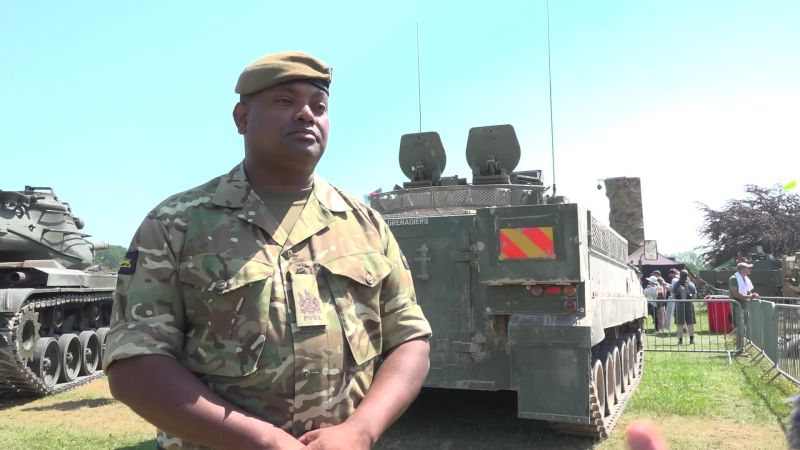
Warrant Officer Class 1 Johnson Beharry, a decorated veteran awarded the Victoria Cross, recently experienced a poignant reunion with his Warrior infantry fighting vehicle after 22 years. This emotional event was not just a nostalgic drive; it stirred memories of his heroic actions during the Iraq War, bringing both reflection and sense of loss.
Return to the Battlefield
In 2004, WO1 Beharry was driving the Warrior when his unit from the Princess of Wales’s Royal Regiment faced an enemy ambush. At a recent event at the National Army Museum, he was reunited with the very vehicle that played a crucial role during those harrowing moments in Iraq. Following this emotional encounter, he also got to drive the Warrior at Tankfest, a military vehicle event hosted by the Tank Museum in Bovington.
During his initial drive the day before Tankfest, everything went smoothly; the vehicle functioned perfectly as he reacquainted himself with its controls. However, on the first day of the festival, the Warrior began to malfunction, a situation that prompted dark memories from his time in combat. According to Beharry, “The vehicle decided it’s not going to change gear, and it felt like it was in limp mode.”
Confronting Painful Memories
The malfunction transported WO1 Beharry back to his combat experiences, where he often felt the hot pressure of the vehicle refusing to respond as he needed. He recalled moments of ambush and the haunting memories that still linger, “Coming in the ambush, in the nights when I’m having nightmares and sweats.” The emotional weight of remembering fallen comrades and the dangers they faced left Beharry momentarily lost for words.
These reflections showcase the toll that war can take, not just physically but mentally as well. The recollection of those who did not return weighs heavily on him. “I wish those who didn’t come back are here today,” he shared, illustrating the ongoing impact of grief on veterans.
Recognizing His Service
While WO1 Beharry stands as a symbol of courage—having received Britain’s highest award for valor for his actions in Iraq—he remains humble about his contributions. His bravery during a second ambush, where he drove his crew to safety despite being severely injured, exemplifies his dedication to duty. When questioned if he considers himself a war hero, Beharry replied, “I’m just a soldier, doing my job.”
This statement speaks volumes about the mindset of many veterans who see themselves as part of a greater whole rather than individual heroes. They carry the mental scars of warfare and focus on honoring their fallen colleagues rather than seeking recognition for their own deeds.
In summary, Beharry’s recent drive in the Warrior not only served as a trip down memory lane but also highlighted the emotional complexities of being a combat veteran. His honesty about the struggles faced by himself and his fellow soldiers offers a profound insight into the lasting impacts of war. Honor and memory intertwine in his journey, reminding us all of the sacrifices made by those in service.