
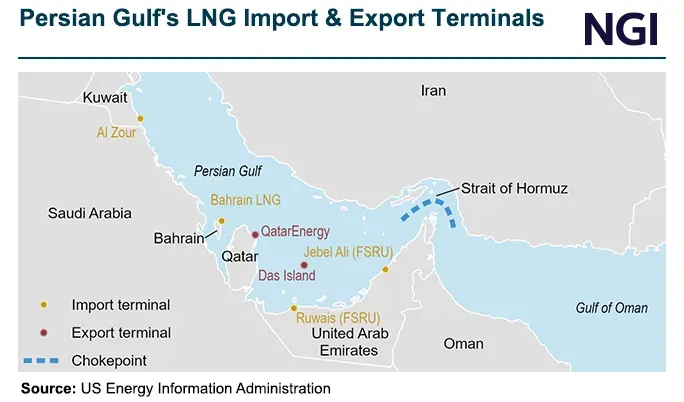
The global LNG market is experiencing notable fluctuations this week due to geopolitical tensions, particularly in the Strait of Hormuz. Understanding these developments can provide insight into the potential future of LNG supply and demand. Here are key highlights to consider.
Strait of Hormuz Crossings Decline
Recent tensions between Iran and the United States have led to a reduction in LNG vessel crossings through the critical Strait of Hormuz. According to Kpler, there was a significant drop from 30 crossings on Wednesday to just 22 on Thursday. This decline is attributed to renewed fighting that escalated earlier this week, particularly following attacks on Qatari LNG tankers. Since the exchanges of hostilities began, only two LNG vessels have successfully entered the strait, with just one exiting. These disruptions can have lasting implications for the global LNG supply chain.
Impact on Global LNG Supply
The Strait of Hormuz serves as a vital artery for global energy shipments, accounting for a significant portion of the world’s LNG trade. Disruptions in this region can lead to delays and increased shipping costs, affecting the overall market. As tensions persist, buyers may seek alternative routes or suppliers to mitigate risks. The uncertainty surrounding security in the strait raises questions about long-term supply commitments and can drive up prices. Traders and energy analysts will be closely monitoring these developments as they unfold, as any further escalations could impact global LNG availability.
Market Reactions and Future Outlook
Market responses to these geopolitical events have been immediate, with fluctuations in LNG pricing noted across various trading platforms. Investors and stakeholders are expressing concern over regional stability, prompting discussions about diversifying sources of supply. This situation may lead to increased competition for LNG from alternative suppliers, such as those in the Americas and Australia.
Prolonged conflict in the region could have far-reaching implications, not only for LNG prices but also for related industries dependent on steady energy supplies. Market participants are urged to remain vigilant in tracking developments in the region while exploring risk management strategies to navigate potential supply disruptions effectively.
Conclusion: A Shifting Landscape
The current state of the global LNG market illustrates the intricate connection between geopolitical dynamics and energy supply chains. As the situation in the Strait of Hormuz evolves, stakeholders must adapt to changing market conditions while also considering long-term strategies that ensure consistent energy deliveries. By staying informed and proactive, energy companies and consumers alike can better navigate the uncertainties that lie ahead in the global LNG landscape.