
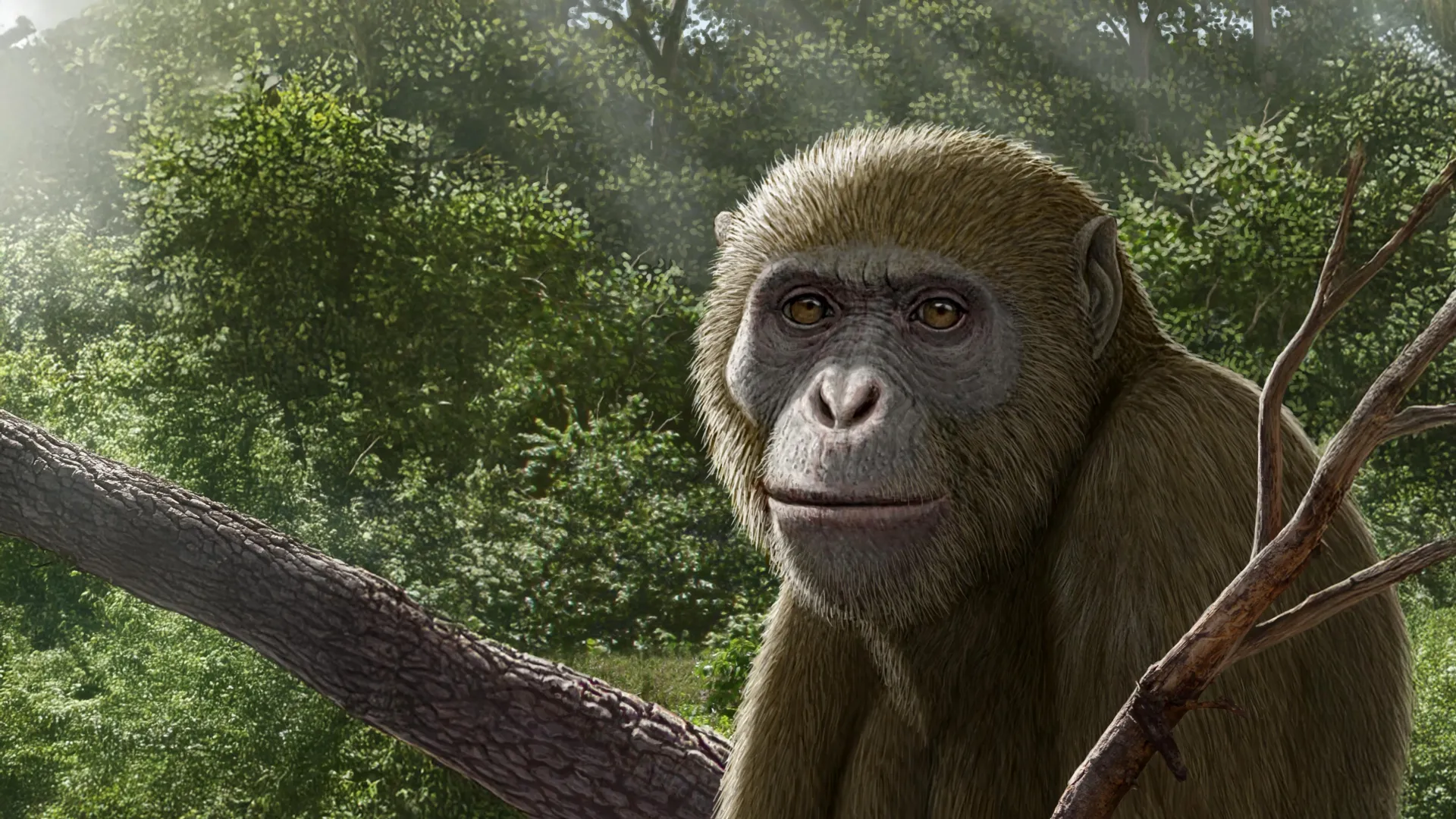
An exciting breakthrough in paleontology has emerged with the discovery of a new fossil ape species, known as Masripithecus moghraensis, which roamed Northern Africa approximately 17 to 18 million years ago during the Early Miocene epoch. This significant finding, a collaborative effort between researchers from Egypt’s Mansoura University Vertebrate Paleontology Center and the University of Southern California, was documented in a recent study published in Science.
Significance of the Discovery
The fossils of Masripithecus were unwrapped in Wadi Moghra, Egypt, marking the first confirmed evidence of an ape from this region. The geographic context of the discovery not only expands the known distribution of early apes but also indicates that North Africa and the broader Middle East likely played a crucial role in the evolutionary pathways that eventually led to the emergence of modern apes. Prior to this find, fossil sites from the Early Miocene in North Africa yielded only monkey remains, leading researchers to assume that apes were largely confined to southern Africa.
Hesham Sallam, a paleontologist and senior author of the study, expressed the difficulty in understanding early ape history when significant gaps in the fossil record persist. His team dedicated five years to the search, uncovering evidence that highlights the importance of North Africa in the ape evolutionary narrative.
Distinctive Features of *Masripithecus*
The name Masripithecus is a fusion of the Arabic word for Egypt, “Masr,” and the Greek term “píthēkos,” meaning ape. The species name, moghraensis, refers to the specific area where the fossils were recovered during fieldwork in 2023 and 2024. Although only part of a lower jaw was found, it exhibits unique characteristics not previously documented in other apes from the same era. The fossils reveal larger-than-average canine and premolar teeth, alongside molars with rounded, textured surfaces, suggesting that Masripithecus had a sturdy jaw structure.
This anatomical configuration implies an exceptional adaptability in feeding. The study proposes that Masripithecus had a versatile diet primarily centered on fruits, along with the ability to consume harder foods such as nuts and seeds. This dietary flexibility would have been advantageous during periods of climatic change, contributing to its survival.
Implications for Ape Evolution
The discovery of Masripithecus carries profound implications for the understanding of ape evolution. By employing advanced Bayesian methods, the research team was able to combine anatomical features from extinct and living apes, DNA from current species, and the geological ages of known fossils. This analysis allowed them to trace the evolutionary relationships among ape groups and estimate when their lineages diverged.
The findings suggest that Masripithecus shares a closer lineage with living apes than any Early Miocene species known from East Africa, prompting new discussions about the origins of modern apes. Biogeographic analyses conducted by the researchers propose that the common ancestor of all living apes most likely resided in Northern Africa and the Middle East during this period, challenging previously held theories that suggested East Africa as the epicenter of ape evolution.
A Shift in Perspectives
Erik Seiffert, a paleontologist and co-author of the study, reflected on how this discovery has reshaped his understanding of early ape evolution. He previously adhered to the belief that the common ancestor lived in East Africa. However, the new evidence from Masripithecus, and the innovative analyses conducted, have led him to reconsider this long-held notion.
As further excavations are planned in North Africa and the Middle East, researchers anticipate uncovering more fossils that will shed light on the origins and diversification of modern apes. The unveiling of Masripithecus moghraensis suggests that essential chapters of ape evolutionary history may still be hidden in unexplored regions, waiting for paleontologists to find and piece them together.