
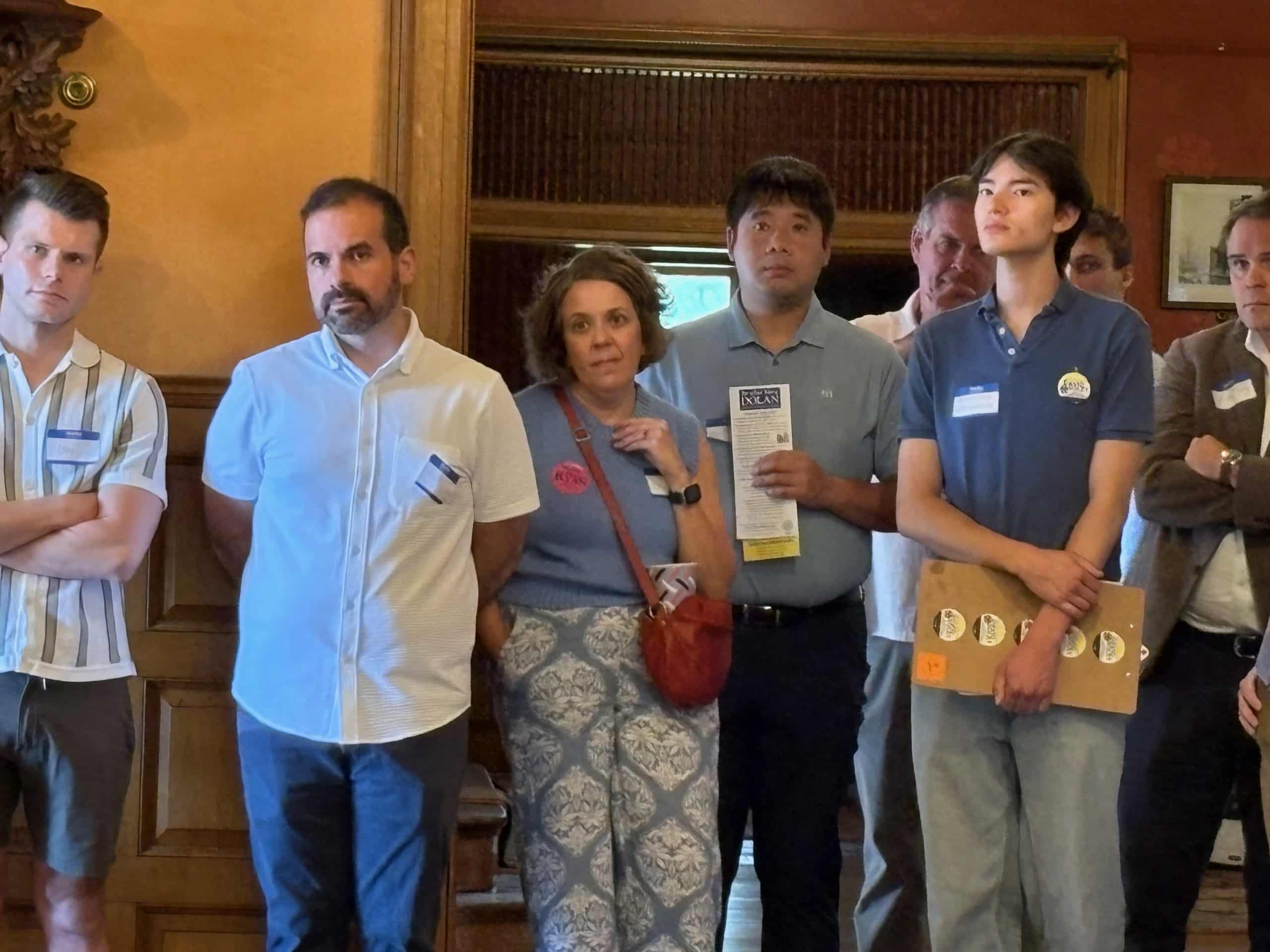
Katherine Clark’s recent visit to Waltham’s Stonehurst took an unexpected turn when her meet-and-greet event was interrupted by protesters concerned about U.S. military aid to Israel. A significant figure in the Democratic party and the House Minority Whip, Clark faced difficult discussions that overshadowed her outreach intentions as she shared her campaign messages with local voters.
Protests Disrupt Local Campaign Event
The gathering, organized by the Waltham Democratic City Committee, aimed to provide candidates an opportunity to connect with constituents before the Democratic primary. Clark, alongside her challenger Jonathan Paz, sought to engage voters during this informal event. However, soon after her arrival, attendees confronted her about the issue of military assistance to Israel, which has been a contentious topic in recent political discourse. Andrew Fintzel, the event’s organizer, reported that these discussions quickly intensified.
As Clark attempted to answer questions posed by attendees, a group of protesters continued to follow her, seeking to revive the discussion each time she tried to move on. This prompted Clark to step away into a more private area of the venue. The situation escalated further, leading Fintzel to intervene, asking the protesting attendees to leave and summoning police support for assistance.
Clark’s Decision to Leave
Ultimately, the tension led to Clark’s decision to exit the event early to prevent further disruption for both her supporters and the candidacy process. Fintzel emphasized that he prioritized maintaining a conducive environment for other candidates seeking to communicate their platforms. When Clark’s absence was announced to the audience, a protester, Eli Gerzon, vocally opposed the description of the events, leading to a clash with attendees who were eager to proceed with the program.
Despite the unrest, many individuals remained at the event, hoping to engage with other contenders. As police arrived, they communicated with the protesters, ultimately determining they had not violated any laws. Consequently, attendees who initially protested were allowed to stay and continue watching the proceedings.
Calls for Accountability and Change
Gerzon, identifying as a local Arlington resident within Clark’s district, sought to raise specific issues with the representative. They wanted Clark to advocate for the Block the Bombs Act, which aims to limit military support for Israel. Furthermore, they called for a public acknowledgment of Israeli actions as genocide, referencing a U.N. report from September that criticized these actions in the context of the ongoing conflict.
Fintzel expressed his dismay over how the confrontation affected the event. He highlighted the importance of informative discourse in a democratic society, asserting that “responsible, respectful dialogue” is essential for an engaged electorate. He lamented that the behavior of the protesters did not align with this ethos and ultimately interfered with the event’s purpose.
As of the time of reporting, Clark’s office had not responded to inquiries regarding the incident, leaving constituents seeking clarification on her stance and commitments. The outcome of this event underscores the challenges politicians face when addressing sensitive issues while trying to maintain a constructive environment for public dialogue during campaign activities.