
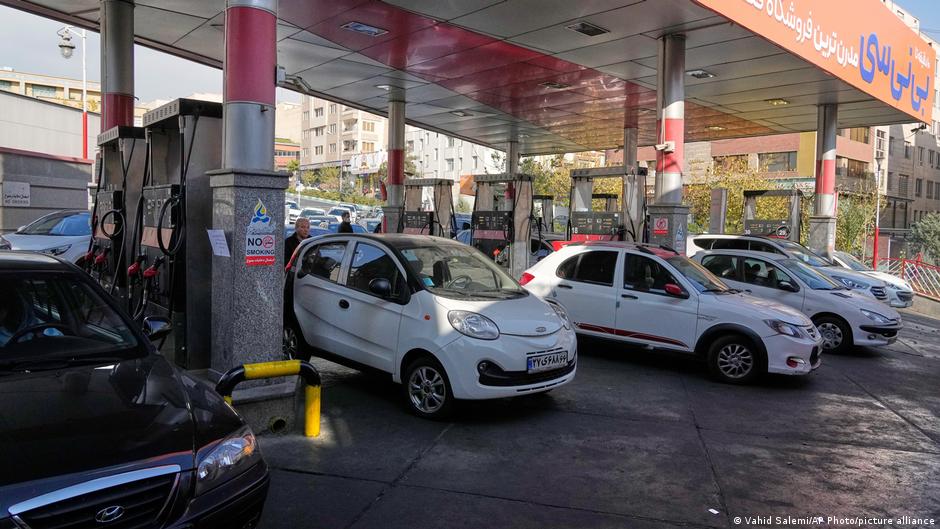
Iran is facing significant changes to its gasoline pricing as the government seeks to address a persistent imbalance between fuel production and consumption amidst ongoing tensions with the United States. With a growing gap between these two factors, experts predict that the government will have to implement adjustments that may include price hikes or alterations to existing fuel quotas.
Imminent Fuel Price Changes
On July 25, government spokesperson Fatemeh Mohajerani indicated that modifications to fuel prices or rationing are both “certain and unavoidable.” However, officials have not yet specified whether these changes will come in the form of new quotas, increased prices, or a combination of both. Currently, Iran operates under a tiered subsidized fuel price system, which features monthly quotas that dictate the cost per liter. The lowest tier is priced at 1,500 tomans (approximately $0.008) per liter, while the highest tier is currently at 5,000 tomans (approximately $0.026). Reports suggest that the highest tier may increase to 10,000 tomans (around $0.053), marking nearly a 100% price escalation. However, this figure is still unconfirmed.
Although gasoline appears affordable compared to global prices, the reality for many Iranians is starkly different. Years of sanctions and economic challenges have led to reduced incomes, making even these lower prices burdensome. For instance, the 2026 minimum monthly wage is set at approximately 16.6 million tomans, equivalent to $87. As a result, any increase in fuel prices could impose additional financial strain on households already grappling with diminished purchasing power.
Fuel Demand and Economic Repercussions
Officials argue that increasing gasoline prices may suppress demand; however, many critics contend that fuel is a necessity, and higher costs may not significantly curb consumption. A resident of Karaj noted that rising gas prices would inevitably lead to higher costs for goods and services, ultimately impacting lower- and middle-income families the hardest. “Transport fares will go up when fuel becomes more expensive,” he remarked, indicating the ripple effects a gasoline price increase could have on the economy.
Umud Shokri, an energy strategist at George Mason University, emphasized that while price adjustments could potentially reduce unnecessary travel and limit fuel smuggling, they cannot resolve the underlying crisis without comprehensive policy changes. He suggested that any increase should be accompanied by financial support for low-income families and improvements in public transportation. If such measures are not enacted, higher gasoline costs could intensify inflation and ignite social unrest.
Iran’s Gasoline Shortage Explained
Despite possessing one of the world’s largest oil reserves, Iran has been struggling with gasoline production. Shokri estimates Iran’s daily gasoline production is around 121 million liters, while consumption reaches approximately 129 million liters. This deficit has been gradually developing, significantly since 2019. While domestic gasoline usage has surged by about 39 million liters, production has risen by only 16 million liters, transforming the country from once being a net exporter to an importer.
To alleviate this issue, one feasible solution could be to enhance the use of compressed natural gas (CNG), as Iran has an extensive network for it that remains underutilized. Additionally, stronger rationing, anti-smuggling measures, and better fuel efficiency standards could be vital in managing the current fuel crisis. However, the structural challenges posed by sanctions make securing imports difficult, complicating the situation further.
The Impact of Rising Prices on the Iranian Public
The war with the U.S. has indeed impacted fuel infrastructure, making management of the gasoline crisis more complex. Nonetheless, experts warn that the physical destruction of fuel facilities may not be as severe as perceived. Shokri pointed out that while the war has exacerbated existing shortages, it hasn’t fundamentally altered Iran’s gasoline production capacity.
As the Iranian public braces for potential price hikes, the atmosphere is already charged with frustration over economic hardships. A drastic fuel price rise may serve as a catalyst for wider unrest, pushing the government to navigate the delicate balance between economic realities and political stability. With mounting grievances over declining living standards, any adjustments to fuel pricing will likely be under intense scrutiny as the government attempts to stabilize the situation.