
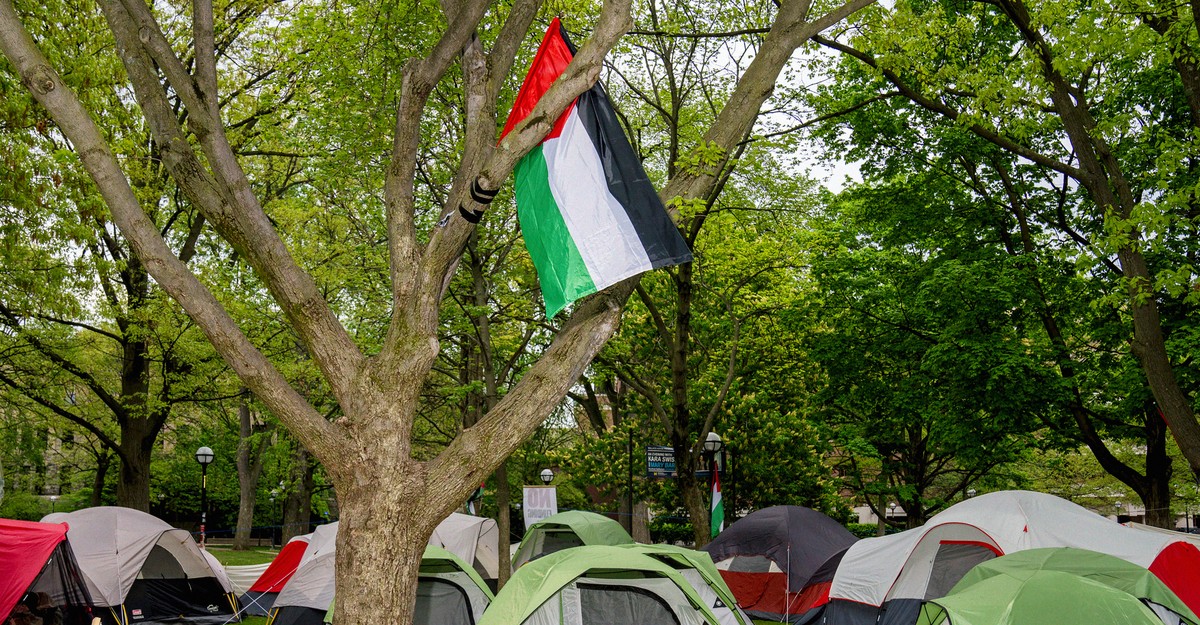
The ongoing conflict between Israel and Hamas has sparked intense debates, particularly in places like Ann Arbor, Michigan. Pro-Palestinian activists have exerted their influence in ways that some deem excessive, leading to acts of vandalism and intimidation against those they consider too supportive of Zionism. At a recent graduation ceremony at the University of Michigan, historian and faculty senate chair Derek Peterson made headlines with a speech that framed the discourse as morally clear-cut. He suggested that one side held all the moral authority, ironically positioning those engaging in intimidation as the true advocates of justice.
The Role of Activism in Shaping Perspectives
Derek Peterson’s remarks highlighted the courage of student activists at the university, particularly those advocating for Palestinian rights. He argued that these activists had reshaped the moral landscape by drawing attention to alleged injustices faced by Palestinians in Gaza. However, while Peterson celebrated these voices, the effectiveness of their activism in shifting public sentiment remains debatable. His narrative raises questions about whether such activism fosters understanding or merely alienates potential allies.
The prevailing belief within some liberal circles posits that activism is synonymous with progress, often leading to uncritical support of any causes championed by activists. This viewpoint can lead to a reluctance to critique the actions or positions of activist groups, even when those actions might cross ethical boundaries. Peterson alluded to civil rights movements and social justice advocates of the past, suggesting that today’s activists are merely following in the footsteps of these noble predecessors. Yet, this idealization overlooks the complexities and controversies inherent in many social movements, especially those that may be perceived as one-sided.
The Selective Nature of Progressive Narratives
Peterson’s portrayal of activism fails to acknowledge the existence of alternative voices within the university community. Over recent years, many University of Michigan students have expressed support for Israel, yet these perspectives are often sidelined in broader discussions around activism. This selective retelling of activism’s history fosters a bias that elevates only certain narratives to a position of moral superiority. Activists are often remembered only for their successful and celebrated causes, glossing over instances where left-wing movements have historically made questionable decisions.
The underlying assumption that progressive activists are inherently just elevates them to a category above mere political actors. This perspective lacks accountability, transforming them into figures whose ideals are above reproach. Such a mindset diverts scrutiny from their methods and objectives, focusing instead on their passion and commitment.
Implications for Campus Discourse
While empathy for Palestinian suffering is commendable, the broader goals of movements like Students Allied for Freedom and Equality raise concerns about their methods. This organization, part of a national network, has even endorsed violent actions, complicating the image of activism as purely benevolent. The tendency among adult activists to romanticize student movements can inhibit meaningful critique of these positions.
Some campus activists have adopted an aggressive approach to advance their agendas, often infringing upon shared spaces within the university. This behavior starkly contrasts with the university’s commitment to inclusivity and community, signaling a troubling trend where assertive activism can devolve into intimidation. As demonstrated by incidents of harassment aimed at individuals opposing their stance, questions arise regarding the ethical implications of such tactics.
Ultimately, Peterson’s rhetoric at the graduation ceremony, while intended to celebrate activist efforts, reveals a deeper issue at play. By commandeering a shared university space for a specific agenda, he inadvertently modeled the same ethical breaches that some student activists engage in. This underscores the danger of viewing activism through a lens of unquestionable righteousness, highlighting the need for a more nuanced and critical discourse surrounding complex social issues.