
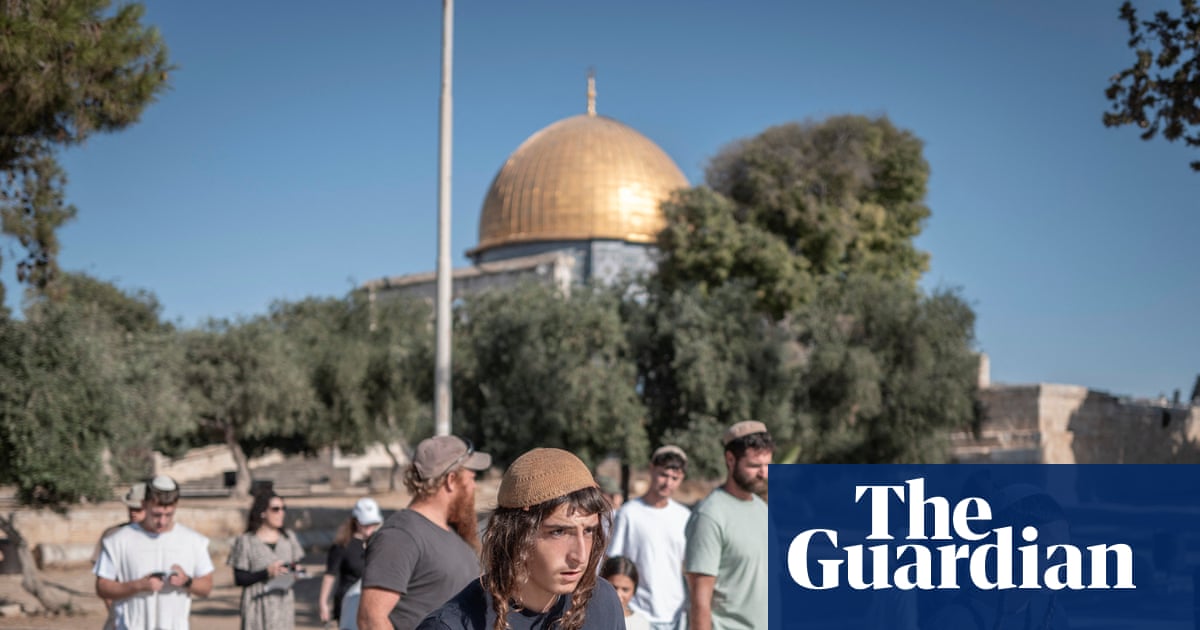
Jordan has called for an emergency meeting with foreign ministers from Arab and Islamic nations to address what it describes as an “imminent” threat of an Israeli seizure of crucial religious sites in Jerusalem, which could ignite a religious conflict. The meeting is scheduled for Wednesday and is a response to increasing incursions by Jewish extremists near the al-Aqsa mosque and the Dome of the Rock. These actions violate the longstanding agreement overseen by Jordan, which permits only Muslims to pray at these sacred sites.
Escalation of Tensions
On July 23, over 2,000 members of Israel’s religious right, primarily settlers driven by National Security Minister Itamar Ben Gvir, entered the area known to Jews as the Temple Mount. They conducted prayers and rituals across the compound, an act that Jordanian authorities deemed unprecedented in modern history. This event has heightened existing tensions, with Jordan expressing concern over a recent recruitment campaign aimed at forming a specialized police unit for the Temple Mount. Such developments are particularly concerning as major Jewish holidays approach in September, coinciding with a tense election campaign for Prime Minister Benjamin Netanyahu’s far-right coalition.
Jordanian Foreign Minister Ayman Safadi highlighted the urgent nature of the situation, warning that any alteration to the current status quo could provoke a conflict that extends beyond Palestine and Jordan to affect the entire Muslim world. He emphasized that Jordan is leveraging all possible diplomatic measures to mitigate the ongoing threats and to raise global awareness about the potential volatility surrounding Jerusalem.
Custodianship and Historical Context
Jordan’s custodianship of the al-Aqsa compound has historical roots dating back to the Ottoman Empire, with the established status quo being formally recognized in the 1878 Treaty of Berlin. The Jordanian role further expanded to include Christian sites in the 20th century and was reaffirmed following the 1967 war as well as the 1994 peace treaty with Israel. Past infringements by Jewish extremists have historically led to violence, exemplified by the riots during the British Mandate and Ariel Sharon’s controversial visit to the compound in 2000, which triggered the Second Intifada.
Given the delicate history, any attempt to displace Palestinians from the West Bank poses alarming threats to Jordan. The influx of displaced individuals could destabilize the nation economically and politically, particularly since over half of Jordan’s 11.5 million people are already descendants of earlier Palestinian refugees. Jordan’s position is clear: any violations of these red lines will not be tolerated, and they have made that stance evident to the international community.
Israel’s Actions and Jordan’s Response
Recent Israeli actions, including the reduction of water supplies to Jordan, have raised tensions further. The Israeli government opted to revert to a 50 million cubic meters per year water agreement, drastically lower than the 100 million cubic meters previously shared, a move perceived as punitive for Jordan’s criticisms of Israeli policies regarding Palestinian civilians. These continuing provocations create higher political costs for Jordan’s monarchy, complicating its relationship with Israel.
The growing anti-normalization sentiment in Jordan underscores the increasing backlash against Israeli actions in the West Bank and al-Aqsa mosque. Political sentiments are shifting, led by a rising Islamic movement that has surged in popularity recently, partially fueled by the perceived injustices occurring in neighboring territories. The government faces challenges from within as it seeks to navigate its dependence on the U.S. for security while managing the growing domestic frustration over Israel’s provocative measures.
As international tensions rise, Jordan’s leadership remains firmly committed to protecting Palestinian rights and ensuring the sanctity of historical agreements regarding Jerusalem. Their efforts to raise awareness about these critical issues will be paramount in preventing further destabilization in the region.