
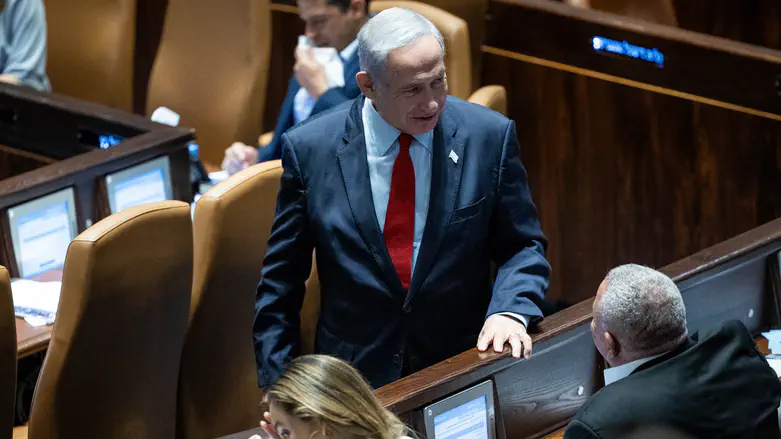
Recent polling data reveals significant developments in the Israeli political landscape. According to a Channel 13 News survey published late Wednesday, the Yashar party, under the leadership of Gadi Eisenkot, maintains its position at the forefront of the political arena with 22 projected seats. In contrast, Benjamin Netanyahu’s Likud party has dropped to 18 seats. This shifting dynamic presents a compelling narrative as the nation prepares for upcoming elections.
Current Party Standings
Trailing behind the leading parties, the Together party, led by Naftali Bennett, has seen a decrease in support, with its seat count dipping from 13 to 12. Additionally, the Democratic party, headed by Yair Golan, is estimated to secure 10 seats. This decline in the Together party’s standing signifies a notable transformation in voter sentiment and alignment.
Emerging Political Alliances
A noteworthy aspect of this poll is the emergence of several parties that are expected to secure eight seats each. These include the alliance between the Religious Zionist Party and Zehut, with leaders Bezalel Smotrich and Moshe Feiglin. Additionally, Otzma Yehudit, directed by Itamar Ben Gvir; Yisrael Beytenu, under the guidance of Avigdor Liberman; and the Joint List are all projected to achieve similar results. Shas and United Torah Judaism are also anticipated to each garner seven seats, reflecting a resilient support base among their constituents.
Ofer Winter’s Amcha Yisrael party is on the rise, showing potential with six expected seats, alongside Ra’am, led by Mansour Abbas, who is positioned to also receive six seats. These results demonstrate the fluidity of voter preferences and the potential for new alliances to reshape the political scene.
Parties Falling Below the Threshold
On the other hand, certain political groups are forecasted to fall short of the electoral threshold. The list led by Yoaz Hendel and Yaron Zelekha is projected to receive only 3.1%, while the Haredi Public party is estimated at 1.8%. Benny Gantz’s Blue and White party is facing a particularly challenging situation, with predictions suggesting it may secure less than 1% of the vote.
Shift in Coalition Dynamics
Despite the decline in Likud’s seat count, the overall coalition dynamics have experienced crucial changes. Netanyahu’s coalition bloc is projected to rise to 54 seats, while Eisenkot’s bloc is close behind at 52 seats. The collective representation of Arab parties stands at 14 seats, illustrating their continued significance in the political discourse. This evolving coalition scenario may impact future negotiations and governance approaches, reinforcing the necessity for parties to strategize effectively in response to shifting voter sentiments.
The current political landscape in Israel is marked by its volatility, underscoring the importance of ongoing public opinion polling. As election day approaches, these trends will continue to evolve, shaping the future of governance in the nation.