
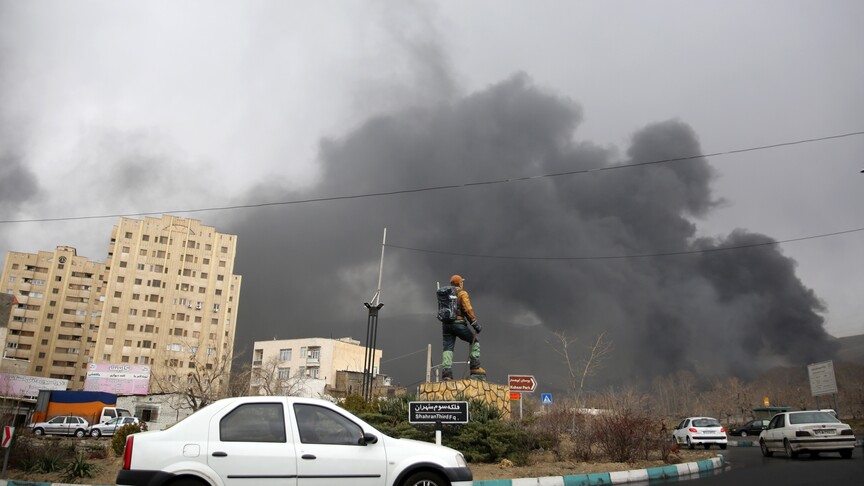
Iran’s military recently announced that it has received intelligence indicating that the United States plans to renew military strikes against the Islamic Republic. This revelation comes amid rising tensions in the Middle East, suggesting a potential escalation in hostilities.
US Intentions Spark Concerns in Tehran
A statement from the Khatam al-Anbiya Central Headquarters, highlighted by the state-run broadcaster IRIB, indicated that the US decision to ramp up military activities has received support from certain regional nations during a recent meeting in Europe. The phrasing used by Iranian officials underscores their perception of the US as a ‘criminal’ entity intent on aggression. Iran’s military forces warned of significant retaliation targeting US interests and locations in the region should Washington “err in its calculations.”
Warnings Against Regional Allies
The Iranian military issued a stern warning to neighboring countries that align themselves with the United States in what it refers to as aggressive actions against Iran. They asserted that any nations supporting these moves would be seen as complicit and should not expect restraint or mercy from Iran’s military forces. This rhetoric illustrates Tehran’s commitment to defending its sovereignty and sending a clear message to its perceived adversaries.
Heightened Middle East Tensions
The situation in the Middle East has grown increasingly fraught since the US and Israel initiated military actions against Iran on February 28. In response, Tehran has launched strikes against countries in the region hosting US military assets. Moreover, the strategic Strait of Hormuz, a critical conduit for global oil and gas exports, was temporarily closed by Iran following these heightened hostilities. This move directly impacts global energy supplies, underscoring the strategic importance of this waterway.
The Fragile Nature of Diplomatic Agreements
In June, Washington and Tehran reached a framework deal aimed at curtailing military operations and facilitating the reopening of the Strait of Hormuz to navigation. However, this agreement quickly unraveled amid ongoing disputes regarding traffic in this vital maritime route. The collapse of diplomatic efforts has only intensified the risk of conflict, with both sides increasingly resorting to militaristic posturing rather than dialogue.
As tensions continue to escalate, the international community watches closely, aware that any misstep could lead to further destabilization in a region already marked by conflict. The geopolitical dynamics at play are complex, but one thing remains clear: the potential for increased hostilities persists, raising concerns not only for the countries involved but also for global peace and security.
In this tense environment, it is crucial for diplomatic channels to remain open, as any miscommunication or miscalculation could lead to dire consequences. As the situation unfolds, both regional stakeholders and global powers must navigate these treacherous waters carefully to avoid an all-out confrontation.