
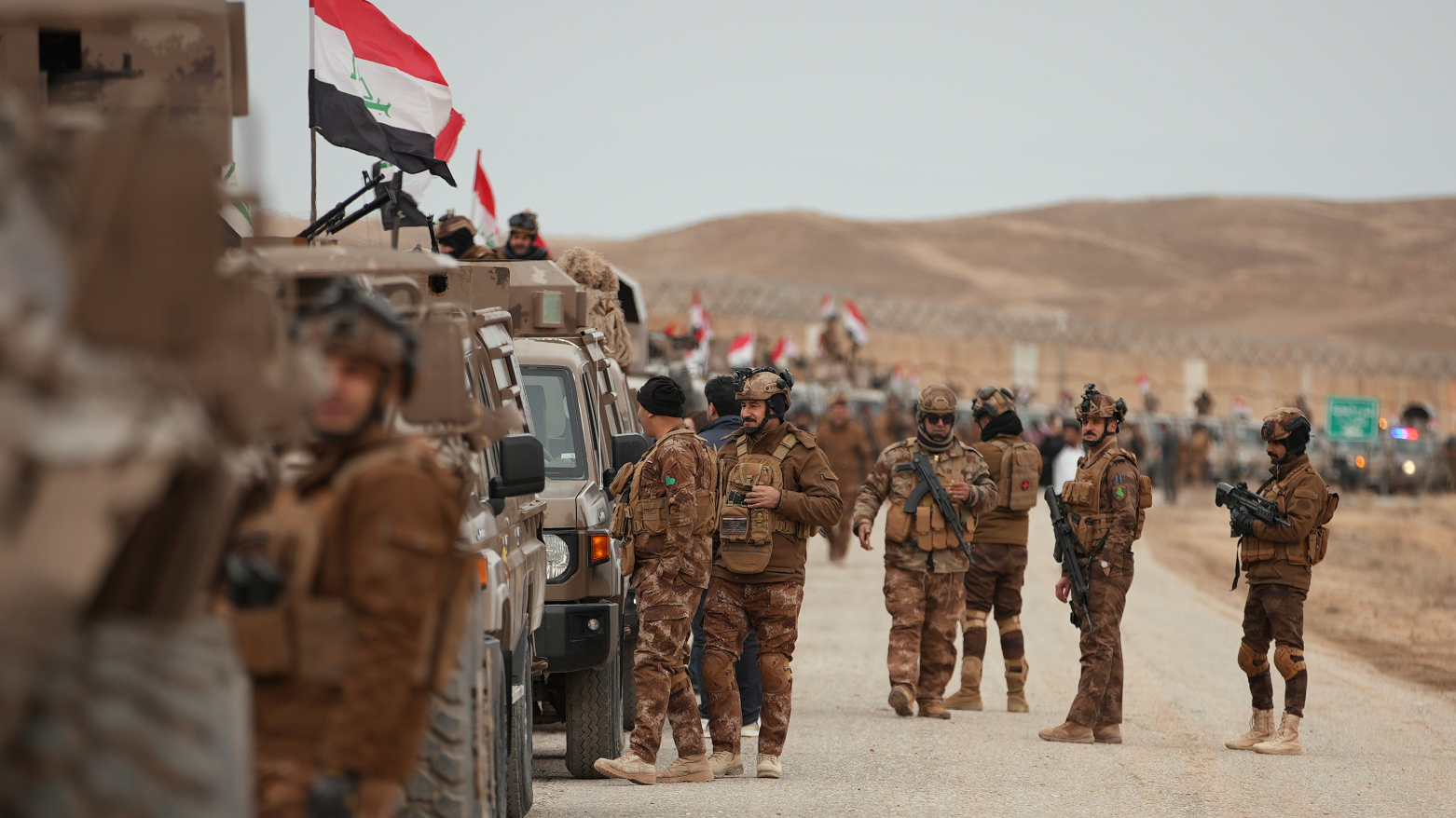
Iraqi Army Chief General Abdul Amir Rashid Yarallah recently visited Sinjar as part of a high-level security initiative. His mission is focused on addressing various urgent concerns in the area, including the disarmament of armed groups, restructuring local security forces, and facilitating the return of displaced residents.
Assessment of Local Security Conditions
Yarallah’s visit on Tuesday represents a significant move from Baghdad to enhance security in Sinjar. The chief of staff arrived with a specialized committee aimed at evaluating the prevailing conditions in the district of western Nineveh. An unnamed source provided insight, revealing that the committee had begun discussions with military leaders and various armed factions operating in the region. These discussions included representatives from the Sinjar Protection Units, which consist of both male and female combatants, focusing on how to bring local arms under government control and streamline security operations.
The timing of this initiative aligns with recent statements made by Iraqi Prime Minister Ali Faleh al-Zaidi, who emphasized the need for armed factions associated with the resistance front in Sinjar to surrender their weapons to the federal government. Moreover, al-Zaidi announced that Mount Sinjar would come under full government authority, and he mandated the creation of a comprehensive assessment committee to evaluate both security conditions and public services in the area. This includes addressing the legal status of Sinjar Resistance Unit members, with provisions for those who meet specific criteria to be integrated into formal security services.
Challenges to Disarmament Efforts
Despite the new engagements initiated by Yarallah’s visit, previous disarmament efforts have faced numerous challenges. Mohammed Jassim, head of the Nineveh Provincial Council’s Security Committee, reported that no substantial progress has been made regarding disarmament, estimating that over 4,000 armed individuals remain active in Sinjar. Earlier attempts to transition around 2,000 fighters into a disarmament process under past Prime Minister Mohammed Shia al-Sudani ultimately fell short. Current discussions about incorporating PKK-affiliated fighters into the Iraqi security framework have yet to yield any tangible results. Therefore, while discussions are back on the table, the path to comprehensive security and disarmament remains fraught with complications.
The Sinjar Agreement and Its Unfulfilled Promises
The ongoing federal initiatives are also influenced by the Sinjar Agreement, which was established in October 2020 under the guidance of the United Nations. This agreement aimed to normalize security and governance in Sinjar, including the removal of armed groups from the city’s core and the delegation of security roles to formally recognized institutions such as the Federal Police. However, its execution has repeatedly stalled as local armed factions, including the Sinjar Resistance Units and various Popular Mobilization Forces, continue to hold sway in the district. Interior Minister Rebar Ahmed has underscored that while the Sinjar Agreement offers a crucial framework, what truly matters is its successful implementation, including restoring stability and public services.
Broader Goals: Reconstruction and Community Rebuilding
Beyond disarming militia groups, the committee’s objectives extend to ensuring the reconstruction of Sinjar, providing compensation to affected families, and reinstating essential public services. The presence of rival armed factions and the lack of cohesive local governance complicate these efforts. Jassim has pointed out that appointing a new district commissioner is a pressing concern that must be addressed for the establishment of a stable local administration. The return of thousands of displaced Ezidis since the ISIS attacks in 2014 is contingent upon resolving these security issues.
The overarching goal for Baghdad involves more than simply collecting weapons. It aims to establish a unified state framework in place of competing security forces, decide the future of local militia members, and create conducive conditions for both reconstruction and the safe return of displaced citizens. Yarallah’s engagement in the ongoing process signals a pivotal step in this direction; however, the success of this initiative will ultimately depend on collaborative arrangements with remaining armed factions and the effective realization of Baghdad’s outlined security strategies.