
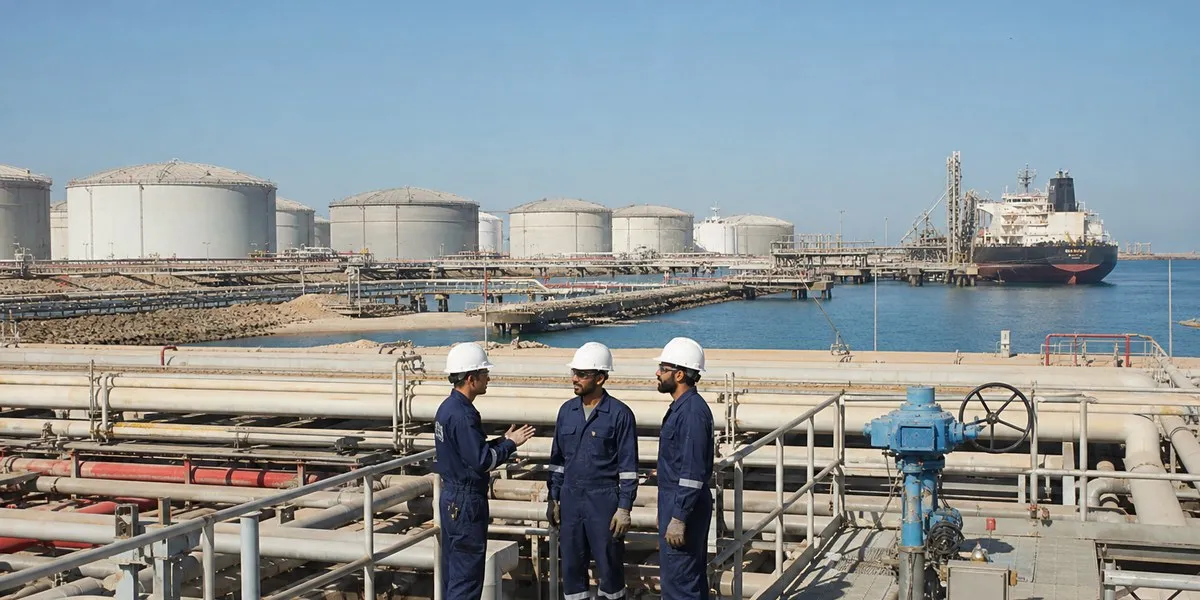
Saudi Arabia is reimagining its energy landscape by integrating traditional oil and gas sectors with a robust commitment to renewable energy sources, including solar and wind power, alongside plans for civilian nuclear energy. This initiative reflects the kingdom’s ambition to diversify its energy portfolio and enhance sustainability within its economy.
Historical Context of Saudi Oil Production
The journey of Saudi Arabia in the global petroleum arena began with the successful testing of Dammam Well No. 7 in 1938, which opened the doors to commercial oil production. This discovery, dubbed the “Well of Prosperity,” signified a pivotal shift in the kingdom’s economic landscape. Over the years, the state has established a significant influence in global oil markets, culminating in the complete nationalization of Saudi Aramco in 1980. The company, originally formed in 1933 as the California-Arabian Standard Oil Company, was transformed into the Saudi Arabian Oil Company in 1988, cementing the state’s grip on its natural resources.
The Need for Alternative Export Routes
Recent geopolitical tensions, notably during the 2026 conflict involving the United States, Israel, and Iran, highlighted the vulnerabilities of traditional shipping lanes, particularly the critical Strait of Hormuz. Disruptions in this area underscored the necessity for alternative export pathways. According to reports, Saudi oil exports through Yanbu on the Red Sea have surged to approximately 4.6 million barrels per day, thanks in part to the strategic East-West Pipeline and enhanced storage capabilities. Amin Nasser, President and CEO of Saudi Aramco, noted that the company’s foresight and investment in infrastructure allowed it to maintain steady production and exports, even in challenging circumstances, resulting in an impressive net income of $67.2 billion in the first half of 2026.
Investments in Renewable and Nuclear Energy
As part of its commitment to renewable energy, Saudi Arabia unveiled power purchase agreements in July 2025 to develop solar and wind projects with a combined capacity of 15 gigawatts, representing an investment near $8.3 billion. This initiative, driven by the consortium led by ACWA Power, aims to source about half of the kingdom’s electricity from renewables by 2030.
In tandem with these efforts, Saudi Arabia is advancing the development of the Jafurah gas field. The initial phase focuses on producing sales gas and condensate, with plans for the second phase slated for completion by 2027. This dual approach of enhancing existing fossil fuel resources while simultaneously investing in renewables underscores the kingdom’s strategic balance between energy transition and economic stability.
Civilian Nuclear Power Developments
Civilian nuclear energy represents another vital aspect of Saudi Arabia’s comprehensive energy strategy. In July 2025, a cooperation agreement was signed between the US Department of Energy and Saudi Arabia, echoing the kingdom’s serious commitment to nuclear energy. This agreement, endorsed by key figures such as Prince Abdulaziz bin Salman and US Energy Secretary Chris Wright, lays out a framework for a collaborative long-term partnership in nuclear energy which is expected to be presented to the US Congress for approval.
As Saudi Arabia charts its path towards a diversified energy future, the integration of traditional energy assets with renewable and nuclear innovations will play a crucial role in its economic landscape. This multi-faceted approach not only aims to ensure energy security and sustainability but also positions the kingdom as a key player in the global energy transition.