
A recent poll by Channel 13 News reveals the current political landscape in Israel, indicating a shift in party dynamics ahead of the upcoming elections. The poll outcomes demonstrate the potential for significant changes in the Knesset’s composition and voter preferences.
Current Knesset Projections
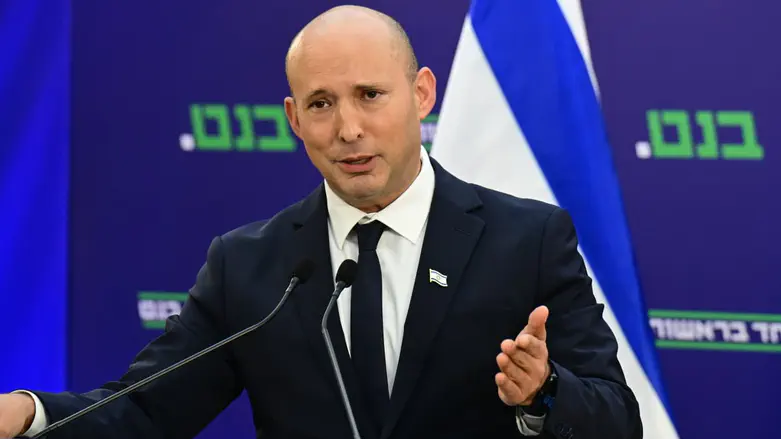
According to the poll, Gadi Eisenkot’s Yashar party is poised to secure 22 seats in the Knesset if elections were held today, making it the front-runner. This is followed closely by the Likud party, which is projected to garner 18 seats. The Together party, led by Naftali Bennett and Yair Lapid, shows strong voter support as well, anticipated to win 11 seats, which ties them with the Democratic faction.
Other parties are also vying for a place in the Knesset. The Joint List, Yisrael Beytenu, and United Torah Judaism are each forecasted to earn eight seats. Meanwhile, the Otzma Yehudit and Shas parties are expected to capture seven seats each. The Religious Zionist-Zehut alliance is predicted to gain six, while Amcha Yisrael and Ra’am are likely to bring home five seats. Lastly, the Reservists-Economic Party rounds out the projections with an anticipated four seats.
Political Bloc Analysis
The overall distribution indicates a divided political landscape. The right-wing bloc is projected to hold a total of 51 seats, while the anti-Netanyahu coalition could control 52. The Arab parties are expected to contribute 13 seats to the Knesset, and the party led by Yoaz Hendel and Yaron Zelekha would claim four seats.
When considering what type of government voters would prefer after the elections, opinions are varied. A broad unity government emerged as the most favored option among respondents, with 31% showing support. This was closely followed by the desire for a “full right-wing” government at 29%. In contrast, 25% of those surveyed indicated a preference for a coalition comprised solely of opposition parties. There is also a small but notable segment of the population—6%—who are inclined towards a different governmental model, while 9% of respondents remain undecided.
Implications for Future Governance
These polling results shed light on the potential trajectory of Israeli politics, highlighting voter inclinations towards various forms of governance. The strong preference for a unity government may suggest a desire for stability and collaboration among factions. The stark division between right-wing and anti-Netanyahu sentiments indicates ongoing political polarization within the electorate.
Moving forward, the results of this poll could play a crucial role in shaping the strategies of political parties as they prepare for the elections. The choices made now will undoubtedly have lasting effects on governance and policy in Israel. As the election date approaches, it will be essential to monitor how these sentiments evolve and how they translate into electoral outcomes.