
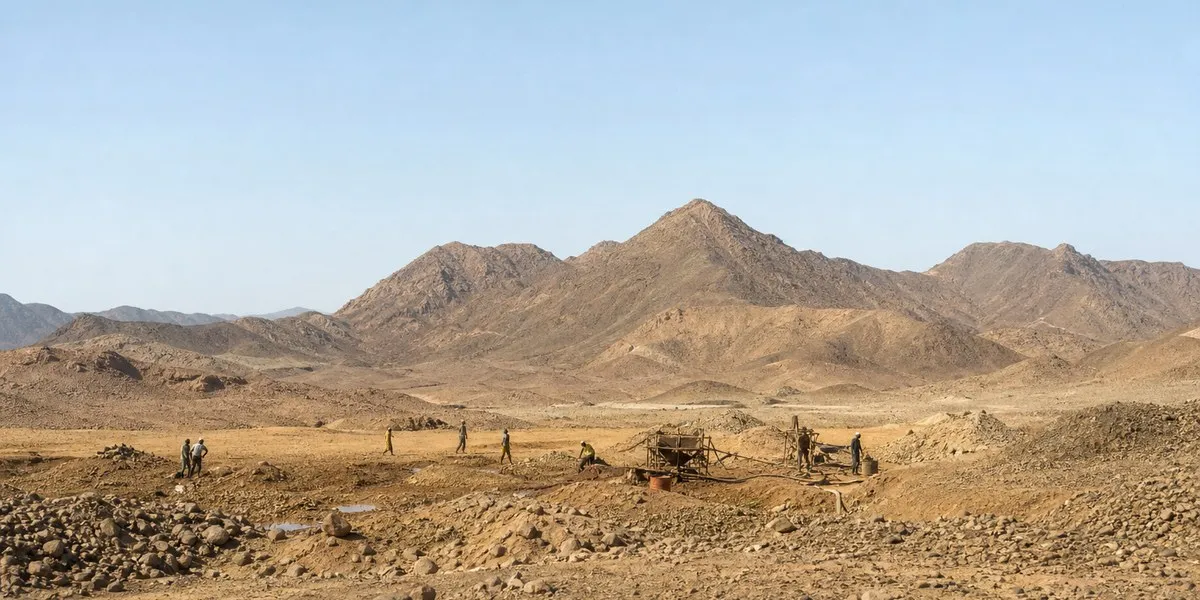
At least 72 miners lost their lives in airstrikes targeting artisanal gold mining sites in a contentious region near the Sudan-Egypt border. These troubling reports emerged from the Sudanese human rights group Emergency Lawyers, as highlighted by Deutsche Welle. The airstrikes occurred on a Saturday in a rugged, hard-to-access area situated to the south of the Halaib Triangle, which lies to the east of the Nile River.
Concerns Over Rising Casualties
The Sudanese Doctors Network has cautioned that the death toll may continue to rise due to the critical nature of the injuries sustained and the limited access to medical care in this remote region. One survivor recounted the chaotic scene that unfolded when the airstrike occurred; he noted that thousands of individuals were present at the mining site at that time. Following the attack, people dispersed in various directions, complicating efforts to determine the total number of casualties.
Geopolitical Context: Disputed Territories and Illegal Mining
The Halaib Triangle holds significant importance, as both Sudan and Egypt claim ownership. This area is notorious for gold mining and trade, but it is also associated with illegal trafficking of various goods and human smuggling operations. The isolated nature of the region makes it challenging to independently confirm the details surrounding these airstrikes. Egypt has yet to officially respond to reports regarding its involvement in the attacks. However, the country has previously acknowledged its ongoing campaign against illegal gold mining activities within its borders.
This campaign has intensified recently, as evidenced by large-scale operations conducted by Egyptian security forces in the same border area. In June, following earlier airstrikes, hundreds of individuals—including foreign nationals—were detained under suspicions of engaging in illegal mining and smuggling activities.
The Broader Conflict in Sudan
Complicating the situation further is the ongoing conflict in Sudan between the military junta led by Abdel Fattah al-Burhan and the paramilitary Rapid Support Forces. This conflict has persisted for over three years and has resulted in significant humanitarian crises, with more than 200,000 lives claimed according to Deutsche Welle’s reports. As the violence continues, the toll on civilians and informal workers in regions like the Halaib Triangle only compounds the existing humanitarian challenges.
In summary, the tragedy of the recent airstrikes highlights ongoing tensions in both geopolitical and humanitarian contexts. The events serve as a grim reminder of the lethal intersection between illegal mining activities and armed conflict in an area fraught with disputes over territory and resources. As more information becomes available, the world will be watching closely to understand the implications this could have for regional stability and the lives of the individuals caught in the crossfire.