
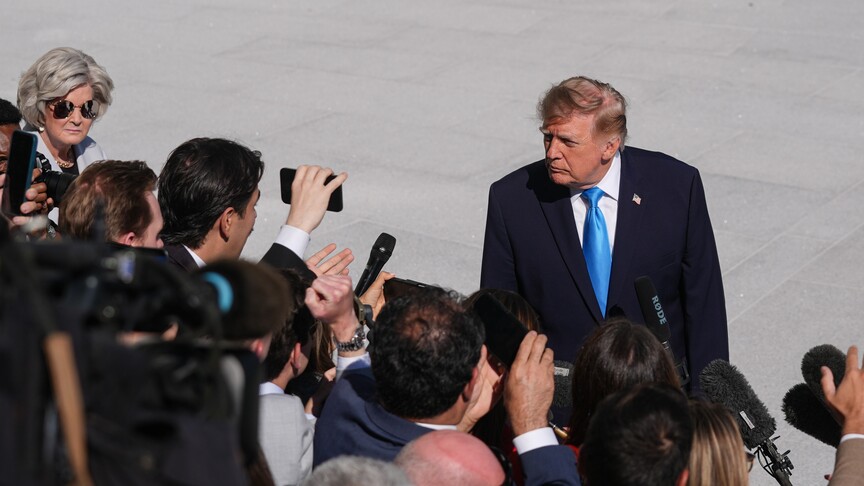
US President Donald Trump stated recently that the United States is in a position to conclude its conflict with Iran but is focused on ensuring a sustainable outcome.
Trump’s Assurance of Quick Resolution
During a rally in South Carolina, Trump expressed confidence that the U.S. could swiftly exit the war with Iran. “The war could end very soon. We could leave now, but for a lasting solution, we want to wait,” he remarked. This declaration was framed within the context of recent military and economic successes that he claims the U.S. has achieved against Iran. Stressing that Iran will “never have a nuclear weapon,” Trump seeks to reassure his supporters that the U.S. is making significant progress in the region.
Strategic Maneuvering Along the Strait of Hormuz
In his address, Trump also brought attention to the U.S. military’s blockade of the Strait of Hormuz, a critical channel for global oil shipping. He provocatively referred to it as the “Trump Strait,” suggesting that a name change could be an indicator of U.S. authority in the region. “We altered the name of the Gulf of Mexico; what’s stopping us from renaming the Hormuz Strait?” he quipped. This statement reflects the Administration’s increasingly assertive stance in its geopolitical strategy.
Military Operations and Future Plans
Reports from The New York Times indicate that both U.S. and Israeli military leaders are contemplating new strikes against Iran, particularly after the upcoming midterm elections. Officials familiar with the discussions suggest that while plans are being considered, it remains uncertain if Trump will endorse these military actions. In previous instances, he has shown reluctance to escalate combat operations, often vetoing plans that involve significant military engagement.
A White House spokesperson commented to the Times, stating that the administration refrains from discussing any military strategies that may or may not be in place. This implies a level of caution about public disclosures regarding operational tactics and intentions in the region.
The Situation in the Strait of Hormuz
The conflict heightened between the U.S. and Iran on February 28, when the U.S. initiated military actions, prompting Iran to retaliate with missile and drone attacks throughout the region. This escalation led to the effective closure of the Strait of Hormuz, a vital route for global energy transportation. Following this turn of events, a memorandum of understanding between the U.S. and Iran, mediated by Pakistan and Qatar in June, has been stalled due to ongoing disagreements—most notably around navigation rights in the strait.
As tensions continue to rise, the next steps concerning the U.S.-Iran conflict remain unclear. With the U.S. facing its own domestic political considerations, any military decision will likely weigh heavily on the administration as it seeks to navigate regional dynamics while addressing its domestic audience and commitments.