
Discoveries in Ancient Egyptian Burial Practices
Recent archaeological findings in the Theban Necropolis shed new light on ancient Egyptian burial traditions, revealing the complexity and evolution of funerary rites. Located near Luxor, Egypt, tomb TT 209 has become a focal point for understanding how these rituals adapted over time. Researchers have explored this site and uncovered a diverse collection of mummified remains spanning 300 years, allowing for a broader examination of ancient Egyptian burial practices.
Insights from Tomb TT 209
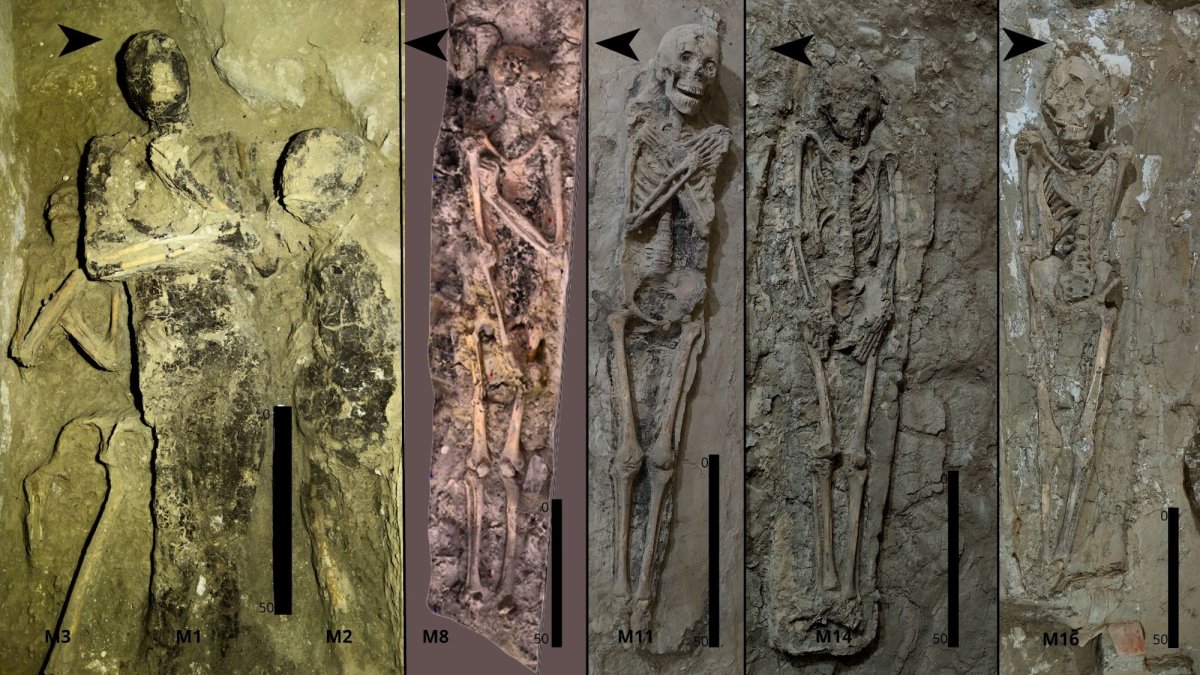
A comprehensive study conducted by scholars from Spain’s University of La Laguna focused on the remains housed in TT 209, which contains over 400 burial sites. This investigation revealed at least 20 ancient individuals, alongside a mummified dog, all positioned in a historically significant manner. Archaeologist Jared Carballo-Pérez noted that the arrangement of the mummies indicates careful planning, countering previous beliefs that the accumulation of remains over centuries led to a disordered burial process.
The meticulous approach to these burials demonstrates a continuation of meaningful rituals rather than a mere chaotic succession of interments. Carballo-Pérez emphasizes that the spatial logic observed underscores an evolving funerary memory, maintaining connections with earlier generations. This newly-acquired knowledge offers a distinctive perspective on how the ancient Egyptians honored their dead and the values they attributed to these practices.
The Evolution of Burial Methods
The study of TT 209 illustrates how burial practices varied through different periods. Initially, the tomb held individuals of high social status, who were laid to rest with an array of lavish items and amulets, indicating their importance in society. However, as time progressed, this trend shifted, especially during the 25th Dynasty and the following Persian period. Mummies began to be stacked vertically, and the elaborate individual interments were replaced by more pragmatic approaches due to space limitations.
Despite these changes, the care taken in adequately mummifying later occupants highlights that respect for the deceased remained paramount. The arrangement of bodies, even in more crowded conditions, reflected a continued veneration of the dead, suggesting that ancient Egyptians adapted their rituals to maintain the essence of their longstanding traditions.
Reinterpreting Tomb Findings
The results of this study challenge the long-held notion that ancient Egyptian burial practices became chaotic over time. Instead, findings from TT 209 reveal that even as space became a critical factor, the integrity of funerary customs was preserved. Many of the later burials still adhered to traditional positions, such as arms crossed over the chest, emblematic of religious significance. This observation refutes the idea of a decline in the respect afforded to the deceased, reinforcing that even seemingly unordered deposits could be understood as deliberate and meaningful.
Archaeologists now recognize the necessity for a revised interpretation of earlier burial sites, allowing for greater appreciation of ancient practices. The continuous examination of these traditions contributes to a deeper understanding of the cultural legacy left by ancient Egyptians, showcasing their evolving approaches to life, death, and remembrance while maintaining a connection with their ancestral heritage.
In summary, the findings at TT 209 enhance knowledge about ancient Egyptian burial customs, revealing layers of complexity that underscore the importance of honoring the dead in a changing cultural landscape. This research invites further exploration into past practices, encouraging a nuanced understanding of how a civilization with a rich history adapted its traditions while remaining rooted in its values.