
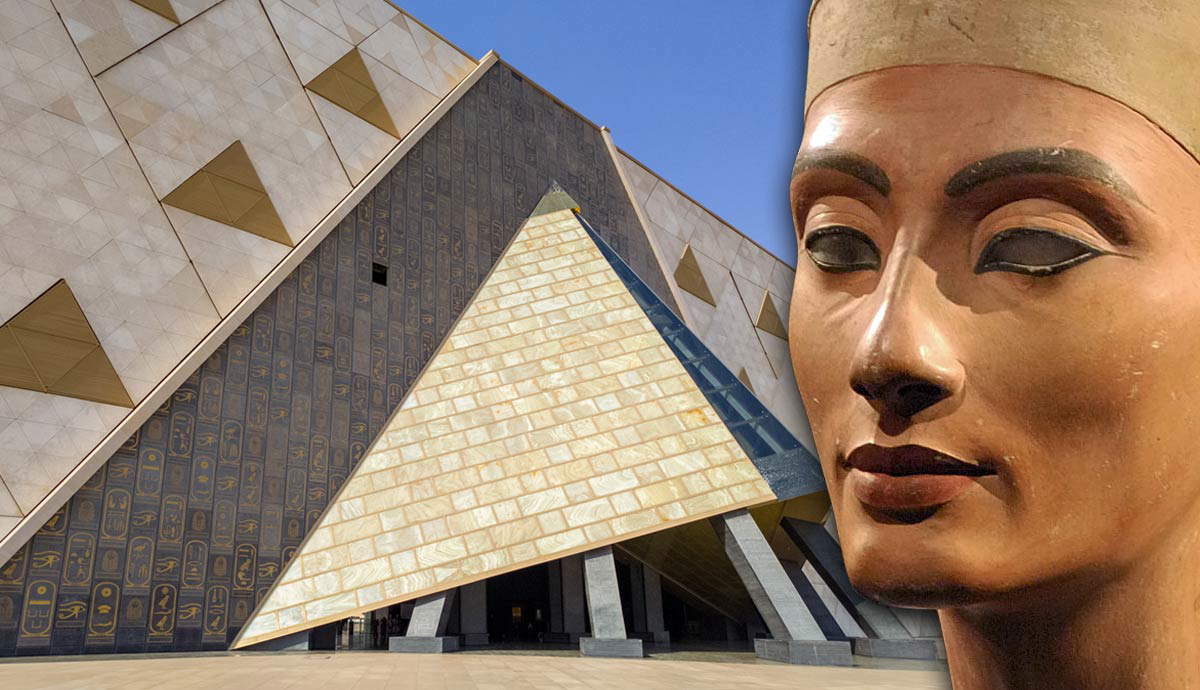
The discourse surrounding the return of ancient Egyptian artifacts has gained momentum significantly in light of the Grand Egyptian Museum’s opening in November 2025. This billion-dollar establishment presents a compelling case for repatriation, countering long-held arguments that artifacts are better off in global museums. Renowned institutions like the British Museum and the Louvre are now under scrutiny as Egypt pursues the restoration of its cultural heritage. Below, we highlight some of the most notable antiquities worthy of repatriation.
1. The Rosetta Stone
The Rosetta Stone has become an emblem in discussions of cultural heritage, renowned for its crucial role in deciphering Egyptian hieroglyphs. Discovered in 1799 during Napoleon’s campaign in Egypt, the stone’s significance extends beyond mere aesthetics; it unveiled millennia of Egyptian history to the modern world. Acquired by the British as part of a surrender agreement, it has been housed in the British Museum since 1802. Its inscriptions in Greek and Egyptian scripts not only aided scholars like Jean-François Champollion in their groundbreaking work but also solidified the stone as a pillar of Egyptology. The return of such a pivotal artifact could enrich Egypt’s cultural landscape, amplifying both historical education and national pride.
2. The Dendera Zodiac
Housed in the Louvre, the Dendera Zodiac is another significant piece taken during the French campaign in Egypt. This vast bas-relief captures the constellations and is regarded as one of the best-preserved depictions of Egyptian astronomical knowledge. Dating back to the Ptolemaic period around 50 BC, it masterfully combines Egyptian and Greek influences. Some scholars argue that the Dendera Zodiac has value comparable to the Rosetta Stone for understanding ancient Egyptian astronomy. Returning it to Egypt would restore a vital piece of its historical narrative and would bolster the nation’s claim to its astronomical heritage.
3. The Tarkhan Dress
Discovered in 1913, the Tarkhan Dress is famously known as the world’s oldest woven garment, dating back over 5,000 years. This linen dress, excavated from a tomb near Cairo, wasn’t appreciated until decades later. Advocates for repatriation often cite cultural nationalism, arguing that artifacts originating from Egypt should be displayed in Egyptian museums. The Tarkhan Dress represents an essential aspect of ancient Egyptian daily life, and its return would signify respect for the culture and history it embodies.
4. Bust of Nefertiti
Arguably one of the most recognizable symbols of ancient Egypt, the Bust of Nefertiti is presently displayed in the Neues Museum in Berlin. The controversy surrounding Nefertiti’s acquisition has heightened calls for repatriation as it underscores the ethical dilemmas of artifact ownership post-colonization. The bust, believed to have been removed under dubious circumstances during early 20th-century excavations, remains a key player in ongoing efforts to return artifacts to their land of origin. Many Egyptians, including Dr. Zahi Hawass, have campaigned for its return, emphasizing its rightful place in Egypt’s cultural sphere.
As the Grand Egyptian Museum enhances Egypt’s capacity to showcase its rich heritage, discussions about the return of these artifacts are becoming increasingly pressing. Each of these items not only holds artistic value but is steeped in the nation’s identity, history, and cultural lineage. The momentum for repatriation is not merely about returning objects; it’s about restoring dignity and history to a civilization that has long been celebrated for its contributions to humanity.