
In recent diplomatic developments, Syrian and Israeli representatives convened in Jordan for the first time in months to ease rising tensions. Mediated by the United States, this meeting aimed to address conflicts following recent Israeli military strikes in Syria and to mitigate the potential spillover of hostilities involving Turkey into Syrian territory.
Tensions Escalate After Israeli Airstrike
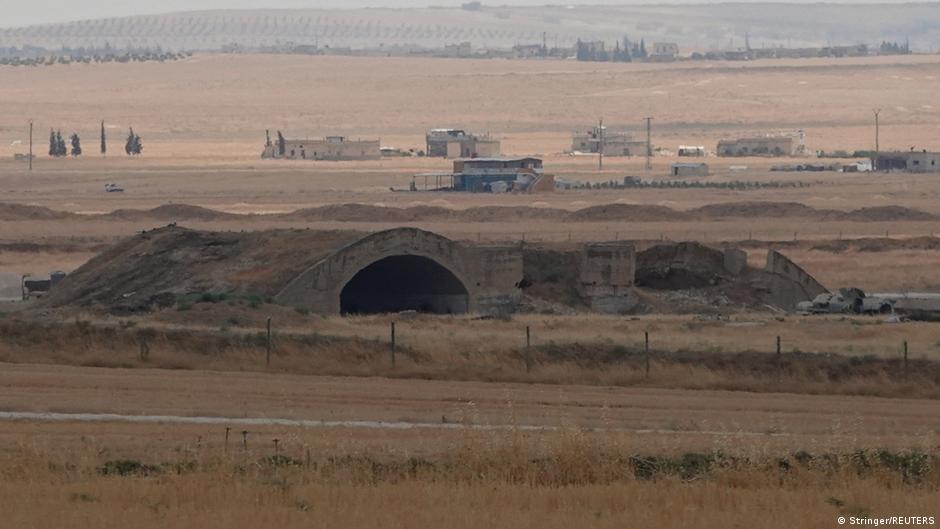
The escalation intensified after an Israeli airstrike at the Abu Duhur military airfield in Idlib Province on August 18. According to Syrian officials, this strike targeted the runway and storage facilities but did not result in any casualties. Israel claimed it acted in response to Syria’s alleged violation of a security agreement, accusing Damascus of permitting the use of the airfield by Turkish forces. Both Syria and Turkey dismissed these assertions as unfounded.
The U.S. criticized Israel’s actions, branding them as an “unnecessary escalation.” Such language signifies a diplomatic pivot, suggesting an increasing alignment with Ankara and Damascus amidst escalating regional tensions. This environment raises critical questions about military and strategic interests at play in the region.
Israel’s Concerns Over Turkish Presence
Israel is apprehensive about a potential Turkish military presence within Syria, viewing it as a “red line.” However, the nature and imminence of such deployments remain unclear. Reports from April 2025 indicated that Turkey had explored establishing bases in Syria under a possible defense pact, but the situation was still nebulous with Israeli airstrikes ongoing.
Proponents of Israel’s stance, such as the Foundation for Defense of Democracies (FDD), argue that Israel’s actions serve as a preemptive measure against potential Turkish aggression. They cite concerns that Turkey might leverage its military foothold in Syria for political leverage over Israel, particularly given the close ties between Syrian President Ahmad al-Sharaa and Turkish leadership.
The Complex Variables of Syrian Politics
As geopolitical dynamics shift, experts are examining the implications of these military actions for Syria’s future. Bente Scheller, a Syrian affairs specialist, emphasizes that without concrete evidence of Turkish troop deployments, the motivations behind Israel’s airstrike should be understood in the broader context of its long-standing strategy toward Syria and the increasing influence of Turkey in the region. Marcus Schneider, another analyst, highlights that the real battlefield may soon involve a struggle for control and influence over Syria’s military order, impacting both its sovereignty and its airspace.
Following the loss of its longtime leader, Bashar Assad, in 2024, Israel established a security zone near the Golan Heights, further complicating the military landscape. While Israel desires to maintain Syria as a weak state to ensure its military freedom, there appears to be a recognition that Syria’s stability is paramount for regional security.
Shifting Alliances and the Role of the U.S.
Syria has sought to bolster its relationship with the U.S., particularly since the rise of President Ahmad al-Sharaa. After a series of diplomatic encounters, including a meeting with President Trump, the U.S. has begun easing sanctions on Syria, fostering a climate conducive to dialogue despite the complex history of U.S.-Syrian relations. However, analysts suggest that Syria might primarily rely on itself in dealing with neighboring powers, including Turkey.
Although Turkey is perceived by Israel as a threat, experts argue that it is more invested in a stable Syria to secure its southern border than in provoking conflict with a nuclear Israel. As Syria navigates this complicated terrain, the success of President al-Sharaa’s administration in securing both its sovereignty and territorial integrity will depend on its diplomatic and negotiation capabilities.
In conclusion, Syria stands at a crucial juncture, caught between powerful neighbors unwilling to respect its sovereignty. The nation’s ability to carve out a distinct political order while managing complex regional dynamics will determine its future stability and security. With changing alliances and evolving geopolitical interests, the road ahead promises to be fraught with challenges requiring deft maneuvering by Syria’s leadership.