
In the context of ancient Egypt, new research on skull remains from the earliest royal cemetery suggests that human sacrifice may have occurred. The findings indicate that many individuals buried near the first Egyptian kings met violent ends, which adds a complex layer to our understanding of early Egyptian rituals.
New Evidence from Ancient Egyptian Burials
Anthropologist Roselyn A. Campbell from Purdue University analyzed 46 skulls excavated from the royal funerary complex at Umm el-Qaab in Abydos, southern Egypt. She observed severe injuries that likely caused death in about 39% of the specimens. These remains date back to Egypt’s First Dynasty, approximately 3078 to 2900 B.C., where numerous court officials and craftsmen were interred alongside the tombs of early rulers.
Previously, British archaeologist Flinders Petrie, who initially excavated these graves in the 1920s, noted no signs of injury, leading him to assume that the deceased were not victims of violence. His work initiated a long-standing debate over the practice of “retainer sacrifice,” where servants were believed to be killed in service of the king in the afterlife.
Injuries Provide Insights
Campbell’s study highlights that the most common injuries found were linear fractures along the tops of the skulls. Additionally, several skulls displayed wounds consistent with sharp objects. Notably, one skull exhibited a piercing injury on the side of the head, while another showed a cleaving blow near the eye. These findings challenge previous assumptions and suggest that many of these injuries occurred before burial rather than as a result of posthumous damage.
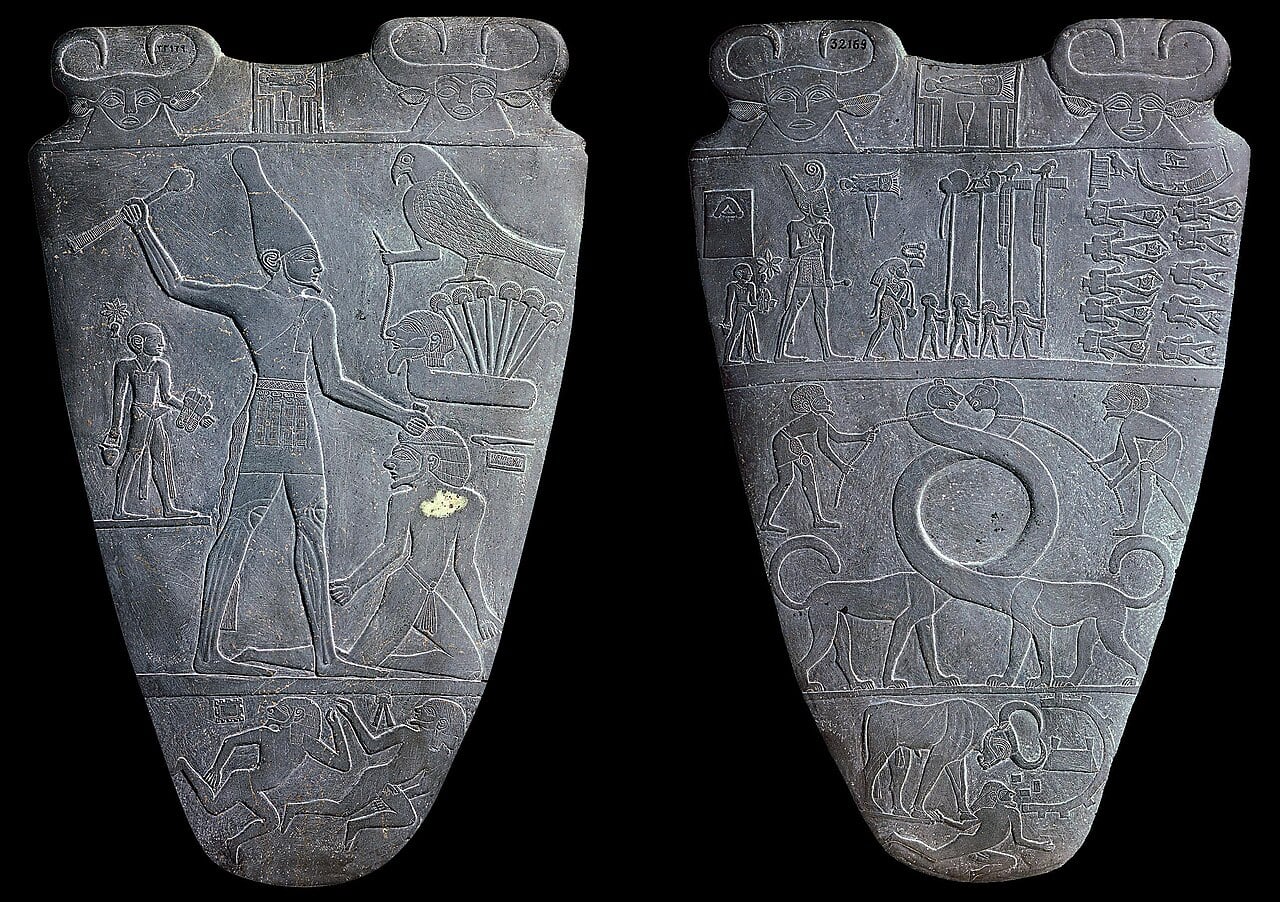
Interestingly, Campbell posited that Petrie may have overlooked these injuries due to his method of preserving skulls with paraffin wax, which likely obscured them. Furthermore, the nature of the injuries leads to skepticism regarding the well-known depiction of royalty in Egyptian art, which often portrays kings attacking enemies with stone maces. Instead, the flat, broad shapes responsible for the fractures lean towards lighter implements made of wood rather than the heavy maces typically associated with combat.
Questioning Past Interpretations of Burial Practices
Campbell’s research raises doubts about the historic claim that some individuals were buried alive. She argued that the body positions reported by Petrie might not indicate intentional entombment but rather shifts that occur naturally due to decay. Moreover, the presence of smaller hand bones still in their original locations points to the idea that these graves served as the first resting places for the deceased.
While Campbell’s findings provide intriguing insights into ancient Egyptian burial practices, there are limitations to the study. The sample of skulls represents only a small fraction—between 5% and 15%—of those buried at the site, as Petrie had reinterred many remains together in a separate location. Thus, while the evidence supports a more nuanced narrative regarding sacrificial practices, it does not solve the mystery entirely.
Overall, these revelations suggest that the royal funerary rites in early Egypt were likely much more diverse than previously thought. This research invites scholars to explore old museum collections with fresh perspectives, challenging existing narratives surrounding ancient Egyptian culture and its complex relationship with death and ritual.