
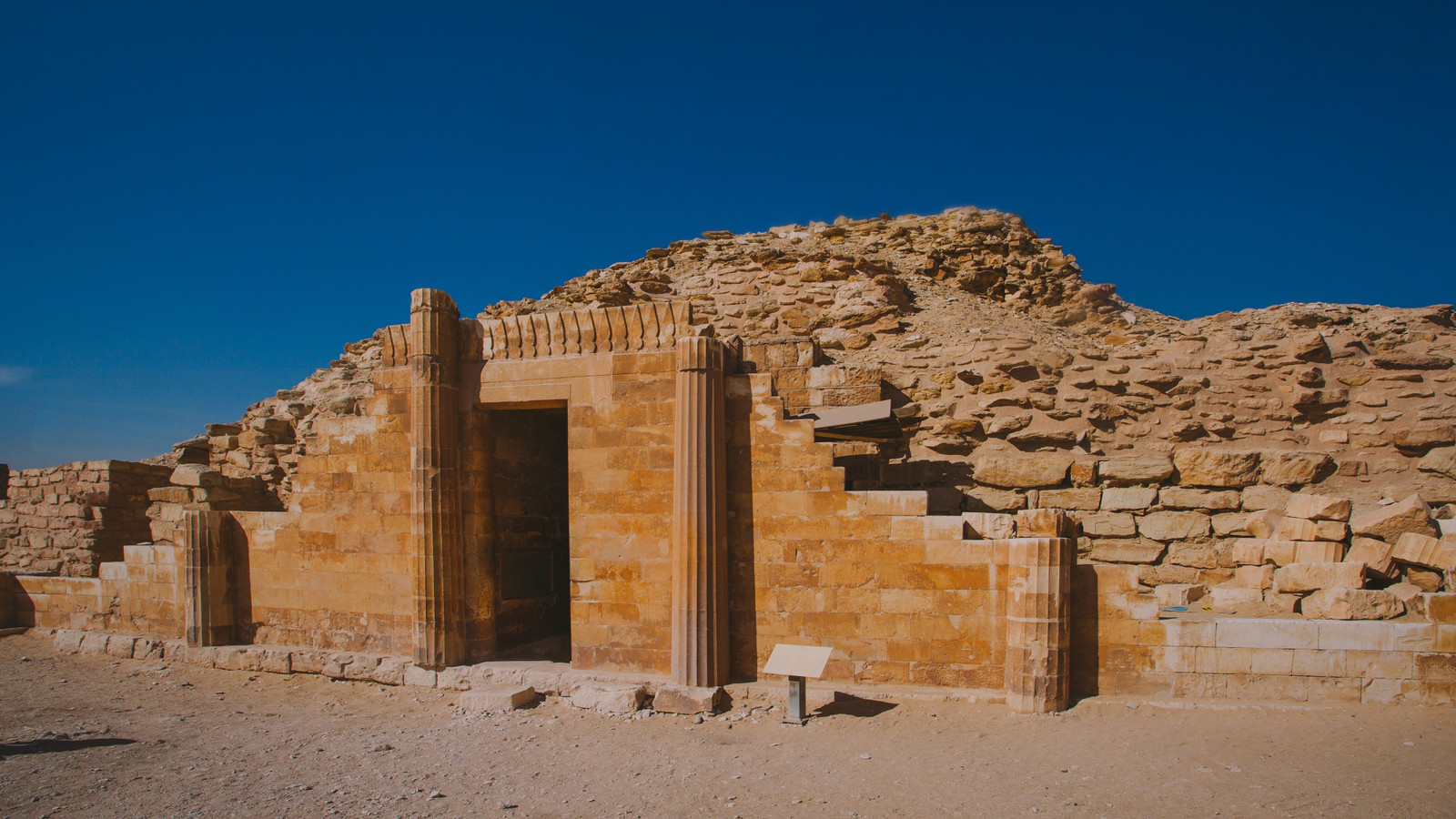
Recently, archaeologists have made significant discoveries in Egypt, uncovering ancient remains and tombs that shed light on life during the Old Kingdom. These remarkable finds invite enthusiasts and scholars alike to explore the secrets of ancient civilizations that thrived thousands of years ago.
The Discovery of an Ancient Egyptian Royal Official’s Tomb
A recent excavation at the Saqqara necropolis, a key burial site associated with Memphis, revealed the tomb of Sekhentio-Ptah, a high-ranking official. This monumental discovery arose from an archaeological mission exploring an unexplored area to the west of the Bubasteion Necropolis. Sekhentio-Ptah’s titles included “keeper of the secrets of royal decrees,” suggesting he held a crucial administrative role, although some experts believe his title might have been more bureaucratic, as noted by Ann Macy Roth of New York University. Beyond this title, he was associated with several others, such as “overseer of royal documents” and “supervisor of scribes,” underscoring his vital role in maintaining royal affairs.
The actual dating of the tomb points to the late Fifth or early Sixth Dynasty, placing it around 4,350 years ago. However, the search for Sekhentio-Ptah’s mummy remains unresolved, possibly due to the tomb’s reuse for multiple burials over centuries. Further excavations may help clarify its history and the specifics of Sekhentio-Ptah’s life and service.
An Interconnected Network of Burials and Funerary Objects
The excavation not only revealed Sekhentio-Ptah’s tomb but also an extensive network of burial shafts with human remains and various funerary artifacts, including three sealed stone sarcophagi. Among the finds were painted cartonnage, a wooden falcon statue, and over 100 shabti figurines—small statues meant to serve the deceased in the afterlife. However, researchers suggest that these artifacts might not exclusively belong to Sekhentio-Ptah; the tomb was likely reused for other burials in the subsequent centuries. This hypothesis is supported by comments from Roth, who noted that significant elements like shabtis point towards later interments rather than the original occupant.
Additionally, the tomb features two symbolic false doors, which are believed to represent a connection between the realm of the living and the afterlife. These doors act as spiritual portals, allowing the deceased’s spirit to receive offerings from loved ones, providing insights into the ancient Egyptians’ beliefs and burial practices.
Continuing Discoveries at Saqqara
Located within Saqqara, renowned for its historical significance and architectural legacy, Sekhentio-Ptah’s tomb marks just one of many recent archaeological triumphs. This site has provided vital context for understanding multiple periods of ancient Egyptian history, from the construction of pyramids to later religious practices associated with different deities like the goddess Bastet.
The Egyptian authorities highlight the ongoing nature of these discoveries, indicating that further excavations will continue at Saqqara. Researchers aim to enhance their understanding of ancient burial practices and the site’s evolution across centuries as communities returned for rituals. With each new find, the mysteries of who inhabited this area and how burial customs changed over time come into clearer focus.
The remarkable state of preservation and the accompanying artifacts found within the tomb offer a rare glimpse into the life and responsibilities of a royal scribe during Egypt’s Old Kingdom. As more information emerges from ongoing studies and excavations, the legacy of Sekhentio-Ptah may one day combine with concrete details of his burial, linking the past to our present understanding of ancient Egyptian culture and tradition.