
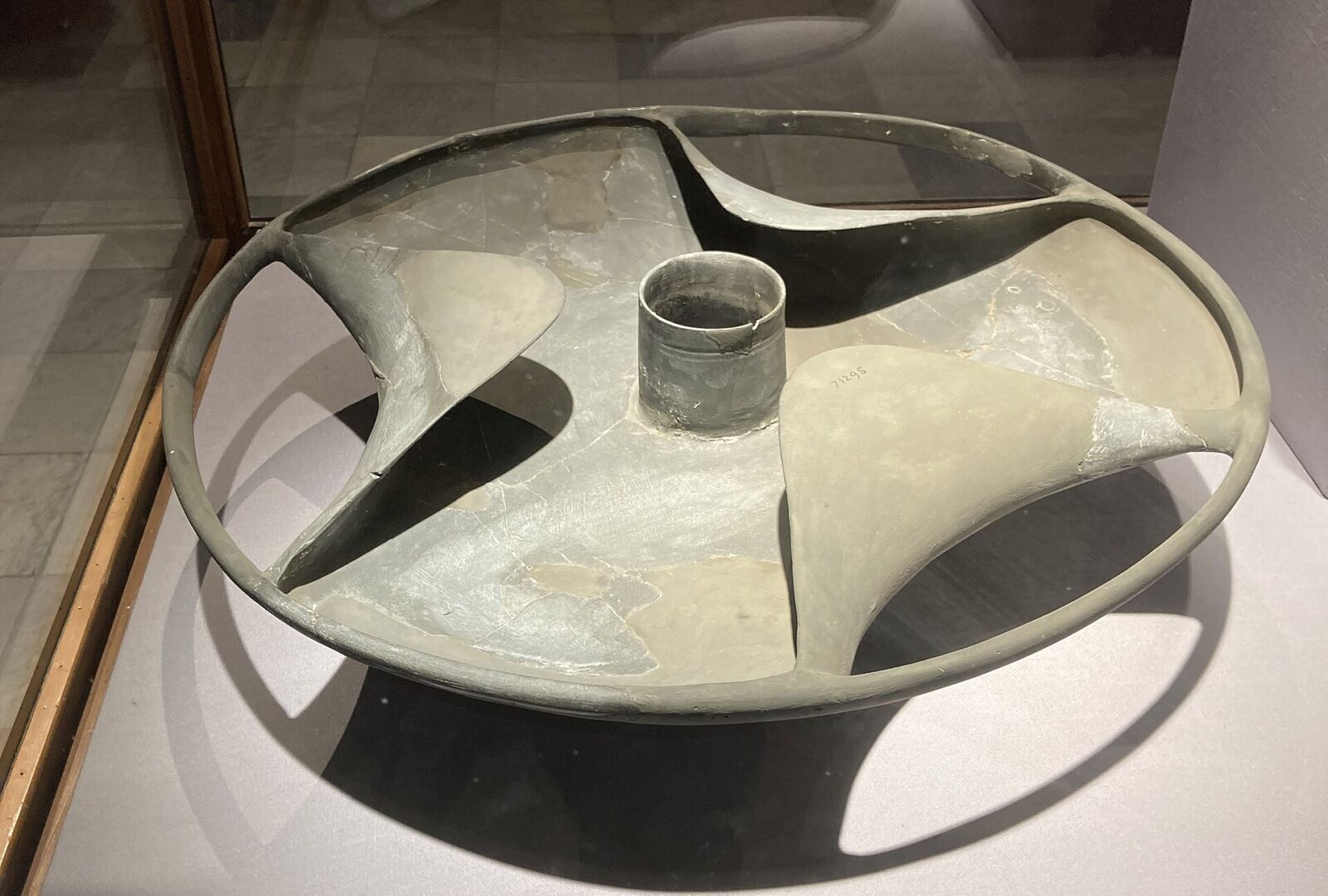
The Sabu Disk, a remarkable artifact dating back 5,000 years to ancient Egypt, has captured the attention of archaeologists and history enthusiasts alike. Its unusual design, which some liken to modern machine parts, raises intriguing questions about its true function. As researchers delve deeper into its mysteries, the disk serves as a fascinating window into the technological capabilities and cultural practices of early Egyptian civilization.
The Enigmatic Design of the Sabu Disk
Crafted from a single piece of stone, the Sabu Disk features a circular shape with a prominent central hole. Its polished surface and symmetrical edges give it an almost mechanical appearance, prompting speculation about its potential use. Some theories suggest that it may have been employed in ceremonial contexts, while others argue it could have served a practical purpose in daily life or industry.
Archaeological findings indicate that such disks were not unique to Egypt. Similar objects have been uncovered in Mesopotamia, hinting at a possible cross-cultural exchange or shared technological traditions in the ancient Middle East. These findings deepen the mystery surrounding the disk’s function and its place within the broader spectrum of ancient technologies.
Theories Surrounding Its Purpose
Despite numerous hypotheses, the exact use of the Sabu Disk remains speculative. One of the more popular theories is that it acted as a form of a grinding tool or a component in the processing of grains, given the significance of agriculture in ancient Egyptian society. Other scholars propose that it may have had astronomical significance, possibly used in ancient rituals linked to celestial events.
In addition to its potential practical uses, some researchers emphasize the symbolic implications of the Sabu Disk. Objects of apparent complexity may have held cultural or spiritual significance, serving as symbols of power or divine connection in a society heavily influenced by religion and mythology. This duality of function—both practical and symbolic—reflects the intricate nature of ancient Egyptian culture.
Continuing Research and Discoveries
As excavations and studies continue, new technology and methodologies in archaeological research promise to shed additional light on the Sabu Disk. Scientists are now employing 3D imaging and chemical analysis to better understand the material properties of the disk and its historical context. These advancements hold the potential to unveil further insights that could clarify its purpose and the craftsmanship techniques used to create it.
In conclusion, the Sabu Disk remains a captivating artifact that ignites curiosity and debate among researchers and history buffs. Its seemingly modern design juxtaposed with its ancient origins invites ongoing exploration into the lives and technologies of early civilizations. As we strive to piece together the puzzles of history, discoveries like the Sabu Disk continue to enrich our understanding of the past, reminding us of the enduring mysteries that shape our shared human story.