
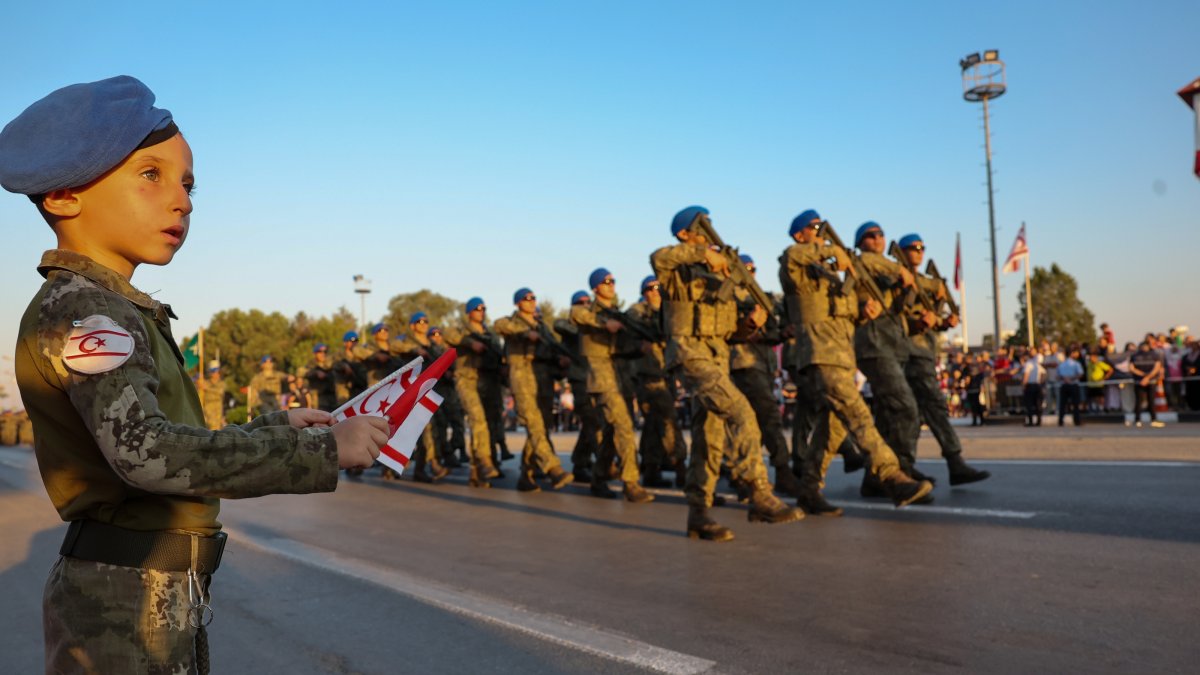
The ongoing situation in Cyprus is gaining renewed attention following a recent visit from U.N. Secretary-General Antonio Guterres. This official visit has reignited discussions around the long-standing Cyprus conflict, prompting reactions from various stakeholders, particularly Turkey, which is closely monitoring developments on the island.
Turkey’s Military Preparedness and Vigilance
Turkey’s Defense Minister Yaşar Güler has stated that Turkey is updating its military readiness in light of recent developments in Cyprus. This adjustment comes as Turkey watches closely the increasing cooperation among the United States, Israel, Greece, and the Greek Cypriot administration within the Eastern Mediterranean. Güler’s assurances come amidst growing security concerns regarding regional dynamics and their potential implications for Turkey’s interests. He emphasized that necessary military and political measures are continually being implemented to address possible threats, focusing on maintaining a delicate balance on the island while ensuring the security of both Turkey and the Turkish Republic of Northern Cyprus (TRNC).
The Historical Context of the Cyprus Issue
Cyprus has a complex history marked by division and conflict, largely stemming from ethnic tensions between Turkish and Greek Cypriots. In 1974, Turkey intervened in Cyprus under the pretext of a peace operation to protect Turkish Cypriots from escalating violence from Greek Cypriot groups. Today, Turkey stands as a guarantor state for the TRNC, alongside Greece and the United Kingdom. Güler highlighted that Turkish troops remain stationed on the island to prevent a reoccurrence of hostilities, indicating that Turkey’s military presence is a critical component of ensuring stability in the region.
Recently, Guterres expressed optimism regarding the possibility of a renewed dialogue involving all parties, including the guarantor nations. However, no immediate resolution seems forthcoming. The complex political landscape and the historical grievances make it challenging to reach a consensus.
Supporting Turkish Cypriots and National Interests
In addition to military readiness, Turkey is actively involved in supporting the TRNC in asserting its rights in the Eastern Mediterranean. This includes a commitment to safeguarding maritime boundaries and natural resources. Turkey has instituted a monitoring station on the island aimed at detecting any infringements on these boundaries. These actions signify a robust approach to protecting Turkish Cypriots’ national interests and resources significantly.
Erdoğan, the President of Turkey, reiterated this support during his remarks, emphasizing that any initiative that overlooks the sovereignty and rights of Turkish Cypriots is destined to fail. He described the historical 1974 operation as a pivotal moment that secured peace and stability for Turkish Cypriots. The Cyprus issue, he argues, transcends a mere power-sharing dispute, and involves acknowledging the Turkish Cypriots’ equal status on the international stage.
Future Prospects and Continued Cooperation
Erdoğan has expressed Turkey’s unwavering commitment to supporting the TRNC and ensuring that lessons from the past are not repeated. He announced new infrastructure initiatives aimed at boosting the TRNC’s economy and establishing it as a regional leader in tourism, education, and technology. Such projects aim to foster development across various sectors and create a stable environment in the Eastern Mediterranean.
Erdoğan’s statement on pursuing further infrastructure investments, including a subsea natural gas pipeline, reflects Turkey’s broader strategy to enhance economic cooperation and regional stability. The evolving geopolitical landscape demands vigilant oversight and proactive measures to promote peace and prosperity for all parties involved.
As discussions around Cyprus evolve, the focus on protecting Turkish Cypriots and maintaining regional balance is paramount. Turkey’s actions underscore its long-standing commitment to not only defending its national interests but also advocating for equality and recognition of Turkish Cypriots in the complex geopolitical framework of the Eastern Mediterranean.