
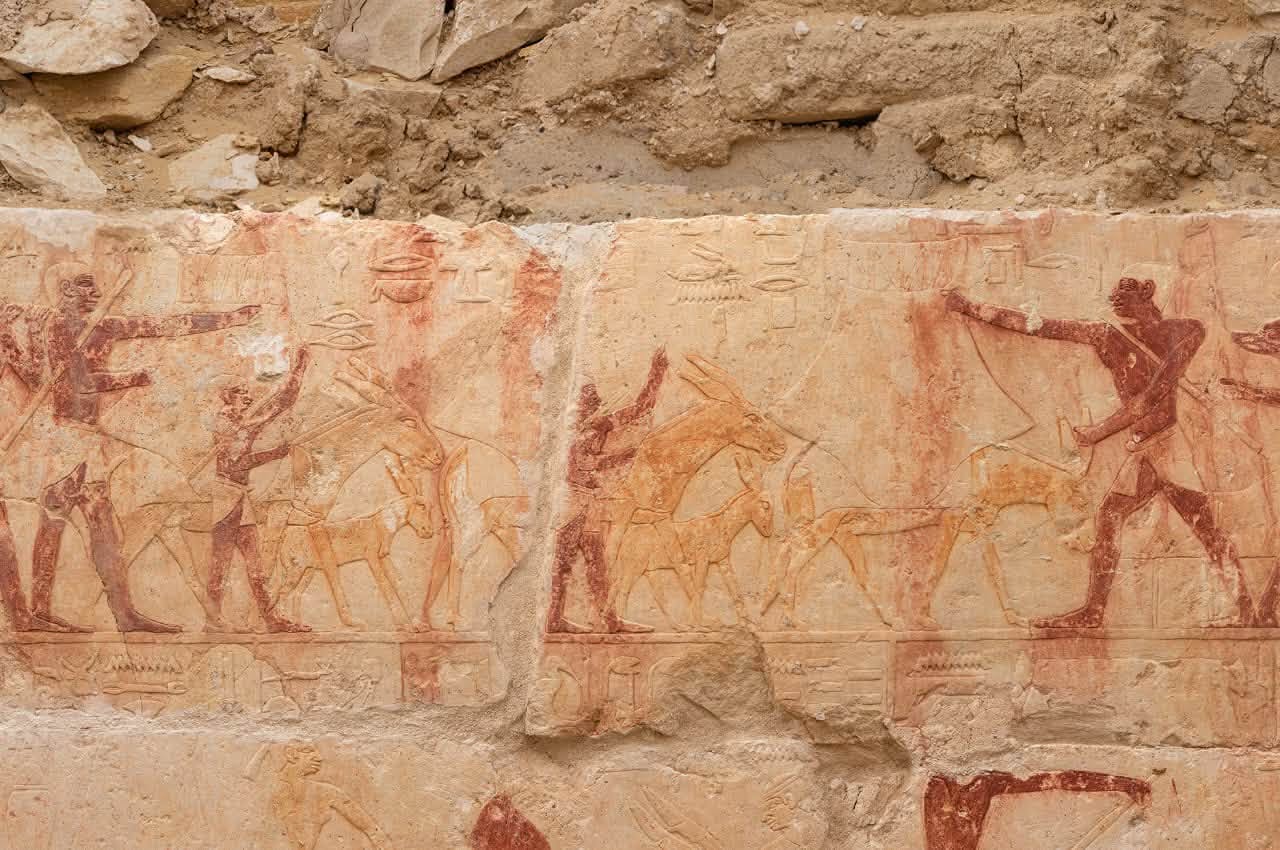
Archaeologists at Egypt’s Saqqara necropolis have recently made an exciting discovery: a tomb from the Fifth Dynasty, dating back to the reign of King Djedkare Isesi. This find is a significant addition to one of the country’s renowned burial sites. A collaborative effort between Spanish and Egyptian missions led to this discovery during their excavation season in 2026, specifically in an area called Mariette’s Cemetery, located north of Saqqara.
Structure and Significance of the Newly Discovered Tomb
The newly unearthed tomb is a medium-sized mastaba containing two funerary chapels. The primary chapel is attributed to Yunmin, who held several high-ranking positions, including judge, director of the court, and chief scribe responsible for overseeing petitions and complaints. The second chapel is dedicated to his father, Iti, a scribe known for managing agricultural lands and temple offerings. This dual structure highlights the importance of family lineage in ancient Egyptian culture and offers insights into the hierarchical nature of their society.
The excavation is part of a collaborative initiative between Spain’s Autonomous University of Barcelona and Egypt’s Supreme Council of Antiquities. These institutions have been actively conducting research and excavation efforts in the northern Saqqara region. Hisham El-Leithy, secretary-general of Egypt’s Supreme Council of Antiquities, remarked that this finding enriches our understanding of the Saqqara necropolis during the late Fifth Dynasty. It illuminates architectural styles, artistic practices, and the administrative roles of senior officials in that era.
Artistic Features and Discoveries
Josep Cervelló Autuori, head of the excavation mission, noted that the chapels of this tomb are designed to open onto its eastern wall, with Yunmin’s chapel positioned to the north. Inside, excavators discovered a finely carved facade adorned with funerary texts, an offering formula, and a formal representation of the tomb’s owner. The walls of these chapels exhibit intricate raised reliefs depicting agricultural activities and processions of offering bearers, many of which retain their vibrant original colors.
The southern chapel dedicated to Iti features a false door and painted scenes of offerings being presented, although much of this decorative work has unfortunately not survived the test of time. Despite this loss, the existing reliefs and inscriptions provide invaluable insights into the rituals and societal norms of ancient Egyptian life, shedding light on their religious beliefs and practices surrounding death and the afterlife.
Excavation and Restoration Efforts
The archaeological team has successfully completed a thorough excavation and scientific documentation of both chapels. They have also engaged in restoration and conservation work on the architectural elements and decorations that were uncovered, ensuring their preservation for future generations. This interdisciplinary approach emphasizes the importance of maintaining cultural heritage and deepening our understanding of ancient civilizations.
In summary, the discovery of this Fifth Dynasty tomb in Saqqara not only enhances our knowledge of ancient Egyptian history but also underscores the significance of continued archaeological endeavors in revealing the complexities of past societies. As excavators work to uncover more about the tomb’s occupants and their lives, this site stands to further enrich the historical narrative of ancient Egypt.