
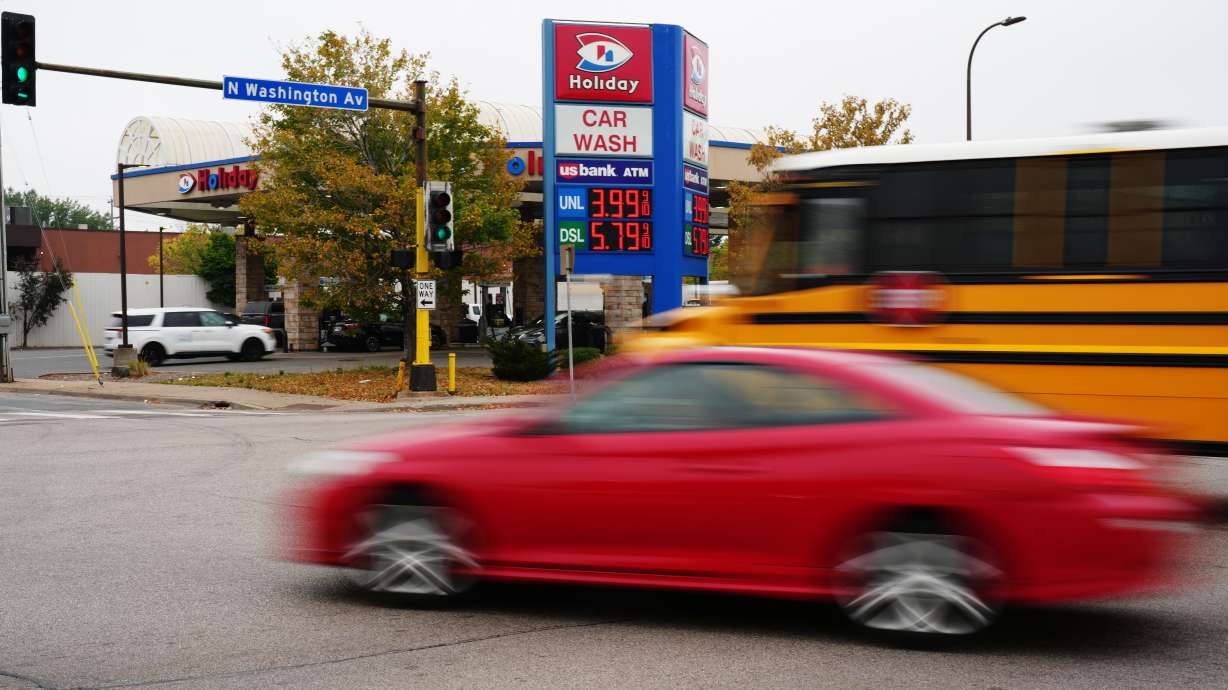
As the Labor Day weekend approaches, Americans are facing steep prices at the gas pump, making it more challenging to embark on that last summer getaway.
Rising Gas Prices Impacting Travel Plans
Currently, the average cost of regular gasoline is soaring at $4.14 per gallon, marking a nearly $1 increase compared to last year’s prices and significantly above the $3.82 average recorded during the Labor Day weekend in 2012, according to data from AAA Motor Club. Travelers like Nicole Collins from Philadelphia have reconsidered their plans, opting to stay closer to home due to the rising costs associated with filling their gas tanks. With a typical journey to South Carolina to visit friends in mind, Collins expressed her frustration about the burden of high gas prices, particularly as her family also has the additional expenses that come with having a baby.
Global Factors Influencing Fuel Prices
The escalating prices at the pump can be traced back to geopolitical tensions, particularly the conflict involving the U.S. and Israel’s actions towards Iran earlier this year. Since the attacks, crude oil transport through the vital Strait of Hormuz has dwindled, leading to a supply crunch, a situation exacerbated by Iran’s refusal to reopen the waterway. Tom Seng, an energy finance professor at Texas Christian University, pointed towards the Iran conflict as a major contributing factor. Meanwhile, U.S. Energy Secretary Chris Wright has hinted at the complexity of the current situation, stating that drivers may have to wait longer for any price relief, noting that current gas prices are already exceeding those from previous Labor Day celebrations.
Challenges in the Diesel Market
While the average price of regular gas remains lower than the all-time peak of $5.02 per gallon set back in June 2022, the diesel market paints a different picture. Diesel fuel has jumped to an average of $5.85 per gallon, setting a new record and creating ripple effects in the cost of goods. Since trucks and other freight systems primarily run on diesel, these increased expenses are inevitably passed on to consumers at grocery stores and delivery services. Collins, along with many others, is concerned about the ongoing surge and uncertainty regarding future prices.
Unpredictable Future for Gas Prices
Typically, gas prices tend to decrease as the summer driving season concludes and refineries shift their focus to producing cheaper winter blends. However, Seng warns that multiple factors beyond just geopolitical tensions could complicate this trend. For instance, refineries in the U.S. are currently operating at a staggering 98% capacity, facing challenges posed by extreme Texas heat and potential hurricane disruptions. Moreover, international factors like Ukrainian drone attacks on Russian refineries and declining outputs from Chinese refiners are constraining global gasoline supplies, as explained by Matthew Metzgar, an economics professor at UNC Charlotte.
In contrast, Secretary Wright has mentioned indications from futures markets that predict a decline in gasoline prices in the upcoming months. He notes that bulk gasoline for November is already projected to be about 35 cents cheaper than today’s prices, providing a glimmer of hope for consumers stretched thin by costs.
In such uncertain times, drivers may find relief through apps that help track prices at gas stations. This strategy could facilitate savings, especially on long road trips where gas prices can significantly vary by location, potentially saving motorists up to 15 cents per gallon.