
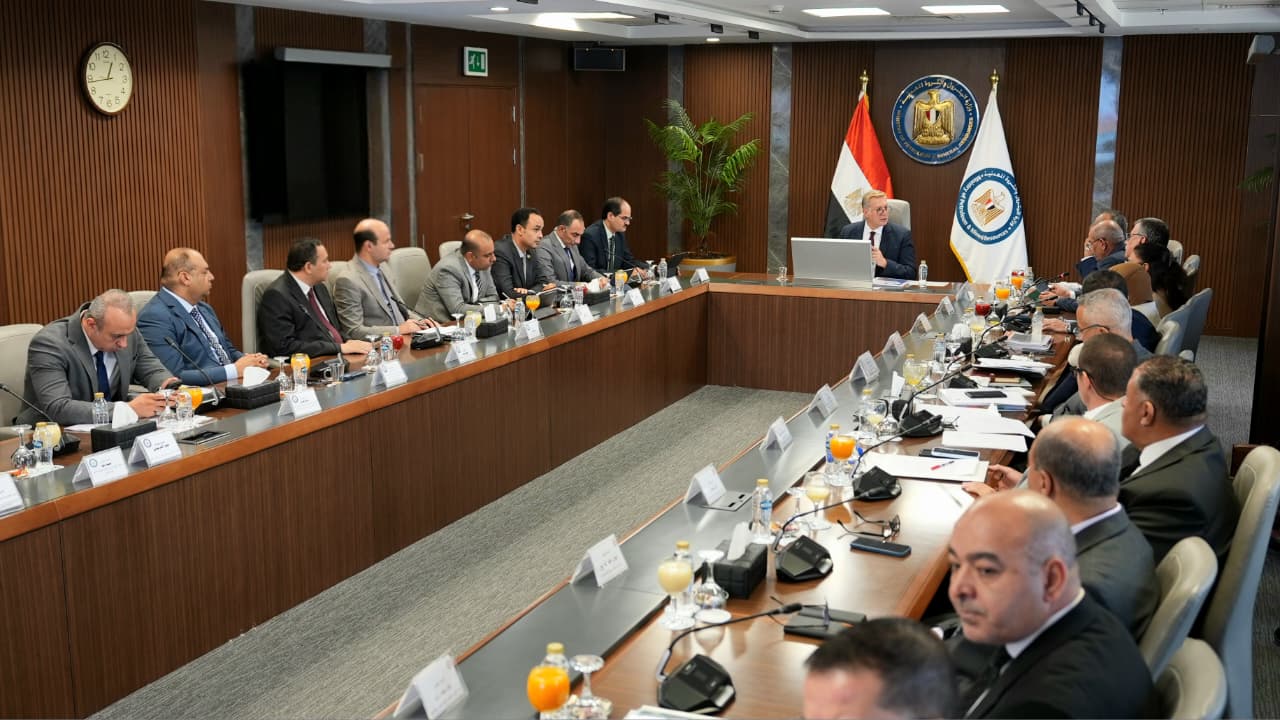
Karim Badawi, the Minister of Petroleum and Mineral Resources, emphasized the need for enhanced development of Egypt’s refineries, transportation systems, and storage capacities. His call to action aims to fortify the nation’s energy security and elevate Egypt’s status as a key trading hub for petroleum products in the region.
Advancements in the Petroleum Sector
During the recent general assemblies of the Assiut Oil Refining Company (ASORC) and the Petroleum Pipelines Company, Badawi shared these insights while addressing their financial performance for the fiscal year 2025/26. This significant meeting included participation from several high-ranking officials via video conference, including Minister of Electricity and Renewable Energy, Mahmoud Esmat, and Minister of Investment and Foreign Trade, Mohamed Farid.
Haggag Rabie Kilany, Chairman of the Petroleum Pipelines Company, reported that the firm’s extensive 6,300-kilometer pipeline network has successfully transported over 8.2 billion ton-kilometers within the past year. The company also operates 155 storage tanks, which collectively hold a capacity of 2.5 million cubic meters. As part of its ongoing initiatives, the company is in the midst of expanding its Sokhna station, aiming to boost its storage capacity from 300,000 to 460,000 cubic meters. Badawi has instructed the company to devise a comprehensive five-year strategic plan focusing on enhancing the transportation capacity for crude oil and petroleum products.
ASORC’s Role and Future Plans
Issa Mohamed Abdel-Aal, Chairman of ASORC, shared impressive performance metrics, detailing that the refinery processed 3.314 million tons of crude oil, generating petroleum product revenues of around $3 billion. Notably, high-value products contributed to approximately 57% of the total output, reflecting the refinery’s operational efficiency. Plans are underway to expand annual refining capacity from the current 4.5 million tons to 9.5 million tons, facilitated by a strategic third distillation unit project that aims to boost production capabilities.
These developments come on the heels of Badawi’s visit to ASORC in August, where he underscored the significance of Egypt’s existing infrastructural resources. He pointed to the potential they have for reinforcing the country’s role as a regional energy powerhouse. Moreover, Badawi advocated for better collaboration among various petroleum companies and their workforce, stressing that effective teamwork would support increased production levels.
A Vision for Egypt’s Energy Future
The Minister’s proactive approach is indicative of a broader vision aimed at strengthening not only Egypt’s energy independence but also its competitive edge in the global market. By prioritizing advancements in refining capabilities, storage solutions, and transportation networks, Egypt is positioning itself to meet both domestic energy needs and regional demand for petroleum products.
Through these developments, Egypt is set to not just enhance its own energy security, but also to play a pivotal role in the Middle East’s energy landscape. The focus on high-value refining and improved infrastructure lays a strong foundation for sustainable growth in the petroleum sector, securing technological advancements and economic benefits for the nation in the coming years.