
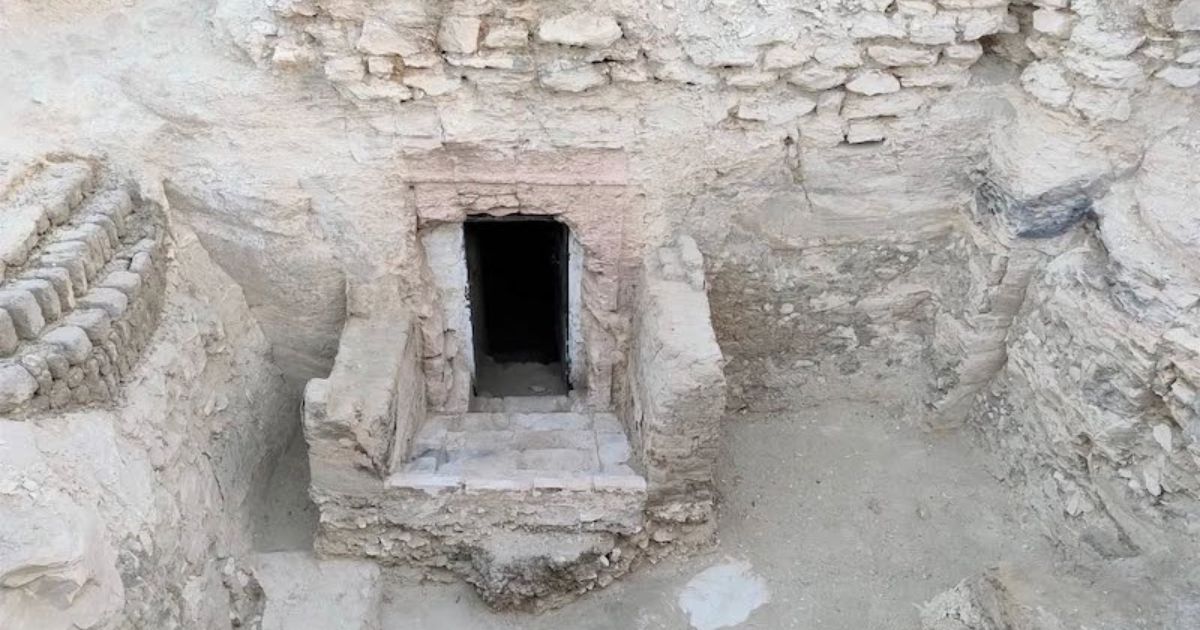
Archaeologists recently made a remarkable discovery on Luxor’s West Bank, unveiling an ancient tomb adorned with vibrant murals and inscriptions. This find, made by a Dutch team from Leiden University during their seventh season of exploration, provides significant insights into the burial customs of Egypt’s New Kingdom era.
Unveiling Paser’s Tomb
The newly discovered tomb belongs to an individual named Paser and dates back approximately 3,000 years, placing it within the Ramesside Period, an era that spanned the 19th and 20th Dynasties. The Theban Necropolis, where this tomb is located, was a pivotal religious and political heart of ancient Egypt, known for its elaborate tombs and monuments. What sets this tomb apart is its detailed inscriptions and vibrant wall paintings, which underscore the artistic and cultural expressions of the time.
Insights into Funerary Practices
Paser’s burial site reflects architectural features typically associated with private tombs of the New Kingdom. It comprises a spacious courtyard leading to an inverted T-shaped chapel and multiple subterranean burial chambers. Researchers can now study this tomb in conjunction with others in the vicinity, which will enable a better understanding of how burial practices evolved over time in Lower Sheikh Abd el-Qurna. Insights gained from this discovery contribute to the broader narrative about the funerary landscape of ancient Thebes.
Preservation and Symbolism in Art
The tomb is remarkably well-preserved, with several key features intact. Among these is a mudbrick platform that once hosted a funerary stela and a staircase bordered by sloping ramps—a significance in how visitors engaged with the space. Inside, the colorful murals depict Paser in acts of worship alongside Egyptian deities and his wife. These scenes are crucial to understanding the spiritual beliefs surrounding death and the afterlife in ancient Egypt, highlighting the connection between the deceased, their family, and the divine.
The artwork grants us insight into Paser’s household and social circles, especially through scenes featuring his wife. This familial connection opens pathways for researchers to explore dynamics that extended beyond the grave, illuminating the importance of familial ties in ancient Egyptian culture.
The Path Forward
While the murals are currently partially obscured by a thin layer of dirt, further excavation and conservation efforts are planned. The research team aims to document the tomb extensively while ensuring its preservation for future study. This discovery adds another layer to our understanding of the vast Theban Necropolis, where the life, status, beliefs, and intricate funeral rituals of ancient Egyptians continue to captivate the modern imagination.
In summary, the unearthing of Paser’s tomb is not merely an archaeological find; it represents a window into the rich tapestry of ancient Egyptian life. As more begins to be unearthed, scholars and enthusiasts alike will undoubtedly gain a deeper appreciation for the artistry, beliefs, and societal structures that shaped this ancient civilization. The ongoing research promises to revitalize interest in Egyptian history, shedding light on a world that has long since passed but still holds invaluable lessons for us today.