
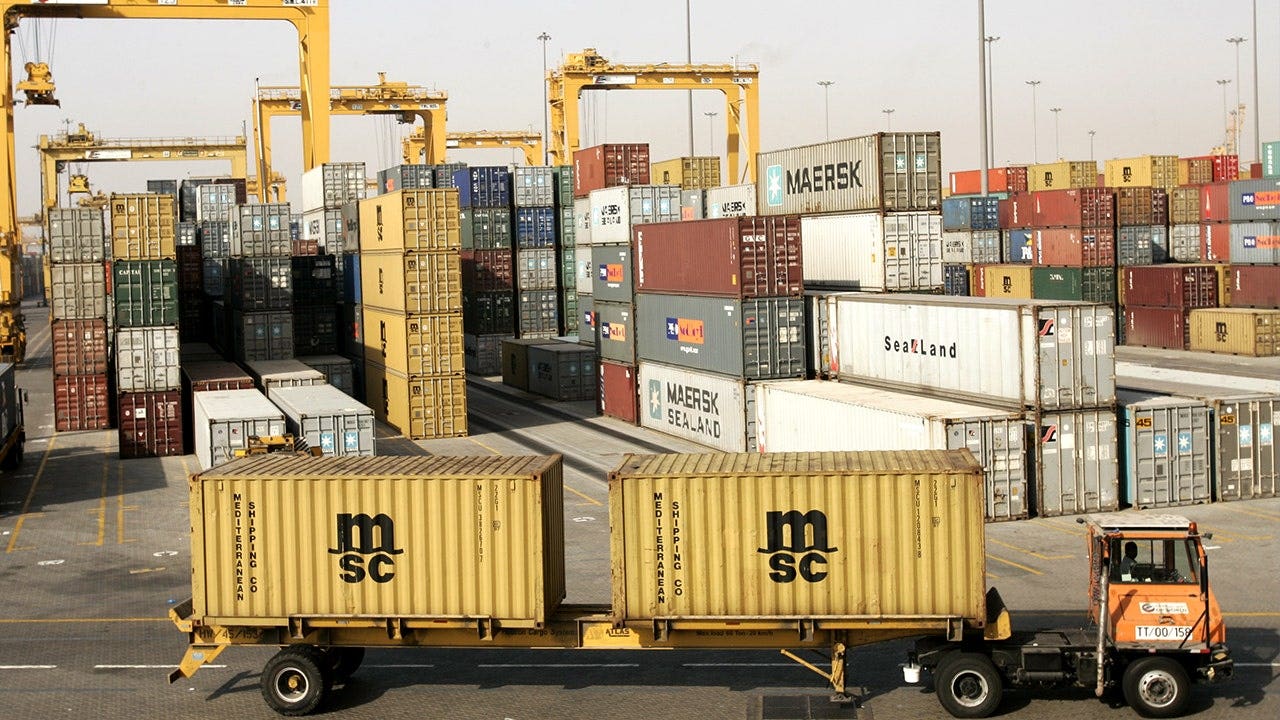
The United States has reinstated its naval blockade on Iranian ports, marking a significant change in strategy under President Donald Trump. This decision, highlighted by former Treasury official Miad Maleki, could have substantial economic and geopolitical repercussions. Trump underscored the necessity of Gulf nations taking a proactive role in maintaining security in the strategically crucial Strait of Hormuz.
Impact of UAE’s Trade Ban on Iran
In a related development, the United Arab Emirates (UAE) has halted all trade and financial activities with Iran. This embargo follows allegations that Iran launched ballistic missiles targeting shipping routes, a claim that further complicates the already tense relations between UAE and Iran. The UAE’s suspension of trade with Iran significantly disrupts one of the Islamic Republic’s critical economic channels. This action poses further isolation of Iran, which is already grappling with sanctions that have limited its economic reach.
Statistics show that in 2024, the UAE accounted for 31% of Iran’s imports, equating to roughly $21 billion, and served as the destination for 13% of Iranian exports, based on data from the World Trade Organization. Maleki pointed out that the UAE and China form the backbone of Iran’s economy, and if the UAE rigorously enforces its restrictions, it could close a vital commercial lifeline that the U.S. Navy has been unable to disrupt.
Dubai: A Gateway for Iranian Commerce
Dubai’s role has been vital for Iran, acting as a conduit for goods that often make their way into the Iranian market under the guise of UAE imports. Many items listed as “imports from the UAE” were originally sourced from other countries, positioning Dubai as a gateway for Iran’s engagement with the global economy. Maleki asserted that this situation could further complicate U.S. efforts to enforce sanctions, especially if the UAE maintains its ban.
The UAE’s Ministry of Foreign Affairs stated that the trade ban will endure until conditions improve, citing a regional escalation that jeopardizes peace and stability. Emirati officials indicated that two ballistic missiles, allegedly launched from Iran, fell into the sea while targeting maritime traffic. In contrast, Iran dismissed these accusations as unfounded, claiming they contradict the spirit of good neighborliness.
Escalating U.S.-Iran Diplomatic Tensions
As U.S.-Iran diplomacy falters, the UAE’s decision to freeze trade comes amidst renewed disputes related to the Strait of Hormuz. This strategic waterway is essential as it previously facilitated around one-fifth of the global oil and liquefied natural gas traffic before the outbreak of recent conflicts. With a recent 60-day negotiation deadline passing without any resolution, diplomatic strains continue to mount, affecting both regional stability and global oil markets.
Trump recently confirmed that there are no ongoing or planned talks with Iran, emphasizing that the naval blockade will stay in effect. He asserted that while the Strait of Hormuz remains operational, Iran insists it will not reopen until Washington lifts its oil sanctions and meets additional conditions. This standoff has amplified concerns over potential conflict in a region that is historically fraught with geopolitical tensions.
In summary, the renewed blockade, UAE’s trade embargo, and the strained diplomatic relations among the U.S., UAE, and Iran underscore a fractious geopolitical landscape. As the situation further unfolds, the consequences are likely to impact not just regional stability but also the broader global economy. The interactions between these nations will be pivotal in determining the future course of events in the Middle East.