
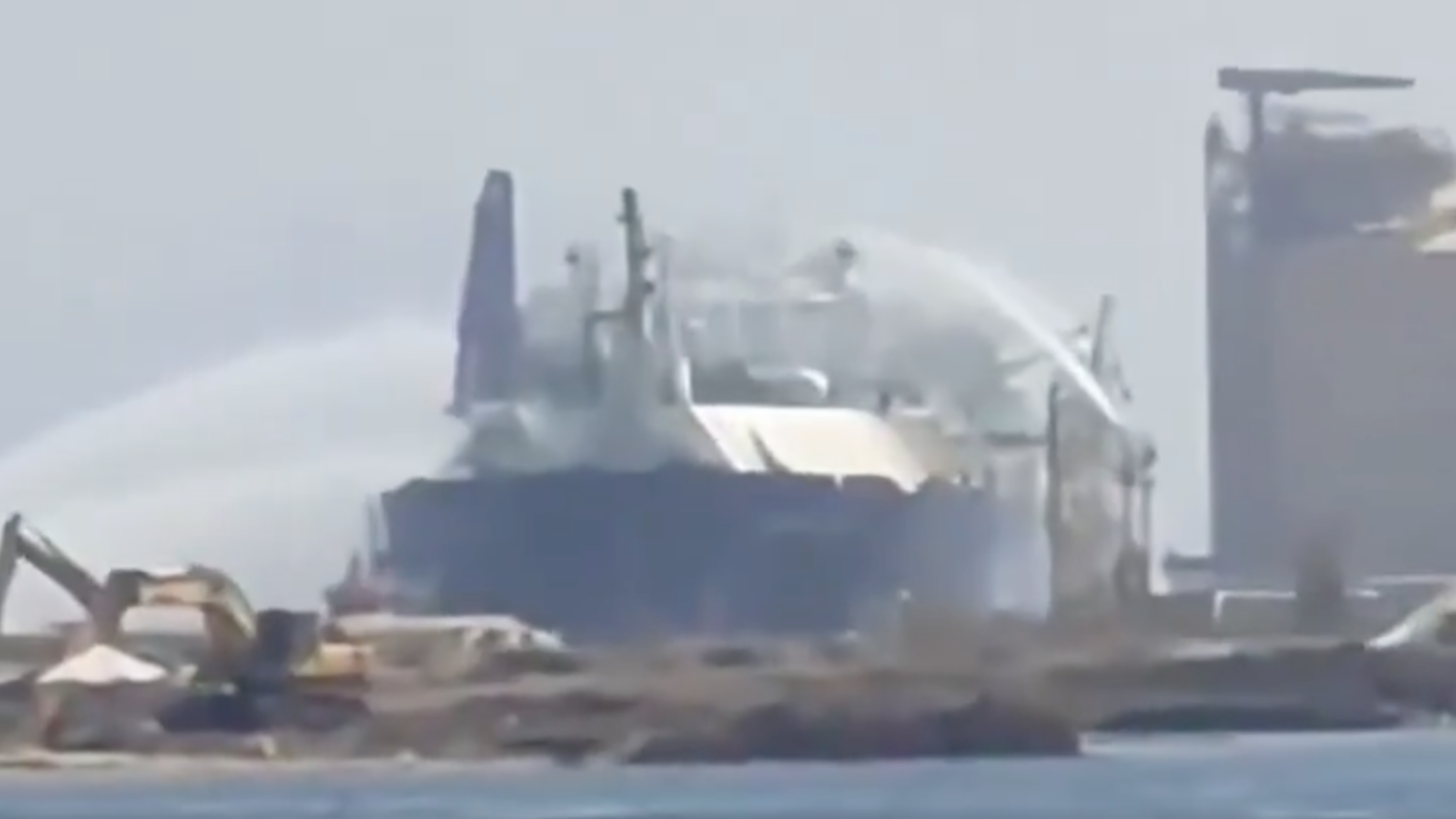
In a recent incident at Egypt’s Port of Damietta, Iranian officials hinted that the attack was a strategic message from Tehran, warning the world of its capability to significantly disrupt international maritime traffic and energy supplies amid rising regional tensions.
Details of the Attack
While Iran has yet to formally claim responsibility for the explosion at the port, two unnamed Iranian sources revealed to The New York Times that a drone facilitated the incident. The attack targeted a liquefied natural gas (LNG) facility, which ignited a fire on two storage vessels. Reports indicate that the drone struck the Energos Winter, a ship owned by a U.S. company, before flames spread to the GasLog Salem. Fortunately, both crews managed to evacuate in time, and firefighting teams successfully contained the blaze.
Background Context
The attack unfolded shortly after Iranian state media had publicly named Damietta as a potential target for retaliatory action against Ukrainian interests. This followed a notable Ukrainian strike on an Iranian vessel in the Caspian Sea. Iranian television aired a segment titled “Potential Targets of Iranian Revenge Against Ukraine,” which showcased a map indicating a range of possible targets throughout the Middle East, including the crucial Port of Damietta, known for its LNG terminal that significantly contributes to Europe’s energy supply.
Strategic Implications
The port’s LNG terminal boasts an impressive annual production capacity of 5.2 million tonnes, making it critical for European energy security. Additionally, Iranian media had issued warnings about potential strikes aimed at other infrastructure linked to oil and gas exports destined for Europe. This context raises questions about the long-term implications of such attacks, especially in light of ongoing geopolitical tensions between Iran and Ukraine.
Diplomatic Repercussions
The attack occurred despite recent diplomatic overtures between Iran and Ukraine. On Tuesday, foreign ministers from both nations engaged in discussions, following which Iranian Foreign Minister Abbas Araghchi expressed that Tehran does not intend to escalate the situation, although it continues to seek compensation from Ukraine. This diplomatic backdrop adds complexity to the already tenuous relationship between the two countries, highlighting the challenges in navigating regional instability.
In summary, the recent strike on Egypt’s Port of Damietta serves as a critical reminder of the volatile geopolitical landscape in the Middle East. As tensions rise, the international community faces the pressing concern of securing maritime routes and energy supplies, underscoring the need for robust diplomatic strategies to mitigate further escalations.