
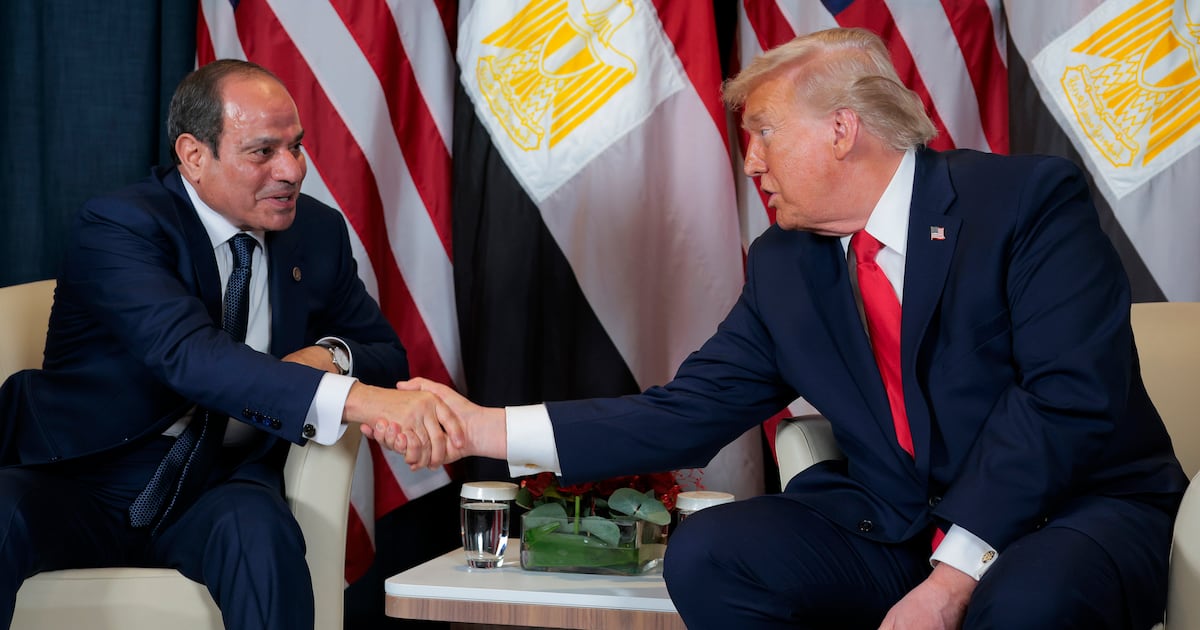
Egypt’s President Abdel Fattah El Sisi is set to strengthen his nation’s position as a critical partner for the United States during his upcoming meeting with President Donald Trump at the G7 summit in France. This dialogue is seen as crucial for both countries as they navigate complex regional tensions.
Historical Context of U.S.-Egypt Relations
Egypt has been a steadfast ally of the U.S. since the 1970s, a time when it shifted from a Soviet alliance towards Western alignment, leaving behind its socialist roots to adopt free-market principles. The landmark event of signing a U.S.-brokered peace treaty with Israel in 1979 marked the end of decades of conflict, effectively paving the way for substantial American financial assistance to Egypt, which has included $1.3 billion in military aid annually. This relationship has had long-standing implications for the geopolitical landscape of the Middle East.
Seeking New Forms of Assistance
In light of recent conflicts, notably concerning Gaza and Iran, Egypt is looking to translate its role as a mediator into fresh forms of U.S. support. Cairo has recently acknowledged its efforts to mediate between Iran and the U.S., voicing its commitment to regional stability. As Egypt gradually steps into a more influential role, it hopes that these diplomatic efforts will lead to a revitalization of American support on various fronts, particularly in the Middle East and Africa.
Sources close to the Egyptian government indicate that Cairo desires increased U.S. engagement in resolving ongoing disputes. Chief among them is the contentious issue surrounding the Nile dam that Ethiopia is constructing. Egyptian officials are concerned that this dam could significantly diminish the nation’s water supply, jeopardizing its agricultural sector. A favorable U.S. posture would potentially pressure Ethiopia into more favorable negotiations.
Shifting Focus to Gaza
Closer to home, Egypt is also urging President Trump to redirect attention back to the Gaza conflict. The Trump administration had previously laid out a 20-point peace initiative to alleviate tensions between Israel and Hamas, but the recent focus on Iran has sidelined these efforts. Egypt is keen to see renewed international focus on Gaza, emphasizing the dire humanitarian situation faced by Palestinians and reaffirming support for the peace plan’s second phase.
Cairo’s investment in a stable Gaza is not just a humanitarian concern; it’s tied to national security. With fears that Israeli Prime Minister Benjamin Netanyahu’s government might seek to forcibly relocate Palestinian residents into Sinai—turning Egypt into a direct player in the Israeli-Palestinian conflict—Egypt faces the prospect of an influx of refugees at a time when it is already hosting millions.
Strategic Alliances and Regional Power
Furthermore, Egypt is advocating for increased autonomy in exporting arms to African nations, particularly as it seeks to strengthen alliances in the Horn of Africa. This move is viewed as part of Egypt’s broader strategy to isolate Ethiopia regarding the Nile dam dispute, empowering its regional partners in the process.
As President El Sisi prepares for the G7 summit, this meeting represents a vital opportunity for Egypt to highlight its potential as a strategic ally to the United States. With a significant military presence and a diplomatic history that enables dialogue with various factions, Egypt is poised to leverage its influence and push for advancements in many crucial areas. As noted by an advisor to the French president, Egypt’s role at the summit underscores its credibility and importance in the regional arena, asserting itself as a key player in the ongoing quest for peace and stability.