
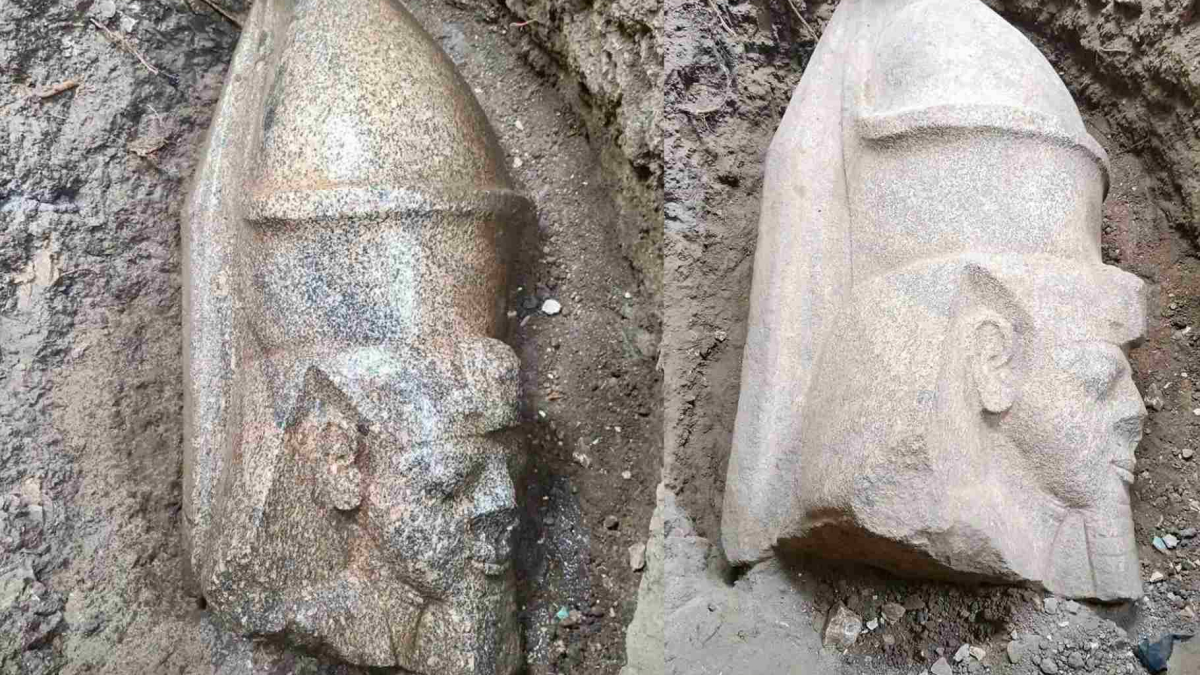
An Egyptian farmer made a startling discovery while working in his field—he uncovered a carved stone block that led archaeologists to the remains of a large statue of Ramses II, one of ancient Egypt’s most renowned rulers. This fascinating find not only highlights the agricultural landscape but also reveals the rich history lying beneath modern Egypt.
The Discovery in Gharbia Province
This remarkable event took place in Behbeit El Hagar, a village located in Egypt’s Gharbia province. While tilling the land, the farmer uncovered a stone block, which prompted him to inform local antiquities officials. This led to an excavation that unveiled the remains of a monumental royal statue attributed to Ramses II, often linked to the biblical figure of Moses.
Archaeologists from Egypt’s Supreme Council of Antiquities joined the excavation and discovered a head of a statue measuring over five feet tall. Based on the proportions of the fragment, experts estimate the complete statue would have stood more than 27 feet high, including its base. The scale of this discovery illustrates the grandeur of royal statues in ancient Egypt, further illuminating the civilization’s intricate past beneath the Nile Delta.
Significance of Ramses II
The excavated remains are likely associated with Ramses II, also known as Ramesses the Great, a figure renowned for his extensive building projects and 66-year reign during Egypt’s New Kingdom. This reign was marked by significant military and diplomatic achievements. The colossal statue embodies the artistic talent and the monumental scale that characterized the time, offering insights into how pharaohs conveyed their power through stone.
One of the most striking aspects of the discovery is the face of Ramses II, adorned with a double crown symbolizing his authority over both Upper and Lower Egypt. Furthermore, a smaller royal statue, standing just under eight feet tall, was also found, though its legs and base were missing. This second statue shows a face that shares resemblance with the larger one, suggesting both may represent the same pharaoh.
Historical Context and Connections
Archaeologists unearthed additional materials that might help contextualize this site. A block of pink granite, about four feet tall, displayed hieroglyphic inscriptions linking the statues to titles such as “Nesu Beti,” meaning “King of Upper and Lower Egypt,” and “Sa Ra,” or “Son of Ra.” These findings enrich our understanding of how monumental art served to establish a pharaoh’s legacy and influence, while shedding light on the historical connections of the site.
Ramses II ruled Egypt from approximately 1279 to 1213 B.C. and is recognized for commissioning some of the most iconic monuments, including the temples at Abu Simbel. His colossal statues were not merely ornamental; they reinforced his divine authority and connected his rule to ancient religious practices. The newfound statue’s extraordinary height places it among the greatest expressions of royal presence in ancient history.
Ramses II and the Exodus Narrative
The recent finding reignites the debate surrounding Ramses II’s potential role as the pharaoh mentioned in the biblical Book of Exodus. The narrative describes a ruler who enslaves the Israelites and faces divine retribution before their escape. While Ramses II’s connections to the city of Pi-Ramesses and his prominence make him a popular candidate, the identity of the biblical pharaoh remains a contentious topic among historians and scholars.
Despite the excitement surrounding the discovery, current archaeological evidence does not definitively identify Ramses II as the pharaoh of the Exodus story. However, the statue adds material weight to the historical memory of a ruler deeply entwined with such narratives. The recent uncovering of this statue invites further exploration of the intertwining of archaeology, history, and biblical texts, underscoring the ongoing conversation about ancient civilizations and their legacies.