
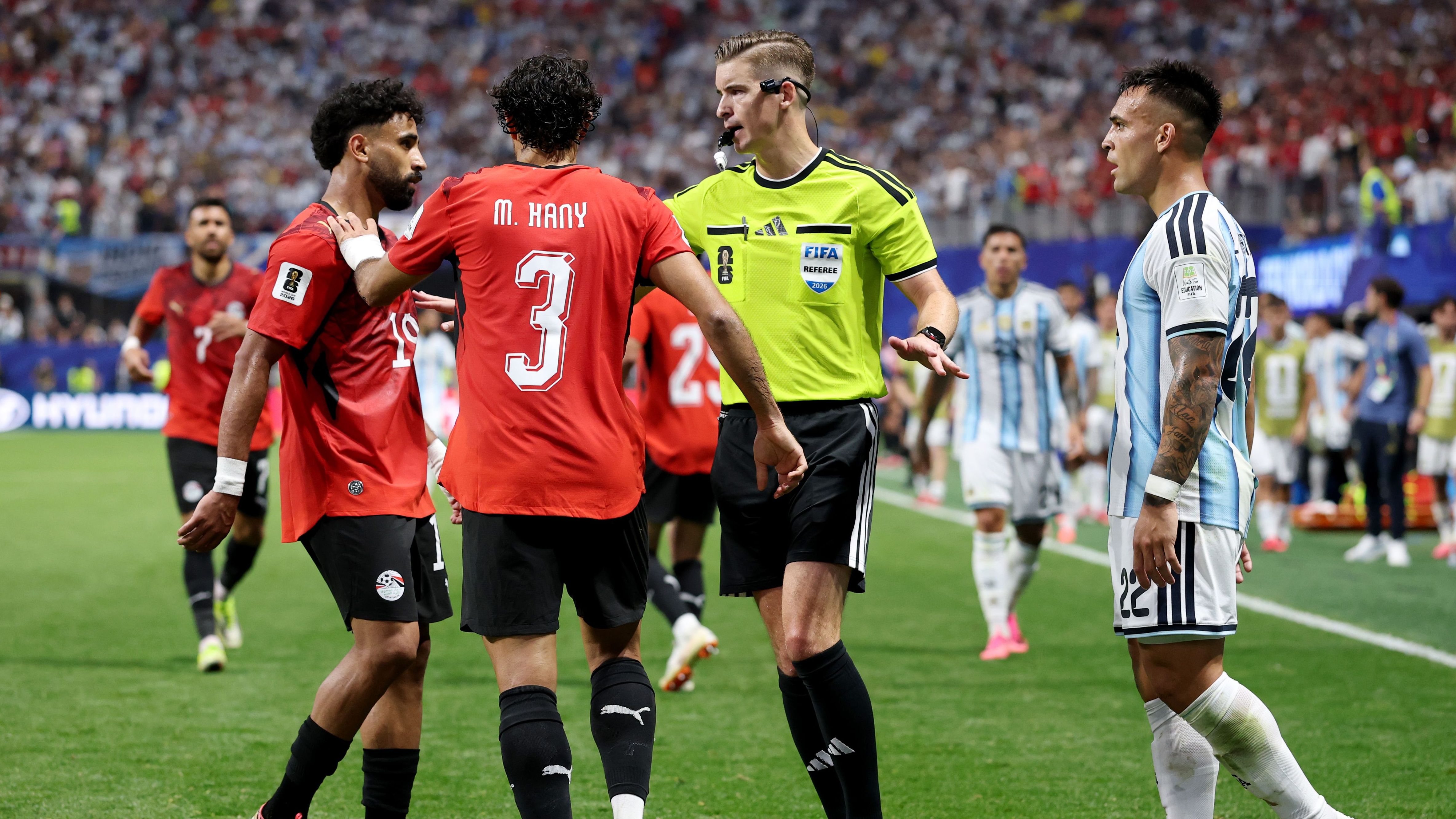
In a recent match that had everyone talking, Egyptian manager Hossam Hassan expressed his concerns regarding the officiating. He believed that the referees showed a bias toward the defending champions. Hassan raised eyebrows when he highlighted a controversial moment involving a possible foul against star player Mohamed Salah in the penalty area, which was overlooked right before Argentina scored the winning goal.
Questionable Officiating Raises Eyebrows
The controversy didn’t stop there. Hossam Hassan pointed out that many fans and analysts felt the referees may have been influenced by Argentina’s status as the reigning champions. In high-stakes matches like this, the perception of bias can weigh heavily on the decision-making process. The moment in question involved Mohamed Salah, who is not just a key player for Egypt, but also a global football icon. His absence from the penalty spot could have drastically changed the game’s outcome.
Referee’s Defense of Non-Call
In response to Hassan’s claims, referee Pierluigi Collina defended the decision to not award a penalty for the alleged foul on Salah. Collina explained that both the referee on the field and the VAR team assessed the situation as regular football contact between Salah and Argentina’s Julian Alvarez. This defense highlights the inherent subjectivity that can come into play during matches, particularly when it involves split-second decisions.
Subjectivity in Decision-Making
Hassan acknowledged that football is a game filled with gray areas, where not every decision will be universally agreed upon. He conceded, “There will always be an element of subjectivity in some decisions.” His remarks reflect a broader sentiment in football regarding the balance between fair play and the unpredictable dynamics of the game. Despite the frustrations surrounding officiating, Hassan noted that he appreciated how consistent the principles of officiating were applied throughout the tournament.
Implications for Future Matches
As the tournament progresses, the implications of officiating decisions like this one will continue to reverberate throughout the football community. Fans and teams alike are keenly aware of the impact that refereeing can have on the outcomes of matches. The incident serves as a reminder of the pressure officials are under and how their decisions can sway public opinion, especially in high-stakes matches.
In the fast-paced world of football, where one moment can decide a game’s fate, the scrutiny of referees will persist. As teams prepare for future encounters, the discussions surrounding the subjectivity of officiating will remain relevant. Coaches, players, and fans will undoubtedly keep their eyes on how these principles are applied in subsequent matches, hoping for greater clarity and fairness on the pitch.