
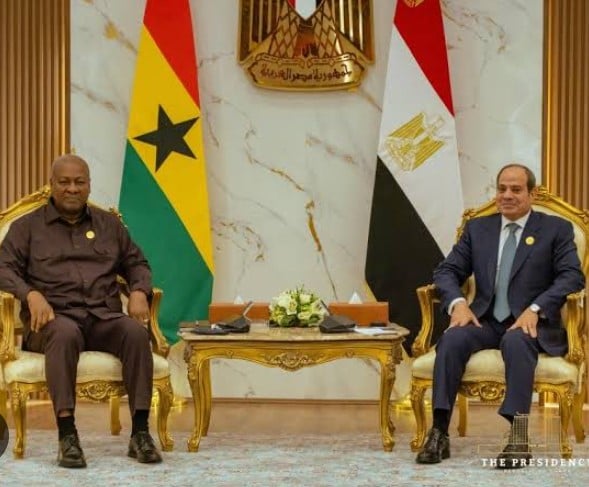
President John Dramani Mahama of Ghana and Egyptian President Abdel Fattah el-Sisi have announced plans to enhance collaboration in critical areas like defense, pharmaceuticals, trade, and infrastructure. This commitment was revealed in a statement from Ghana’s Presidency dated October 5. Their discussions took place during the 8th African Union Mid-Year Coordination Summit and the inaugural Alamein Africa Forum in Egypt.
Revisiting Historical Ties
The leaders opened their discussions by reflecting on the pan-African legacies of Ghana’s inaugural President, Dr. Kwame Nkrumah, and Egypt’s former President, Gamal Abdel Nasser. Mahama expressed gratitude to Egypt for its support of Ghana’s reparation resolutions at the United Nations and urged continued backing throughout the diplomatic process. While acknowledging shared historical narratives, the focus now shifts to the tangible cooperation that will emerge from these discussions.
Key Areas of Focus
In terms of defense and security, Mahama emphasized Ghana’s desire for increased collaboration with Egypt in intelligence sharing, capacity building, and counter-terrorism initiatives. He noted that Egypt’s defense industry serves as a benchmark for Ghana to emulate. The conversations also encompassed support for the Sahel–Gulf of Guinea Accord, demonstrating a mutual interest in regional stability.
Pharmaceutical cooperation aims to simplify the process for registering Egyptian medicines in Ghana, with the goal of enhancing healthcare access and stimulating investment in the sector. Improvements in this area could benefit ordinary citizens by broadening the range of available medications and fostering competition that may lead to lower prices. However, it will pose a regulatory challenge for Ghana’s Food and Drugs Authority, which must ensure that accelerated registration does not compromise quality.
Infrastructure efforts are also on the agenda, with Mahama expressing a keen interest in learning from Egypt’s experience in executing large-scale projects. Notably, Egypt’s New Administrative Capital serves as a case study as Ghana contemplates its own plans for a new capital. Discussions also included social housing, underscoring the ambition to improve living conditions in Ghana.
Implications and Future Considerations
The emphasis on security cannot be overstated. The instability in the Sahel region has the potential to threaten Ghana’s northern border and coastal areas. Consequently, strengthening partnerships with nations like Egypt, which boasts a substantial military, advanced defense industry, and extensive experience in counter-terrorism, is vital. Both nations could reap the benefits of intelligence sharing and training.
However, while the discussions reflect a commitment to deepen these ties, it is essential to approach this partnership with a level of realism. Reports indicated intentions to explore cooperation, yet there were no concrete agreements or timelines established. The real challenge will lie in operationalizing these conversations, including defining specific defense agreements and evaluating the implications for pharmaceutical registrations and infrastructure investments.
Additionally, Ghana’s intention to apply for BRICS membership introduces another layer of complexity to these discussions. With Egypt already a member, this relationship could enhance diplomatic engagement and economic opportunities for both nations.
In summary, the potential collaboration between Ghana and Egypt in defense, pharmaceuticals, and infrastructure presents both opportunities and challenges. As the nations move from dialogue to action, it will be imperative to clarify objectives, expenses, and the impact on existing partnerships, particularly in light of Ghana’s BRICS ambitions.