
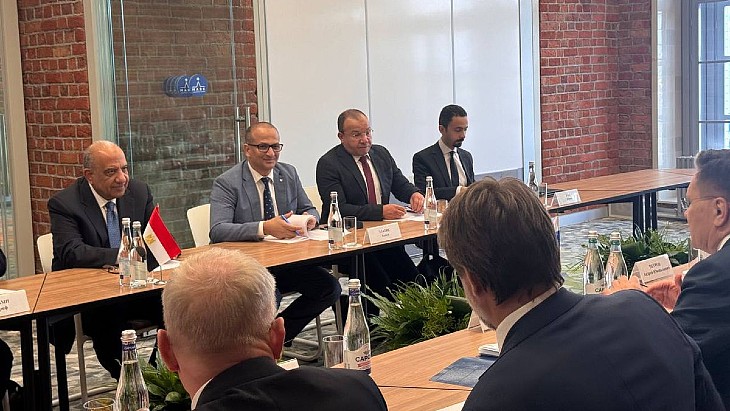
Egypt’s Ministry of Energy and Russia’s Rosatom are making significant strides in the construction of the El Dabaa Nuclear Power Plant. Recent discussions have wrapped around reviewing the project’s progress as well as exploring further options for reactor expansions.
Key Discussions Between Egypt and Rosatom
A meeting took place in Nizhny Novgorod, Russia, between Alexei Likhachev, the Director General of Rosatom, and Mahmoud Esmat, Egypt’s Minister of Electricity and Renewable Energy. This gathering aimed to evaluate the ongoing construction of the four-unit power plant, where they assessed various components and completion rates. The dialogue also emphasized the necessity of maintaining robust collaboration between the Egyptian and Russian teams to ensure timely project execution that adheres to the highest safety and quality standards.
According to Egypt’s Nuclear Power Plants Authority, the meeting highlighted the importance of the ongoing workflows and targeted timelines. Both parties reiterated the need for continuous coordination to ensure that the El Dabaa project adheres to its ambitious roadmap.
Exploration of Small Reactor Technologies
In addition to reviewing the El Dabaa project, Minister Esmat met with representatives of a Rosatom-affiliated company that specializes in small nuclear reactor technologies. They discussed the latest advancements in this field and explored potential partnerships to leverage Russian expertise. Esmat underscored Egypt’s keen interest in adopting small nuclear reactor technologies, as part of a broader strategy to diversify energy sources and maximize peaceful nuclear applications.
He emphasized the importance of conducting technical and economic studies to assess how these technologies might fit into Egypt’s energy landscape, while also prioritizing nuclear safety and security protocols.
Future Expansion Plans for El Dabaa
During the discussions, Likhachev revealed that talks had commenced regarding a potential second phase for the El Dabaa project, which may include the addition of two more units. The feasibility of financial models for these fifth and sixth units was also addressed. A consensus on these expansions would need to be communicated to the leadership in both nations for final approval.
In alignment with the project timeline, Likhachev noted that the delivery of nuclear fuel for the first operational unit is slated for 2027, with plans for it to connect to the national grid by 2028.
Cooperative Initiatives Beyond Nuclear Power
Beyond the expansion of El Dabaa and small reactor options, both nations discussed other cooperative ventures, such as constructing a water desalination plant and developing nuclear medicine and additive manufacturing facilities. These initiatives reflect a commitment not just to energy production but also to advancing technological and industrial capabilities.
Significance of the El Dabaa Project
The El Dabaa Nuclear Power Plant is poised to be Egypt’s first nuclear facility and the first in Africa in nearly 40 years. The project, located approximately 320 kilometers northwest of Cairo, will feature four VVER-1200 units. Rosatom’s engagement goes beyond just construction; it encompasses the provision of nuclear fuel for the entire operational duration, alongside training for Egyptian staff.
With first concrete poured for the initial unit in July 2022 and ongoing construction activities, Egypt aims for nuclear energy to contribute 9% to its electricity mix by 2030, thereby reducing reliance on fossil fuels. The success of this project could mark a pivotal moment in Egypt’s energy strategy and economic landscape.