
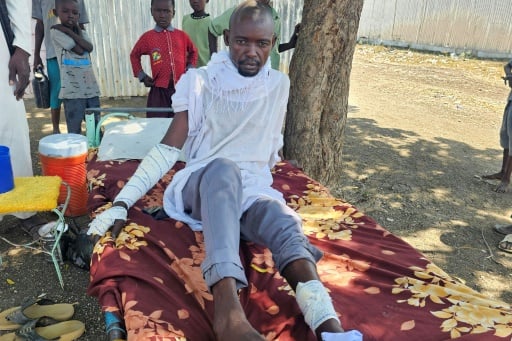
In the aftermath of a tragic airstrike that claimed the lives of numerous gold miners on the Sudanese-Egyptian border, survivors are left grappling with physical injuries and deep psychological scars. Many of them are determined to return to the mines, as gold mining has become one of the few means of survival amid the devastating conflict that has engulfed Sudan.
Tragedy Strikes the Gold Mining Community
Sharaf al-Din Ali, a 26-year-old miner, shared his harrowing experience from a makeshift shelter in Sudan while awaiting transport back to Jabal al-Uqaydat. “I need to go get my gold,” he explained, having just buried his friend alongside several others in a shallow grave. Despite the loss and trauma, the harsh reality of his circumstances compels him to continue mining: “Then I’m not coming back to al-Uqaydat. But I can’t leave gold mining either.” Since the outbreak of conflict between Sudan’s army and the paramilitary Rapid Support Forces in April 2023, many young Sudanese have flocked to the perilous gold trade, which indirectly fuels both sides of the ongoing war.
Aerial Assault and its Aftermath
On October 10, as thousands converged in the rugged mountains, Ali Mohamed Hamdan, 29, endured an airstrike that transformed a moment of camaraderie into chaos. “It made three rounds, on the fourth it fired a missile,” he recounted, recovering from minor injuries at home. A Sudanese rights group estimates at least 72 miners lost their lives in the airstrike attributed to the Egyptian military, which claimed to target illegal miners within its borders. Estimates suggest this figure is conservative, with many miners, including children, still unaccounted for.
Survivors like Omar Mohieddin noted that the plane’s frequent appearances had created a false sense of security. “People were used to them,” he explained, recalling the immediate panic that ensued when the aircraft returned to drop its payload. The scene of devastation left behind prompted a week of mourning in their village, with exhausted families grappling with the trauma of loss amidst communal grief.
Survival in a War-Torn Economy
The gold mining activity in Sudan, particularly in the mineral-rich regions bordering Egypt, is not merely an economic venture; it has become a lifeline for many. As Tarek Ahmed Issa, a teenager, described, after the attack, bodies littered the ground, and recovery efforts were fraught with difficulty. Many of the injured were left to die along the roadside due to a lack of resources for transport and medical care. “The scenes were impossible to describe,” recollected a local doctor.
The war has created a stark choice for many young Sudanese: join armed groups or continue mining in hazardous conditions. Informal gold mining operations—often conducted without safety measures—are the norm. Those who endure these dangers face long-term health risks from exposure to toxic substances such as mercury and cyanide. Despite the grim circumstances, miners have little choice but to pursue the precarious trade. “There are hardly any trucks,” Issa said, expressing his desperation to sell his hard-earned gold. “The war left us no farming and no livestock. I have to keep working so my family can survive.”
As the multi-billion dollar gold industry thrives on the backs of those digging in dangerous conditions, miners receive only a fraction of global market prices. “By the time the ore is sold, everyone takes a cut,” lamented Omar Abdelrazig Abdalla, who tragically lost both a son and a nephew in the attack. This grim cycle of exploitation continues as those who survive the immediate threats are left fighting for their place in a devastated economy.