
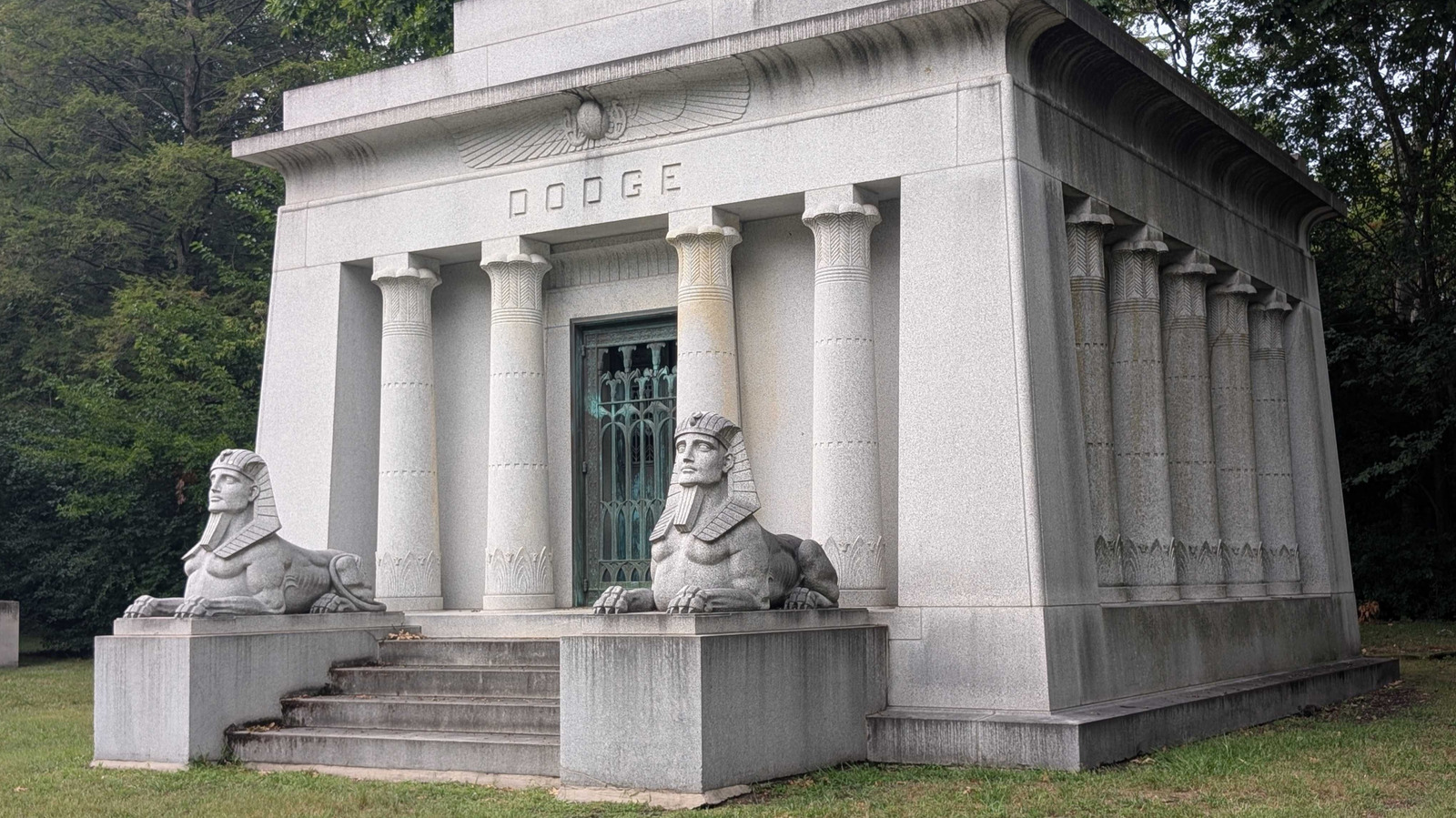
The Dodge brothers, John and Horace, are not only well-known for their automotive legacy but also for their uniquely designed final resting place in Detroit. As part of an ongoing exploration of significant figures’ final resting places during this spooky season, we delve into the ornate mausoleum that draws inspiration from ancient Egypt and reflects the brothers’ remarkable lives.
The Dodge Brothers: Pioneers of the Automotive Industry
In their lifetime, John and Horace Dodge were emblematic of the spirit of entrepreneurship that defined early 20th-century America. Starting from a modest machine shop, the Dodge brothers’ savvy business moves included investing in Henry Ford’s nascent company and later establishing their own automobile brand. Their tenacity was evident not only in their business acumen but also in their vibrant personalities, marked by numerous daring exploits and a refusal to conform to societal norms. By 1914, their company had skyrocketed to become one of the largest automakers in the United States.
Tragedy struck in 1920 when both brothers fell ill after attending the 1919 New York Auto Show. Complications from a severe respiratory illness, possibly linked to the Spanish Flu outbreak or contaminated alcohol, claimed John’s life. Horace succumbed to his grief and health issues the following year. The legacy of their brand, however, has persisted long after their deaths, cementing their place in automotive history.
An Egyptian-Inspired Mausoleum
Tucked away in the esteemed Woodlawn Cemetery, the mausoleum of the Dodge brothers stands out with its Egyptian-inspired design, featuring two impressive granite sphinxes at its entrance. These mythical guardians embody the grandeur associated with ancient Egyptian royalty, suggesting that the brothers wished their legacy to evoke an enduring influence. The mausoleum is adorned with papyrus plants — symbols of regeneration — and palm fronds, echoing the decorative styles of ancient temples and conveying messages of victory and immortality.
Moreover, the thoughtful arrangement of symbols also serves to protect against evil, signaling the brothers’ aspirations for a lasting legacy. Above the intricately designed gates, a sun disc flanked by outstretched falcon wings resonates with the ancient Egyptian god Horus, intended to offer divine protection. Such profound symbolism reinforces the message that the Dodge brothers considered themselves architects of their fate, destined for greatness in life and beyond.
The Cultural Fascination with Egypt
The decision to incorporate Egyptian motifs into their mausoleum aligns with a broader cultural fascination that erupted following Napoleon’s campaigns in Egypt. This phenomenon, often referred to as Egyptomania, captivated Victorian and early 20th-century societies. The Dodge brothers’ choice to leave a final mark steeped in this cultural narrative reflects their desire to resonate with their contemporaries’ aesthetic tastes and spiritual beliefs. Graveyards around Woodlawn showcase a wide array of similar Egyptian-inspired designs, attesting to a collective enthusiasm for this timeless resource of inspiration.
Ultimately, the ornate mausoleum acts as a testament to their lives as titans of industry, rich with symbols of strength and protection. The craftsmanship embedded in this resting place tells a powerful story of who John and Horace Dodge were and how they envisioned their legacy enduring through time.
As we remember iconic figures of the automotive world, the Dodge brothers’ stunning mausoleum serves as a reminder of their indelible mark on history. Join us next week as we continue to explore other notable automakers’ final resting places, and feel free to share your own experiences or photographs of similar sites.