
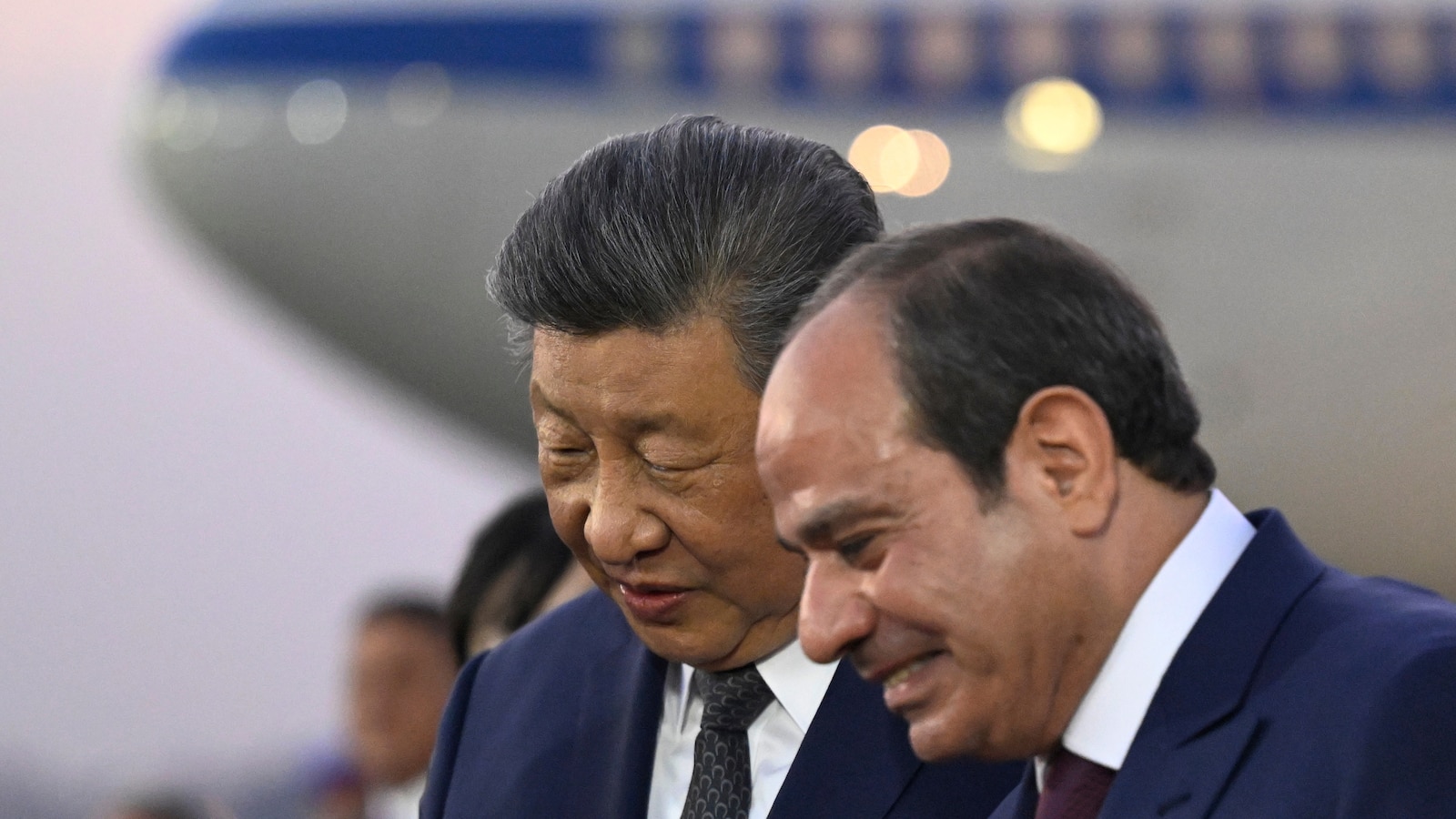
This week, Chinese President Xi Jinping is in Egypt to bolster the nations’ economic and diplomatic relations. While on the surface this visit may seem like a routine diplomatic affair, it carries significant strategic implications—especially as China seeks to deepen ties with countries traditionally allied with the United States, such as Egypt.
China’s Growing Influence in the Middle East
Xi Jinping’s visit is emblematic of China’s broader ambition to present itself as a stabilizing force in the Middle East, contrasting sharply with the U.S., which has been militarily involved in the region for decades. The six-month conflict in Iran serves as a recent example of the ongoing U.S. entanglement. Analysts note that China is adeptly expanding its influence by building a web of relationships across the region, a move that American foreign policy is struggling to counter.
As educational leader Amr Hamzawy points out, “China continues to build up its soft power reserves while the United States self-sabotages its own stock.” This shift indicates a growing perception of China as a viable alternative partner at a time when U.S. military focus may be diminishing.
Symbolism and Significance of Xi’s Visit
Xi arrived in Cairo to a warm welcome, greeted by President Abdel Fattah el-Sissi and military honors, including a red-carpet ceremony. His itinerary includes high-level talks aimed at enhancing bilateral cooperation, alongside visits to significant cultural sites like the Grand Egyptian Museum. The leaders are marking 70 years of diplomatic relations with op-eds in state media, which confirms their commitment to mutually beneficial partnerships.
During this visit, Xi emphasized the need for both nations to “expand the scope of pragmatic collaboration” in various sectors including infrastructure and trade. El-Sissi reciprocated by praising Chinese investments in Egyptian projects, underlining Cairo’s support for Beijing’s One China policy, notably in regards to Taiwan.
Strategic Partnerships and Economic Cooperation
Egypt has been actively diversifying its international partnerships, viewing its engagement with China as a vital counterbalance to its historical ties with the U.S. Recently, Egypt joined the BRICS bloc, which counters more Western-led institutions like the G7. The strategic significance of this partnership is amplified by China’s investments exceeding $10 billion in Egypt, facilitating projects in infrastructure and transportation.
In recent years, bilateral trade has also taken a leap, with estimates suggesting that trade volumes have reached approximately $20 billion. In contrast, U.S.-Egypt trade stood at around $15.7 billion in 2025. With Egypt playing a crucial role in U.S. national security interests in the Middle East, this burgeoning relationship with China could alter regional dynamics and power structures.
As tensions rise in the Strait of Hormuz due to ongoing conflicts, China’s deepening ties with Egypt offer a potential alternative for navigating energy supply routes. The Suez Canal’s strategic importance cannot be overstated, as it now serves as a critical artery for global energy resources. China, therefore, has significant incentive to fortify its relationship with Egypt, which controls this vital transit route.
In conclusion, Xi Jinping’s visit to Egypt marks a pivotal moment for international relations in the Middle East. As China positions itself as a counterweight to U.S. influence in the region, its collaboration with Egypt may not just redefine diplomatic ties but could also create substantial shifts in geopolitical power dynamics.