
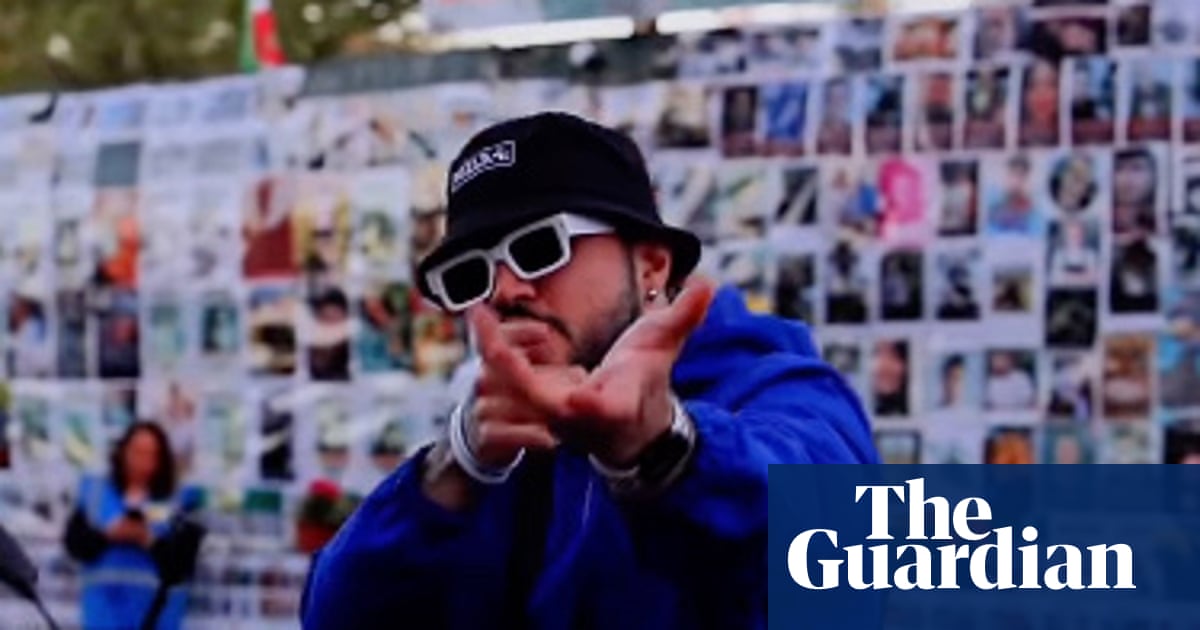
In recent months, tensions within the Iranian opposition have escalated on the streets of London, revealing deep divides among those advocating for change in Iran. The emergence of artists like Tony Mohraz, also known as 021kid, highlights not only the generational shift in activism but also the fierce rivalries among opposing factions seeking a free Iran. Navigating this complex landscape requires understanding the various influences and ideologies that underpin these movements.
The Rising Voice of 021kid
Dressed in a blue Adidas hoodie and khaki shorts, Mohraz energizes a crowd in Golders Green, North London, where a memorial wall honors victims who lost their lives protesting the Iranian regime. As he performs a rap inspired by a popular Israeli war anthem, he adopts a confrontational tone, even mimicking gunfire. This provocative act is part of his mission to advocate for the return of the Pahlavi dynasty, specifically calling for the reinstatement of Reza Pahlavi, the exiled son of the late Shah. The lyrics reflect not only his passion but also his allegiance to a political movement that has evolved since the 1979 revolution.
Historical Context and Modern Implications
The Basij, a paramilitary group known for its repression, and the IRGC, the Islamic Revolutionary Guard Corps, feature prominently in Mohraz’s lyrics. These organizations symbolize the current Iranian regime’s power and its opposition to democratic movements. Meanwhile, the People’s Mojahedin Organization of Iran (MEK) serves as a historical counterpoint, once an ally against the Shah but now distanced from its origins, seeking a secular, democratic Iran. This intricate history complicates any dialogue about leadership and reform, as factions attempt to establish legitimacy both at home and abroad.
Divisions Within the Opposition
What is noteworthy is the increasing friction not between supporters and opponents of the Iranian regime but among various factions within the opposition. Mohraz’s aggressive music has prompted responses from critics like Laila Jazayeri, who see such art as a direct incitement to violence against them. She argues that Mohraz’s messages could threaten the very democratic discourse they are trying to promote. This internal strife is intensified by ongoing global events, including U.S. and Israeli military actions that seem to embolden hopes for upheaval against the Iranian government.
Increasing Tensions in London
As protests arise against the Iranian regime, tensions have spilled over into confrontations among opposition groups. The streets of London, particularly areas with large Iranian communities, serve as venues for these disputes, where self-declared supporters of the Pahlavi dynasty have aggressively challenged MEK members. Incidents like these not only create chaos but also illuminate the precarious balance of power within these movements. With ongoing threats and accusations of intimidation, those affected are left in a state of anxiety.
The competing narratives amongst these factions highlight a critical paradox: while they all seek change, their differing visions for Iran complicate collective efforts. As activists from both sides become more vocal, their rivalries may inadvertently bolster the regime’s narrative of division and instability. Observers note that this internal conflict undermines the broader goal of a united front against authoritarianism, revealing that the fight for Iran’s future is as contested as the current regime itself.
In conclusion, the situation in London embodies a complex tapestry of voices, aspirations, and ideologies vying for supremacy in the Iranian opposition. The emergence of figures like 021kid reflects not just a generational shift but also the intricate dynamics at play within the struggle for Iran’s future.