
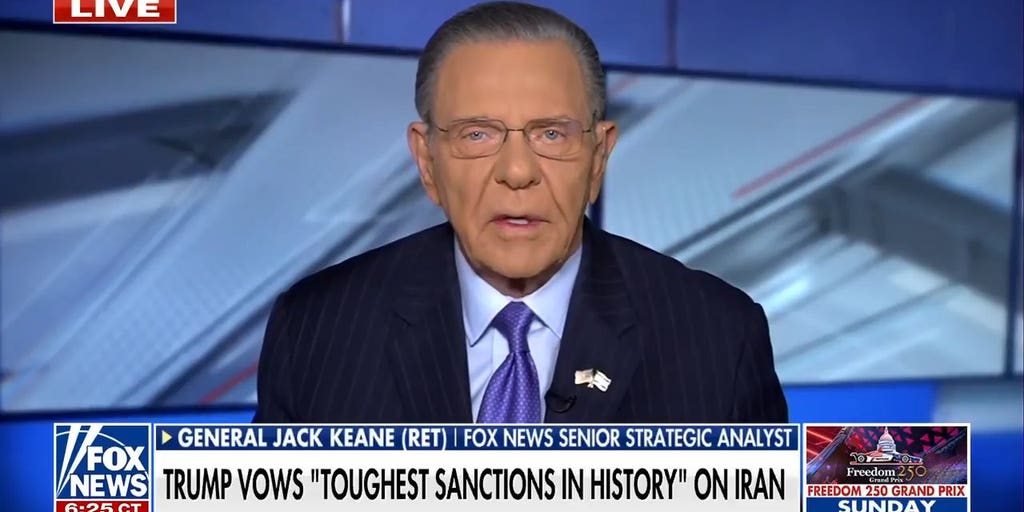
President Trump has expressed significant concern regarding Iran’s potential to acquire nuclear weapons, asserting that the country would “absolutely use” such armaments if they come into possession of them. The current geopolitical landscape underscores a pressing need to assess the effectiveness of U.S. economic sanctions and military strategies in the region, particularly in light of recent discussions featuring retired General Jack Keane and broadcaster Brian Kilmeade.
The Nuclear Threat from Iran
Iran’s pursuit of nuclear capabilities has become a focal point in international relations, prompting fears of a potential nuclear conflict. President Trump’s warning highlights a chilling reality: if Iran successfully develops nuclear weapons, the regime is likely to employ them in accordance with its aggressive policies. This situation not only menaces the stability of the Middle East but poses a global security threat as well. The U.S. government has implemented a series of economic sanctions aimed at curbing Iran’s nuclear ambitions, yet the ongoing developments raise questions about the long-term efficacy of these measures.
U.S. Economic Sanctions: Are They Effective?
The use of economic sanctions against Iran has been a primary strategy for the U.S. to impede its nuclear program. These sanctions aim to cripple Iran’s economy, making it challenging for the nation to fund its nuclear initiatives. However, critics argue that these measures have had mixed results. While sanctions have undoubtedly exerted economic pressure, there are concerns that they may not be sufficient in deterring Iran’s ambitions. In discussions featuring General Keane, the complexities of enforcing these sanctions are examined, particularly given the involvement of other nations that may still engage economically with Iran, undermining U.S. efforts.
Military Deterrence in the Middle East
In addition to economic measures, the U.S. has maintained military readiness in the region to deter potential aggression from Iran. As demonstrated by the deployment of over ten naval vessels in critical areas such as the Strait of Hormuz, the U.S. is actively working to secure important trade routes and counter potential threats from Iran. General Keane emphasizes the significance of these military assets in reinforcing U.S. commitments to regional allies and providing a robust deterrent against Iranian aggression. The presence of U.S. carrier strike groups not only signifies military strength but also serves as a clear message to Iran about the consequences of pursuing a nuclear arsenal.
The Ongoing Challenge
The situation remains highly complicated as the U.S. navigates the challenges of sanctioning a nation that is determined to pursue a nuclear agenda. The interplay between diplomatic efforts, military preparedness, and economic sanctions has become a delicate balancing act. Both President Trump and General Keane stress the importance of a comprehensive strategy that encompasses these elements, ensuring that the U.S. remains agile in responding to Iran’s maneuvers. As the world watches the unfolding events, the efficacy of the current U.S. approach to mitigating the Iranian nuclear threat will be scrutinized with heightened interest.
In conclusion, while President Trump’s warnings about Iran’s nuclear intentions are alarming, they emphasize the need for a multifaceted strategy that combines economic sanctions with military readiness. Understanding the effectiveness of these tools is crucial to devising a long-term solution that secures both regional stability and global security.