
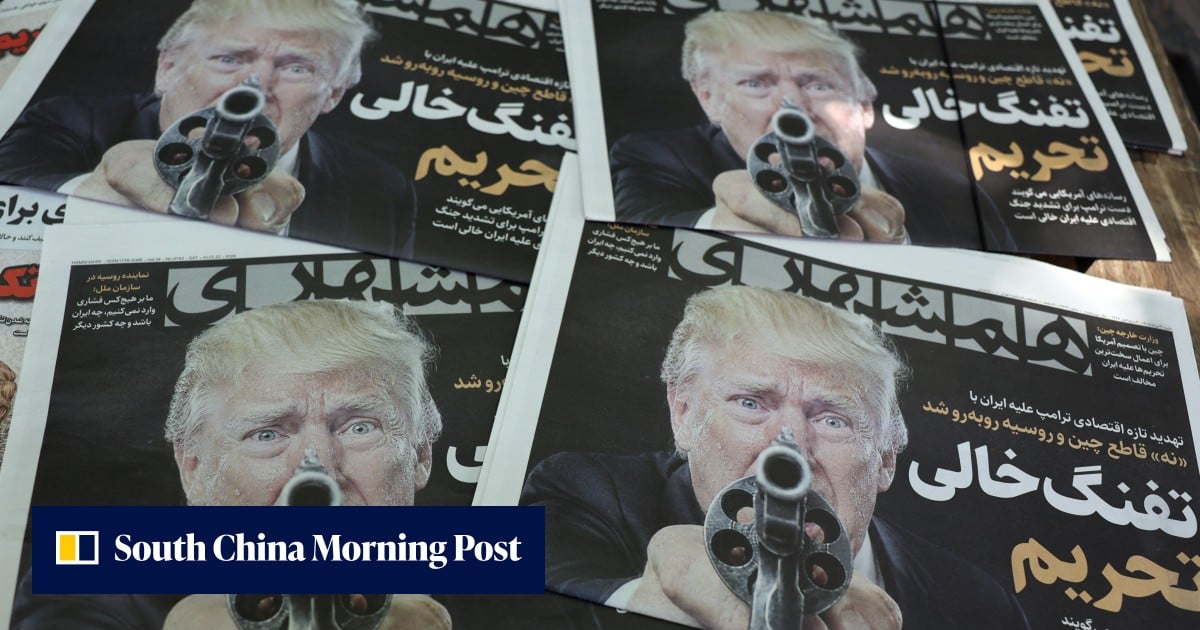
President Donald Trump is relying on a strategy that combines new sanctions, a naval blockade, and increased economic pressure on Iran’s trading partners to achieve what previous military actions could not: compel Tehran to agree to a deal that aligns with U.S. interests. However, this approach faces a substantial challenge.
The Resilience of Iran’s Military Capabilities
One significant obstacle to this strategy is the steadfastness of Iran’s Islamic Revolutionary Guard Corps (IRGC). This military organization has not only asserted its control over the strategic Strait of Hormuz but has also demonstrated a formidable capacity to project power, including launching drone attacks throughout the Gulf. Such actions indicate that the IRGC may be largely unaffected by external pressures, raising concerns over its potential for retaliation.
A Shift Toward Economic Isolation
A critical aspect of the U.S. strategy will be unveiled by Treasury Secretary Scott Bessent, who is expected to present a detailed plan aimed at transitioning the conflict from military exchanges to a comprehensive campaign of economic isolation. This initiative could impact a range of countries, from China and India to Turkey and the United Arab Emirates. By targeting these nations, the U.S. hopes to exert greater pressure on Iran and diminish its capacity to maneuver in the international arena.
The Potential for Military Retaliation
Nevertheless, boosting economic pressure on Iran could have unintended consequences. Iran may resort to military actions throughout the Gulf, particularly targeting energy infrastructure. Such retaliatory strikes could escalate tensions and potentially spike oil prices, undermining the effectiveness of U.S. efforts. Analysts suggest that if the pressure proves to be effective, Iran may feel compelled to act militarily, given that they perceive restricted options. Nate Swanson, a senior fellow at the Atlantic Council, asserts that while Trump may believe this represents a new phase in the conflict, Iran likely views it as a continuation of ongoing hostilities.
Iran’s Capacity for Endurance
Since early 2017, when the U.S. and Israel first initiated military actions against Iran, the nation has shown a remarkable ability to withstand airstrikes targeting thousands of installations, a complex web of sanctions, and maritime blockades by the U.S. Navy. Despite these pressures, Iran has consistently retained its ability to respond effectively. This historical context illustrates Iran’s resolve and capabilities, suggesting that convincing Tehran to concede may prove to be more challenging than anticipated.
In conclusion, Trump’s strategy of using sanctions and economic isolation presents both opportunities and significant risks. While the intention is to compel Iran to negotiate on U.S. terms, the potential for retaliation and military escalation remains a critical concern. As tensions continue to mount, both the U.S. and Iran find themselves in a precarious situation, wherein each action may trigger a response that complicates the path towards resolution.