
Economic challenges are mounting for Iran as it faces significant disruptions to key trade routes due to geopolitical tensions. While Washington has not officially enforced a land blockade against Iran, the closure of crossings to Pakistan and Iraq, combined with ongoing issues affecting freight traffic at the Turkish border, has heightened concerns within Tehran.
The Impact of Border Closures
Mohsen Rezaei, the secretary of Iran’s Supreme National Security Council, has openly acknowledged the detrimental effects a prolonged blockade could inflict on the Iranian economy. In a recent interview, he emphasized that the ordinary citizens would bear the brunt of these economic hardships, with families facing increased financial strain and investment opportunities dwindling. “Anyone who claims otherwise is simply not realistic,” he stated. Rezaei argued that although economic pain is evident, it does not equate to a strategic defeat for Iran. He firmly believes that worsening conditions will not compel Tehran to capitulate to U.S. pressures.
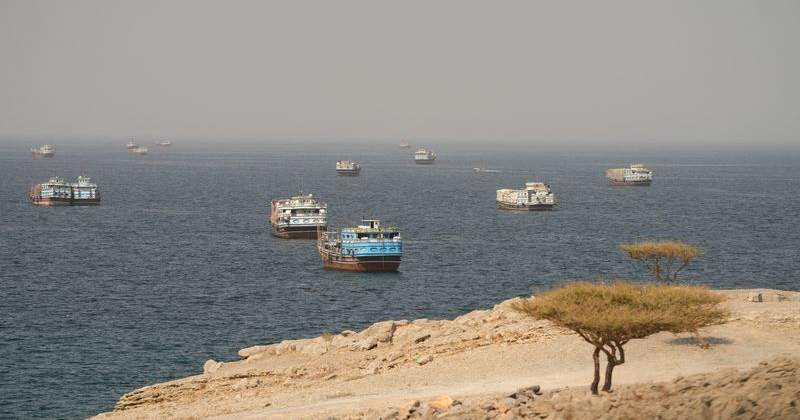
Reports have circulated that the United States has been urging neighboring countries to enforce stricter border controls, particularly following a maritime blockade in southern Iran. This blockade has reportedly halted significant trade activity that used to account for a large percentage of Iran’s commercial exchanges. President Masoud Pezeshkian noted that this maritime halt has effectively cut off vital trade routes, directly impacting Iran’s economy.
The Role of Pakistan in Trade Dynamics
Pakistan has emerged as a crucial mediator in the ongoing situation, yet the relationship remains tense due to recent border closures. Iranian officials have attributed these closures to “technical difficulties” on Pakistan’s side, indicating ongoing discussions about reopening these vital trade routes. However, the U.S. maritime blockade has forced Iranian traders to increasingly rely on Pakistani ports for alternative trade pathways. Yet, complications have arisen, such as stringent electronic documentation requirements and banking challenges that have hindered efficient trade practices.
With the recent closing of the Rimdan-Gabd and Taftan crossings, Iranian officials are voicing concerns that further restrictions could lead to retaliatory measures affecting bilateral trade. Iranian parliament member Fada-Hossein Maleki warned that if Pakistan does not ease its border controls, Iran may have no choice but to limit its own border traffic as well—an action that could have repercussions for both nations.
Iraqi Border Dynamics and Economic Relations
Iraq’s stance regarding its border with Iran has also been inconsistent. While no official total closure has been declared, reports indicate specific crossings, such as Chazabeh-Al-Shaib, have been shut under the direct orders of Prime Minister Ali al-Zaidi to address concerns about drug smuggling and economic violations. Such actions signal a growing tension that has the potential to impact trade, as Iran and Iraq share 13 border crossings that are critical for commercial activities.
In response to these moves, Iranian Deputy Interior Minister Ahmad Zeynivand stated that Iran had formally reached out to Baghdad for clarification on these closures. He claimed that trade in essential goods through other channels has continued uninterrupted, despite the political friction.
Challenges at the Turkish Border and Alternatives
Turkey remains one of Iran’s largest trading partners, and disruptions at the Bazargan border crossing have resulted in significant delays, with reports indicating wait times extending up to 20 days. This bottleneck exacerbates the challenges Iran faces, as alternative routes through smaller neighboring countries provide limited solutions. The existing crossings with Turkmenistan and Azerbaijan remain operational, yet infrastructural inadequacies and heavy congestion diminish their efficacy.
As Iran navigates these turbulent waters, some government factions are calling for retaliatory actions against neighboring countries that impose restrictions. However, without any formal blockade declared, the open border routes currently available are insufficient to substitute for the lost maritime trade, leaving Iran’s economy increasingly vulnerable amid growing international pressures.