
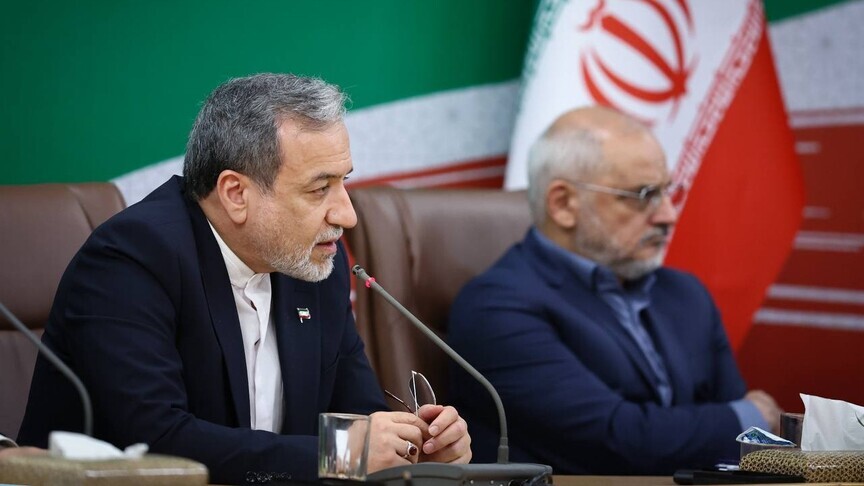
Iran’s Foreign Minister Abbas Araghchi recently emphasized that if the United States were to honor its commitments outlined in the Islamabad memorandum, it would substantially mitigate current regional conflicts. This statement arose during a conversation with Japan’s Foreign Minister Toshimitsu Motegi, highlighting ongoing diplomatic efforts amid escalating tensions.
US Compliance as a Path to Stability
During their discussion, Araghchi stressed that Washington’s adherence to the Islamabad agreement is crucial for restoring normalcy in the region. He criticized the U.S. for its alleged failures in upholding its end of the deal, asserting that these violations have heightened the existing tensions. “The solution is straightforward,” Araghchi conveyed. “If the U.S. returns to its commitments, we can pave the way for improved conditions.” His remarks underscore the persistent struggle for diplomatic resolutions in a landscape riddled with conflict. Beyond the bilateral dialogue, Araghchi also updated Motegi on the negotiations between Iran and Oman regarding the strategic Strait of Hormuz, indicating that significant progress has been made in establishing a temporary transit route, with future management discussions forthcoming.
Japan’s Call for Restraint
In response, Motegi expressed considerable apprehension regarding the renewed hostilities between the U.S. and Iran. He advocated for an immediate de-escalation of tensions and urged both nations to recommence dialogue as soon as feasible. Motegi’s plea for “maximum flexibility” from Iran aims to avoid prolongation of the current stalemate, a sentiment that reflects Japan’s vested interests in regional stability. The Japanese Foreign Ministry issued a statement detailing Motegi’s call for Iran to exercise restraint, particularly regarding its recent attacks on civilian vessels. The statement articulated Japan’s commitment to ensuring safe and unimpeded navigation through the Strait of Hormuz, framing this issue as a matter of international concern.
The Islamabad Memorandum’s Importance
The Islamabad memorandum, negotiated with the assistance of Pakistan and Qatar, serves as a platform for reducing hostilities between Tehran and Washington. Signed in June, this agreement embodies the prospects for negotiation, but Iran has accused the U.S. of failing to implement key stipulations. These include provisions addressing sanctions and naval operations, which have contributed to ongoing friction in the region. Meanwhile, Washington, along with Gulf states, has called for an unhindered navigation framework through the Strait of Hormuz, a vital corridor for global trade.
Araghchi’s remarks and Motegi’s response underline the pressing need for diplomatic engagement aimed at stabilizing the region. Iranian officials continue to advocate for dialogue, even as they pursue negotiations with Oman, highlighting the delicate balance of interests at play. The temporary transit arrangements being discussed are viewed as a stopgap measure while more permanent solutions are sought.
The road ahead remains complex, with competing interests hampering progress. Nevertheless, the dialogue between Iran and Japan illustrates the potential for international cooperation to address pressing geopolitical challenges. As nations evaluate their roles in fostering stability, the emphasis on compliance with international agreements like the Islamabad memorandum will be critical in shaping the region’s future.