
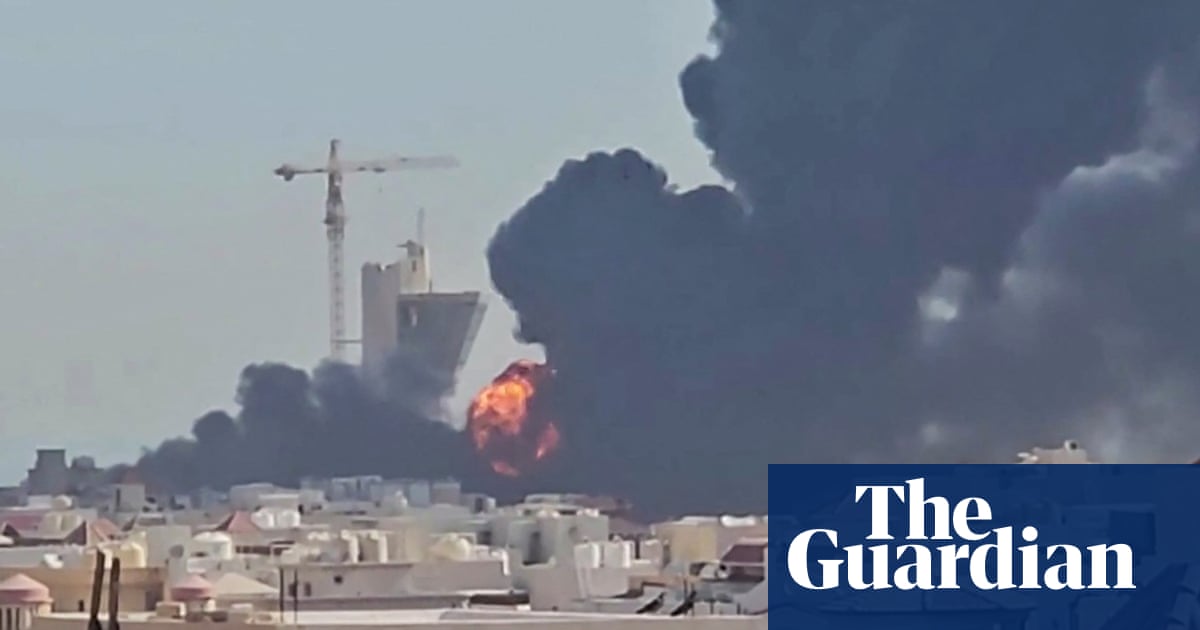
Iran has ramped up its military operations against U.S. allies in the Middle East amid a renewed wave of U.S. strikes targeting Iranian positions. This escalation comes as tensions surge, particularly in the strategically important Strait of Hormuz, which is crucial for global oil transport.
Attacks on Civilian Infrastructure
Kuwait has alleged that Iran is intentionally targeting civilian infrastructure, including essential facilities like a power and water desalination plant. Given that Kuwait heavily relies on desalinated water for approximately 90% of its drinking needs, any attacks on such facilities create significant risks to public health and safety. The Kuwaiti airspace was briefly closed as the nation intercepted missiles and drones, resulting in injuries to several firefighters and workers dealing with fires caused by these attacks.
Bahrain joined the fray, activating air sirens for residents after detecting potential threats in the form of drones or missiles. In Jordan, state media reported that the kingdom successfully downed multiple Iranian missiles. These retaliatory measures are a direct reaction to what Iran perceives as U.S. strikes targeting their civilian infrastructure, which have included assaults on bridges and power facilities.
Escalating Military Rhetoric
Supreme Leader Mojtaba Khamenei issued a stark warning to the U.S., suggesting that continued aggression would yield “unforgettable lessons.” His statement, broadcast via state television, emphasized Iran’s resolve in the face of U.S. military operations. The Gulf Cooperation Council condemned Iran’s acts, categorizing them as “war crimes” and violations of international law, specifically highlighting the deliberate targeting of civilian amenities.
The tension heightened when reports surfaced that Iranian forces had attacked an oil facility in Kuwait, leading to numerous injuries and “significant material losses,” as confirmed by the Kuwait Petroleum Corporation. The Kuwaiti foreign ministry characterized this ongoing campaign as a systematic effort to undermine critical infrastructure, thereby endangering civilian lives.
Continued Hostilities and Military Responses
On late Friday, the Iranian Revolutionary Guard Corps (IRGC) claimed that two oil tankers had exploded in the Strait of Hormuz after striking submerged mines, a statement the U.S. military disputed. Furthermore, the IRGC reported that they had successfully intercepted four vessels attempting to navigate this vital waterway and claimed responsibility for destroying several U.S. military aircraft.
U.S. Central Command reported that their strikes were aimed at degrading Iranian military capabilities. These operations targeted a range of sites, including surveillance and military logistics centers, and were executed with precision overnight. Despite the Iranian media reporting explosions in various cities, including Sirik and Ahvaz, U.S. efforts resulted in significant operational impacts.
As hostilities continue, casualties have risen sharply. Iranian health ministry reports indicate that over 500 individuals have been injured and approximately 50 killed in the ongoing conflict since its revival. The Iranian government itself has admitted to the effectiveness of U.S. strikes on crucial energy infrastructure, urging citizens to conserve power amid extreme heat conditions.
Maj Gen Mohsen Rezaee, an influential military adviser in Iran, hinted that if the U.S. strikes persist, Iran could mount a full-scale offensive. He asserted that Iran’s military strategy would transcend mere retaliatory measures, signaling a potential escalation in the conflict.
As the situation tightens, the international community watches closely, aware that any miscalculation could escalate the conflict beyond the region, impacting global security and energy markets.