
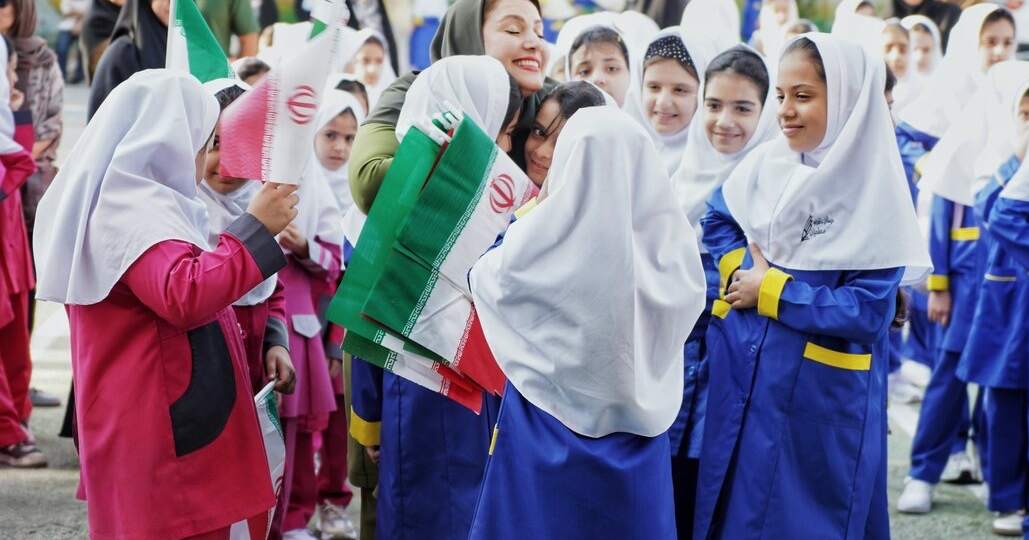
As students across Iran return to classrooms this month, the notable presence of the Basij, a paramilitary force, underscores a renewed push for military and ideological education in schools. This initiative aligns with the Iranian government’s efforts to reshape the educational landscape amid rising tensions and dissent.
Embedding Military Ideology in Education
The Iranian Ministry of Education recently announced significant changes to school curricula, aiming to incorporate materials focused on the country’s military, nuclear capabilities, and recent conflicts. This decision reflects an attempt by the government to secure loyalty from younger generations at a time when discontent is prevalent due to economic struggles and societal unrest. Historian Arash Azizi emphasizes that the Islamic Republic finds itself at a pivotal moment, grappling with a populace that largely did not experience the 1979 revolution. The renewed involvement of the Basij in schools, particularly at the elementary level, marks a shift from the historical trend where their presence had significantly diminished over decades.
Historical Context of Student Activism
Historically, schools have played a critical role in shaping political engagements among youth in Iran. Shahram Kholdi highlights that the recent emphasis on controlling school environments cannot be isolated from the powerful wave of solidarity witnessed during the Woman, Life, Freedom protests. Following the tragic death of Mahsa Jina Amini in police custody, schoolgirls actively participated in protests, symbolizing a significant and youthful opposition. Videos circulated showing students rejecting state-imposed mandates, further illustrating the pivotal role schools can play in sparking civic engagement among young people. The protest movements transformed educational settings into arenas of resistance against the regime, prompting authorities to focus more on monitoring youth.
Concerns About Future Generations
The recent shift towards embedding Basij forces in schools reveals broader concerns within Iran’s political landscape regarding the loyalty of future generations, especially those categorized as Generation Z and the even younger Generation Alpha. Researchers suggest that the establishment is particularly wary of losing the loyalty of these groups, prompting initiatives to infuse more ideological instruction. Azizi argues that there is an ongoing internal debate among regime factions about how to approach the ideologically drifting youth. Some advocate for a return to a more rigid ideological framework, drawing parallels to a “North Korea scenario,” where control over societal norms intensifies to curb dissent.
The Risks of Increased Control
While the Basij may serve as a tool for fostering allegiance, such an aggressive approach carries inherent risks. The focus on instilling a more stringent ideological education could inadvertently fuel further dissent among the youth, who may view such measures as oppressive. Azizi warns that attempting to revert to archaic ideological stances may trigger increased resistance and protests, indicating a precarious balance for the regime. The presence of the Basij in schools not only seeks to reinforce loyalty but also represents an urgent response to social unrest and increasing political disengagement among the youth.
As the Islamic Republic attempts to navigate a challenging and evolving social landscape, the implications of these educational reforms could reverberate far beyond the classroom, influencing the trajectory of Iran’s political future. The ongoing developments highlight a critical juncture for the government as it strives to secure allegiance from a generation that has witnessed significant changes in societal attitudes and aspirations for a more liberal future.