
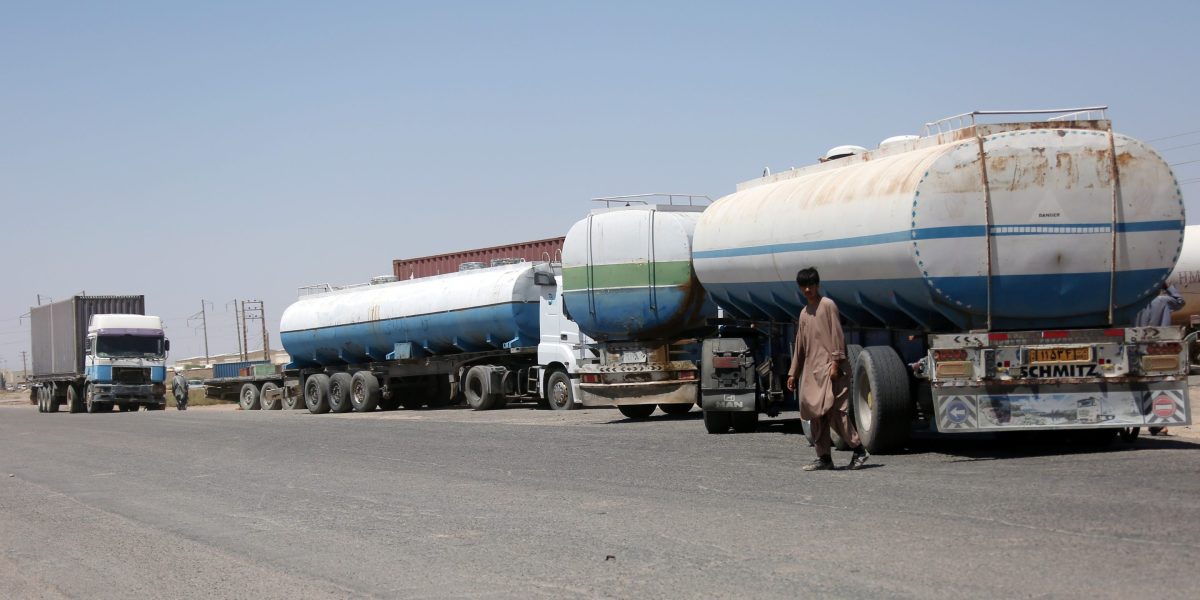
The ongoing U.S. naval blockade against Iran continues to deeply impact the nation’s economy, as attempts to move shipments via land routes are falling short of providing substantial relief. This blockade has drastically limited Iran’s access to international maritime trade, which used to account for over 80% of its trade tonnage.
Shifts in Trade Routes: Increasing Overland Congestion
Prior to the blockade, Iranian ports were vital for trade. However, with the sea routes now largely closed, U.S. Central Command has reported that it has successfully redirected a significant number of commercial vessels—109 in total—to enforce compliance with the blockade. Consequently, this has led to a surge in truck convoys utilizing land routes along the borders with Turkey, Pakistan, Afghanistan, Iraq, and Turkmenistan. Notably, trade between Iran and Turkey increased by 19%, reaching $3.2 billion in just the first half of the year.
Despite these increases in bilateral trade, logistical challenges are making land transport increasingly inefficient. Lengthy customs procedures and inadequate infrastructure are causing major bottlenecks along these routes, resulting in severe delays. At one border crossing, as many as 3,700 trucks were reported to be stranded, leading to extensive lines and driver wait times that can exceed three weeks. This has dire implications for perishable goods, which spoil during these extended delays, while the rising inflation, currently at 90%, exacerbates the situation.
The Toll of Economic Hardship
Though overall trade statistics remain grim, with a reported 28% decrease in non-oil exports and a 26% drop in imports for the five months ending August 22, the impact of these delays extends beyond mere logistical issues. Iran’s reliance on imported fuel — necessary due to its limited refining capacity — has resulted in gasoline shortages. These complications have forced the Iranian government to implement price hikes to curb demand, further straining the economy.
Amidst these challenges, officials from Iran’s Chamber of Commerce have acknowledged the urgent need to reopen trade routes through the Strait of Hormuz, an essential corridor for maritime trade. Acknowledging these hurdles, one chamber member pointed out that restoring southern trade routes through the Gulf is critical for survival.
Quantifying the Economic Strain
Reports suggest that the economic ramifications of relying on land transport are staggering. For instance, transporting a single container from Iran to China by sea now costs about $3,000, but overland routes could push those costs up to $12,000. Given that 2 million containers typically pass through Iran’s southern ports each year, these increased costs could translate to an additional $18 billion annually just for transportation. Although such routes may temporarily supply necessary goods, experts warn that they are not sustainable in the long term and will likely lead to an eventual halt in economic activity.
In contrast, oil-producing nations in the Persian Gulf continue to expand their deliveries through the Strait of Hormuz, despite Iranian threats aimed at deterring shipping traffic. U.S. military operations have facilitated the successful transport of approximately 1 billion barrels of oil through the strait in the past couple of months, supporting thousands of commercial vessels. With these primary lanes now cleared, the flow of oil and liquefied natural gas has reached its highest levels in six months, reinforcing the effectiveness of the blockade.
In summary, while Iran grapples with the consequences of the naval blockade and logistical hurdles of overland transportation, neighboring countries continue to thrive in their trade activities. Without immediate intervention, the outlook for Iran’s economy appears increasingly bleak.