
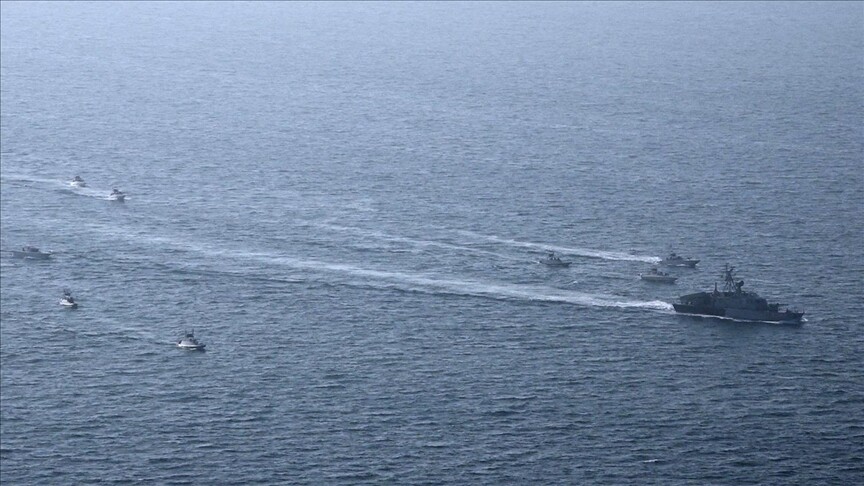
Iran’s Islamic Revolutionary Guard Corps (IRGC) has firmly dismissed claims made by former U.S. President Donald Trump regarding Washington’s control over the strategic Strait of Hormuz. The Iranian military has issued a warning that any U.S. vessels approaching the vital waterway would face a resolute response from Iranian forces.
IRGC’s Challenge to U.S. Claims
Colonel Ali Mohammadi, the IRGC Navy’s deputy for political affairs, responded to Trump’s assertions by challenging the U.S. to send a warship within 100 kilometers of the Strait. “If that is the case, go ahead, bring one of your warships within 100 kilometers,” Mohammadi stated, as quoted by the semi-official Fars News Agency. He emphasized that U.S. forces are aware of the consequences they would face if they approached the strategically important area, citing recent incidents as evidence.
Mohammadi further claimed that foreign military forces have remained outside the Gulf of Oman for an extended period, asserting that no U.S. troops or military assets are currently positioned within the Gulf, Strait of Hormuz, or Gulf of Oman. This narrative aims to underscore Iran’s vigilance and control over the region, highlighting the IRGC’s capability to monitor and respond to foreign vessels operating in these waters.
Surveillance and Operations in the Gulf
The IRGC Navy has asserted that it maintains complete surveillance over the Strait of Hormuz and the surrounding Gulf areas. Mohammadi indicated that vessels traveling from neighboring countries, such as Kuwait and Bahrain, are under the watchful eye of Iranian forces. He warned that any violations of the regulations set by Tehran could result in actions being taken against these vessels. This claim reflects Iran’s commitment to safeguarding its territorial waters against perceived threats.
Additionally, Mohammadi mentioned that U.S. military bases located in Gulf nations have become “non-operational.” He allege that Iranian forces have conducted preemptive operations aimed at U.S. military installations, ships, and vessels that are believed to have disregarded Iranian commands.
Trump’s Assertions and Regional Tensions
Trump has consistently maintained the narrative of U.S. dominance over the Strait of Hormuz amidst the ongoing tensions between the two nations. Earlier in the month, he claimed that U.S. forces had targeted a number of Iranian vessels, reiterating, “We now control the Strait of Hormuz.” Moreover, during a recent address, he proclaimed that the U.S. was “winning” in its confrontational stance against Iran, proposing, rather provocatively, that the strait be renamed the “Trump Strait.”
These statements are part of a larger narrative that seeks to project U.S. strength and resolve in the face of Iranian opposition. However, the IRGC’s counterclaims illustrate the complex and volatile security dynamics in the region, highlighting how both sides navigate the intricate web of military strategy and geopolitical posturing.
In conclusion, the exchange of rhetoric between Iran and the United States reflects not just a battle of words but also the larger struggle for influence over one of the world’s most vital maritime chokepoints. As both nations navigate this high-stakes geopolitical chess game, the implications for regional security and stability remain significant.