
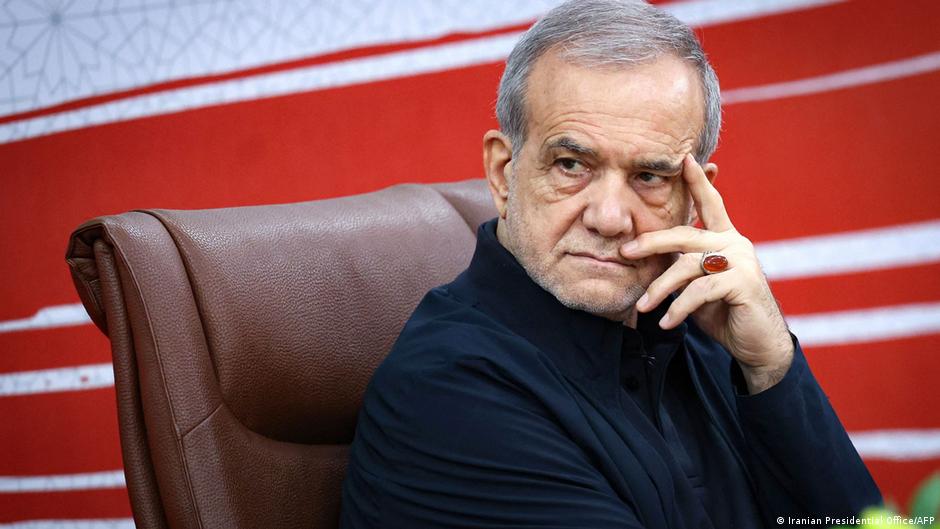
Iran’s President Masoud Pezeshkian recently endorsed the country’s lapsed Memorandum of Understanding (MoU) with the United States, deeming it the most effective pathway to resolve the ongoing tensions between the two nations, which he characterized as a state of “neither war nor peace.” His remarks sparked discussions about the future of U.S.-Iran relations and the potential for diplomatic efforts to bridge a longstanding divide.
Assessment by the Supreme National Security Council
During his address, Pezeshkian highlighted that members of Iran’s Supreme National Security Council (SNSC) resonated with his evaluation, basing their stance on principles of “dignity, wisdom, and national interest.” He firmly stated, “There is not a single provision in this agreement that amounts to capitulation,” reinforcing that the supreme leader directs policy, and the government is bound to follow that directive. This assertion underlines the Iranian leadership’s strategic demeanor in handling diplomatic relations with the U.S.
The MoU, which was initially established by former President Donald Trump, outlined a 60-day framework aimed at de-escalating tensions associated with the U.S.-Israeli-led conflict and compelling Iran to abandon its nuclear ambitions. However, with the deadline having recently elapsed without any proactive engagement or compromise from either party, the situation in the Strait of Hormuz continues to remain precarious. Tehran’s responsive closure of this vital shipping route due to U.S.-Israeli military actions has raised global economic concerns, contributing to an atmosphere of uncertainty.
Economic Implications and Need for Stability
Pezeshkian emphasized the necessity for Iran to transition out of this unresolved conflict phase, claiming that doing so is crucial for attracting foreign investment essential for the nation’s economic revitalization. He cautioned that “capital and money are extremely sensitive to risk,” thus underlining the imperative to mitigate this risk to encourage financial influx into the country. The lingering conflict exacerbates economic instability, making it even more urgent for Iranian leadership to reconsider its approach.
In light of these developments, Iran’s Foreign Ministry announced that Pakistan’s military leader, Asim Munir, is scheduled to visit Tehran. This visit is expected to facilitate ongoing efforts to bolster peace and security in the region, a role Pakistan has historically played in mediating between Washington and Tehran. Significantly, Islamabad had previously helped establish the MoU, emphasizing its commitment to fostering diplomatic relations.
Regional Reactions and Future Prospects
Despite the anticipated dialogue, hardline factions within Iran like the SNSC’s new leader, Mohsen Rezaei, have issued warnings against neighboring nations assisting the U.S. war effort. Rezaei’s threats to target alternative oil routes from the Persian Gulf signal a willingness to oppose perceived hostile actions by regional entities that align with Washington’s agenda. This rhetoric underscores the complicated geopolitical landscape surrounding Iranian relations.
In conclusion, while Pezeshkian’s defense of the MoU reflects a desire for diplomatic resolution, the internal divisions and hardline stances within Iran present formidable challenges. A shift towards constructive engagement will require navigating these complexities. As stakeholders and observers await the outcomes of forthcoming negotiations, the international community remains watchful of any signs that may indicate a thaw in U.S.-Iran relations amid the region’s volatility.