
Introduction
The world is watching as Iran mourns the loss of its Supreme Leader, Ayatollah Ali Khamenei, who was killed early in a devastating war. This significant event highlights the complexities within Iran as it grapples with both grief and political expression. Richard Engel reports from the ground, revealing a scene that seems less like a mourning moment and more like a display of political fervor.
Political Dimensions of Mourning
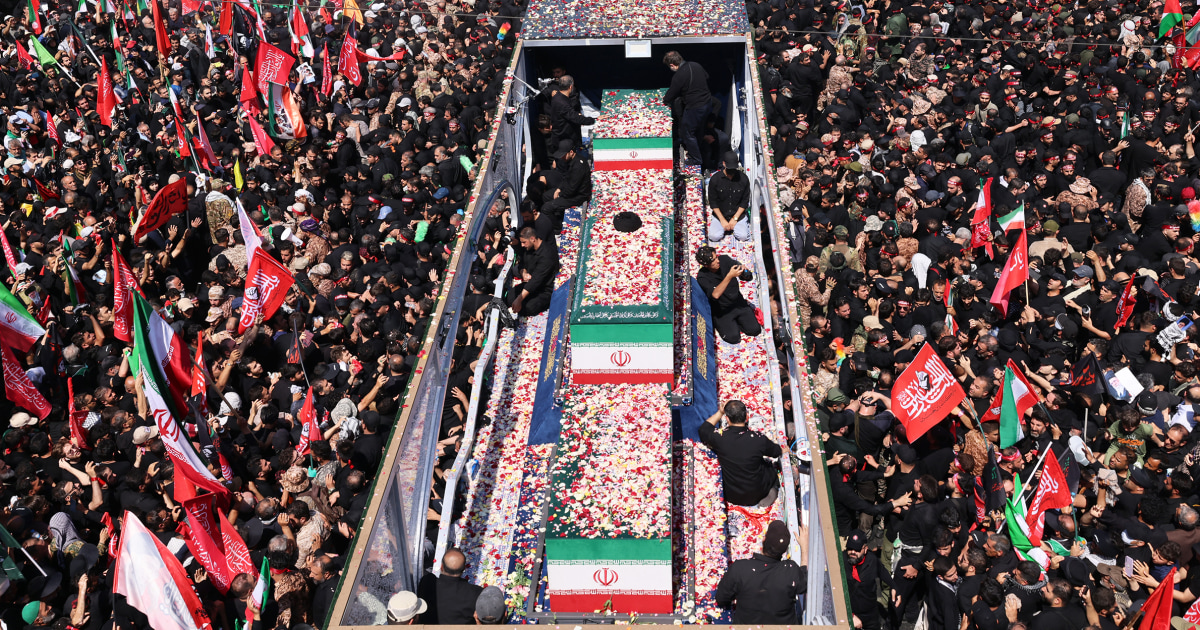
The funeral procession for Ayatollah Khamenei is drawing millions to the streets of Tehran, showcasing overwhelming support for the Iranian regime. Many mourners are visibly emotional over the loss of their leader, whose death occurred at a critical time during the conflict. However, beneath the surface of sorrow lies a significant political undercurrent. The atmosphere suggests that people are using this event to express frustration, particularly toward the U.S. administration and former President Donald Trump. The gathering, while somber, is also a dramatic demonstration of allegiance to the Iranian government in the face of external pressures.
Opposition voices, which were previously outspoken, now seem to be retreating into silence as fear prevails amid the political chaos. The current generation’s hesitance reflects the historical complexities that define Iranian society. The echo of protests from the past can still be heard; many are cautious about voicing their discontent while the nation is in mourning. This phenomenon emphasizes the intricate relationship between national identity, leadership, and external influence.
Soccer Controversy Unfolds
In a parallel narrative, the U.S. Men’s National Soccer Team is back in the spotlight after FIFA overturned a controversial red-card suspension that had sidelined their top scorer. The implications of this decision resonate broadly as fans speculate about the motives behind such moves in an evolving international sports arena. While the return of this key player is seen as a boost for the team, questions linger about what it could cost in the realm of diplomacy and international relations.
This incident brings to light the intersections between sports and politics, especially within the context of U.S.-Iran relations. The world of soccer has always been rife with nationalist sentiments, and as the U.S. men’s team prepares for international competition, the stakes are higher than ever. The players represent not just their country but also a complex relationship that intertwines cultural pride with political diplomacy.
Future Implications for Iran
As Iran navigates this turbulent period following the death of Khamenei, the nation stands at a crossroads. The enormous turnout at the funeral demonstrates a strong public sentiment in favor of the current regime, but underlying tensions could signal potential unrest. The silence from opposition factions may only be a temporary state, depending on how the government addresses both internal and external challenges in the aftermath of this significant loss.
The global community will be observing Iran closely, as the actions taken by its leaders will have lasting consequences. Iran must find a way to unify its people while also addressing their grievances to prevent further unrest. As history has shown, periods of mourning can often lead to pivotal shifts in the political landscape. The current situation presents a unique opportunity for renewed dialogue about leadership, governance, and the future direction of the nation.
In conclusion, the blend of mourning and political expression in Iran paints a complicated picture, raising essential questions about governance, identity, and international relations. As the world watches, both sporting events and political movements serve as reflections of a nation in transition.