
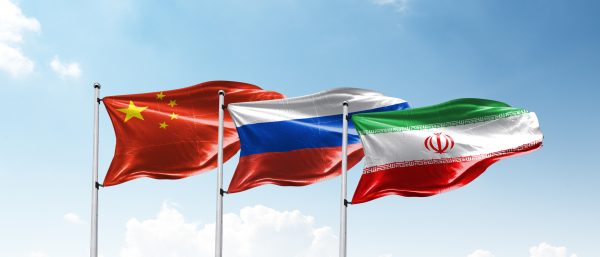
The dynamics of global geopolitics have been intricately shaped by the collaboration between China, Russia, and Iran. This partnership not only supports Iran’s military capabilities but also poses significant challenges to U.S. interests in the region. The implications of this triangular relationship invite a closer examination of how it influences contemporary conflicts and shifts power balances.
The Mechanics of Sino-Russian Support for Iran
China and Russia have established a robust cooperative framework that benefits Iran significantly in terms of military resources and intelligence. For instance, Russia has been instrumental in providing satellite intelligence to Iran, detailing the movements of U.S. military assets, including troops and aircraft. This intelligence has reportedly allowed Iran to target U.S. bases more effectively. Additionally, Russia has assisted Iran in replenishing its drone inventory lost during military engagements, supplying around 60% of those losses with upgraded systems. Tactical guidance from Russia on drone operations leverages lessons learned from the conflict in Ukraine, enhancing Iran’s combat capabilities.
Moreover, logistical support offered by Russia, such as the “Caspian Express,” plays a vital role in facilitating Iran’s military operations while also securing diplomatic backing for Iran in various international forums. This multifaceted support significantly strengthens Iran’s position against U.S. military actions in the region.
Beijing and Moscow’s Strategic Interests in Iran
Both Moscow and Beijing have numerous strategic motivations for bolstering Iran. By supporting Tehran, they aim to weaken U.S. influence and military deployment across the Middle East. Specifically, they seek to create a scenario that either leads to the U.S.’s strategic failure or ties its forces down in protracted conflicts, which would diminish American support for allies in Taiwan and Ukraine. Furthermore, these nations see the conflict as a validation of their own ideological narrative regarding the decline of U.S. global hegemony, paving the way for a new multipolar world order.
This dynamic not only reinforces their partnership with Iran but also aligns with their broader strategic goals to destabilize U.S. alliances and enhance their geopolitical leverage across multiple theaters.
Challenges to U.S. Strategic Posture in the Middle East
The ongoing geopolitical tensions, particularly in the Strait of Hormuz, have laid bare weaknesses in U.S. strategic coherence. As the U.S. grapples with domestic political challenges and strategic missteps, such as perceived inefficiency in global leadership, China’s stature continues to rise. China’s measured approach in supporting Iran, coupled with its refusal to commit militarily while still offering economic and military assistance to both Iran and Russia, underscores the contrast with U.S. strategies under previous administrations.
This stalemate provides China with opportunities to further their interests unchecked, allowing it to project power into the Middle East. The ramifications of this power vacuum extend beyond immediate military engagements and impact regional alliances.
The Future of U.S.-China Relations amid Growing Alliances
The current trajectory of alliances shows a concerning downturn for U.S. interests. The growing ties among Russia, China, Iran, and even North Korea illustrate not only an expanding cooperative strategy against U.S. influence but also a challenge to the existing global order. As Sino-Russian cooperation strengthens, the implications for U.S. allies—from NATO to those in Asia and the Middle East—are increasingly precarious.
U.S. foreign policy, particularly under the Trump administration, has often been criticized for its lack of strategic planning, contributing to this decline. The erosion of trust among U.S. allies, coupled with increasing tensions spurred by the Moscow-Beijing-Iran nexus, signals a need for a recalibrated approach to foreign affairs that addresses both domestic challenges and international realities effectively.
In summary, the partnership among China, Russia, and Iran offers profound implications for U.S. interests and global power dynamics. Understanding this axis is crucial for formulating effective responses to emerging threats and shaping a future where U.S. influence can be restored in a rapidly evolving geopolitical landscape.