
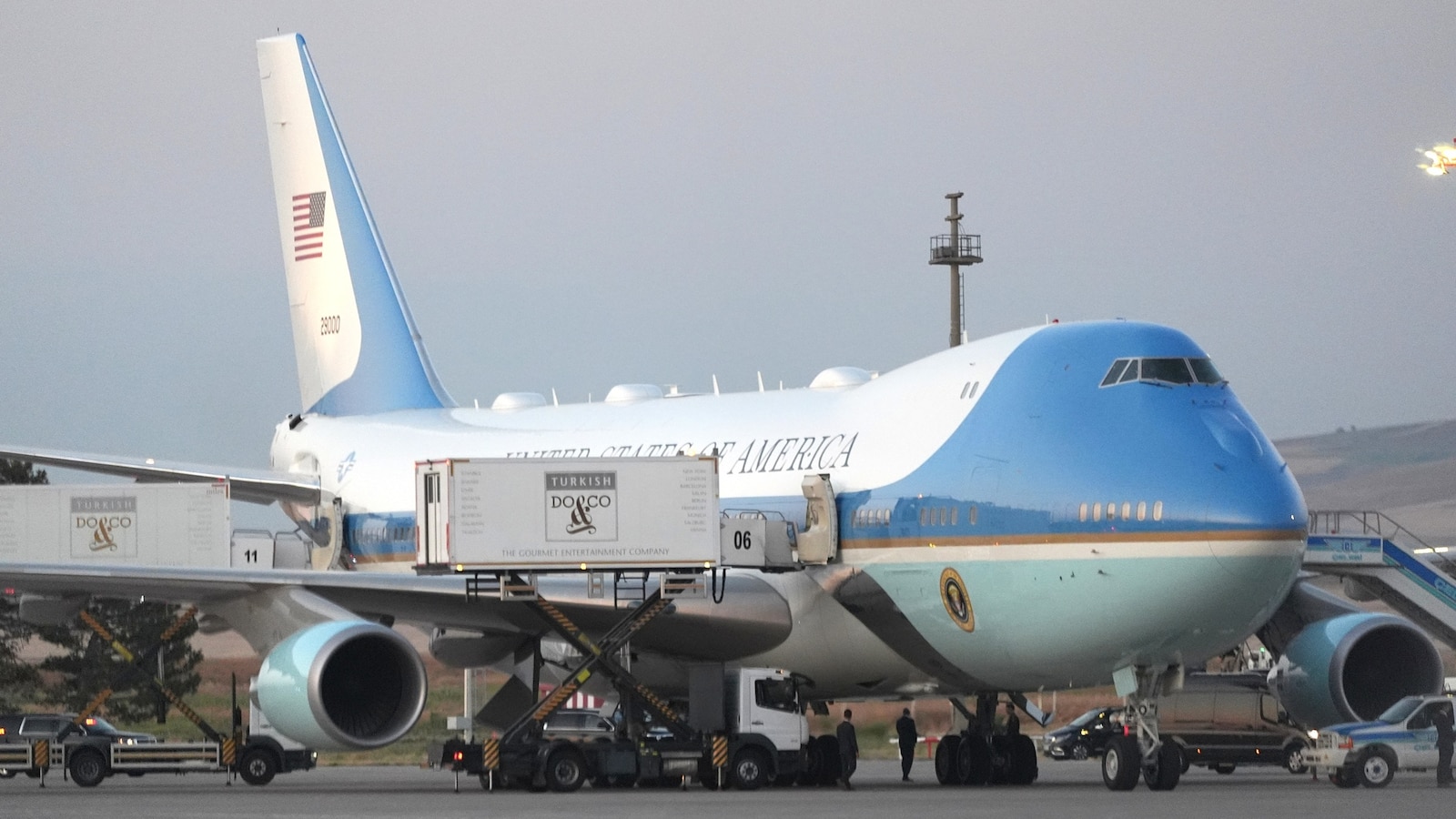
In July, amid concerns for his safety from Iran, President Trump orchestrated a secretive departure from a NATO summit in Turkey, showcasing the complexities of presidential security. This covert operation utilized various strategies, including a catering truck and a military aircraft, in a bid to divert potential threats during his flight to the United Kingdom.
Details of Trump’s Covert Flight
Sources indicate that Trump did not use the typical Air Force One or its new counterpart gifted by Qatar. Instead, he opted for a discreet escape aboard an Air Force C-32A military jet. This plan was executed without the knowledge of much of the traveling press and some White House aides, who remained on the traditional Air Force One during this critical time.
On July 6, the political climate escalated significantly. Following Iranian aggression against vessels in the Strait of Hormuz, U.S. airstrikes resumed. On the night of July 6, Trump departed from Joint Base Andrews, landing in Ankara on July 7 for the NATO summit. The situation on the ground quickly intensified, particularly after Trump’s remarks about threats against his life during a meeting with NATO Secretary General Mark Rutte. He expressed concerns, stating, “I’m on every single one of their lists” in reference to Iranian targets.
Strategies and Securing the President
The choice to switch to a smaller, less conspicuous aircraft stemmed from advice given by the Secret Service, underscoring the gravity of the potential threat level. Trump confirmed that he was aware of increased risks during this secret flight, affirming it was not a routine security measure.
After the summit, plans evolved. Reports indicated that the newer Qatari-gifted Air Force One departed without the president, following Trump’s social media announcement that he would travel using the traditional aircraft. When a reporter inquired whether security concerns influenced this decision, Trump emphasized the inherent risks of presidential duties. He remarked, “I’m number one on the kill list for Iran,” reflecting the serious nature of his presidency amidst external threats.
Arrival and Subsequent Actions in the U.K.
Upon touching down at Mildenhall Air Force Base at 10:29 p.m. local time, the old Air Force One created the illusion that it was his finalized mode of transport. A quick switch back to the new Air Force One went largely unnoticed, as Trump aimed to ensure that the press captured his arrival. This orchestration was part of a broader strategy to mislead potential threats and enhance his safety.
The day following Trump’s return, the White House addressed inquiries about the covert measures. It asserted that using various tactics, including “distraction and misdirection,” is standard when facing threats, particularly from adversaries like Iran. The White House stressed the effectiveness of their security protocols, emphasizing the sophisticated capabilities of the newer aircraft designed to safeguard the president.
This intricate operation not only highlights the serious dynamics of national security but also emphasizes the lengths to which modern presidencies must go to ensure their leaders remain unharmed amidst rising geopolitical tensions. Armed with necessary resources and strategies, the administration has exemplified the complexities behind seemingly routine events, such as international travel.
The subsequent revelations of this covert flight plan remind us of the ongoing challenges faced by leaders in a world that demands heightened vigilance and adaptability.