
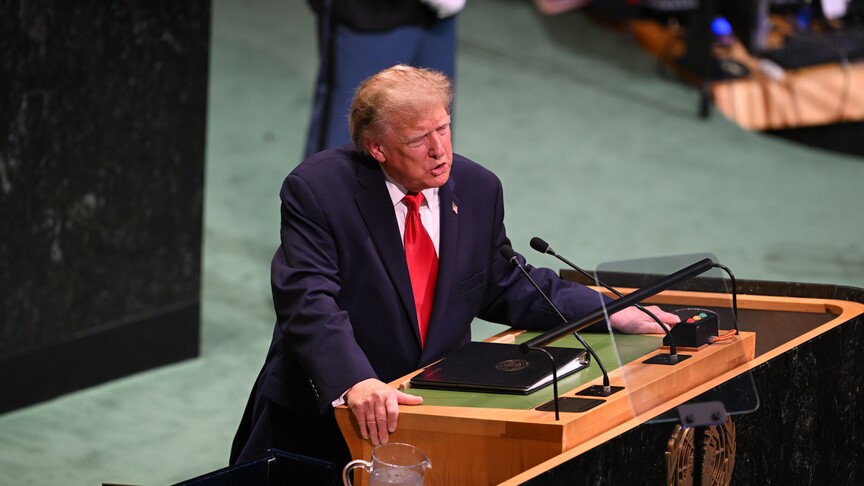
In a recent address to the UN General Assembly, former US President Donald Trump expressed his belief that a potential deal with Iran could be on the horizon after the upcoming midterm elections. He characterized the situation as critical, emphasizing the extent of the choices he faces regarding Iran’s future. This commentary underscores the ongoing geopolitical dynamics involving the United States and Iran, as both countries navigate a complex relationship fraught with challenges.
Trump’s Critical Decision on Iran
During his address, Trump articulated a significant choice he may have to confront: either to engage in negotiations that could enable Iran to thrive once again or to pursue a more aggressive approach that could lead to the total destruction of the Iranian state. “I have a big decision to make,” he stated, highlighting the urgent nature of the matter. He indicated that if a deal were reached, it could pave the way for Iran to develop into a major power in the Middle East, yet he simultaneously warned against the repercussions of allowing the nation to rebuild without constraints.
Negotiations Linked to Midterm Elections
According to Trump, the possibility of reaching an agreement with Iran hinges on the results of the midterm elections in November. He suggested that Iranian leadership is closely monitoring the Republican Party’s performance, anticipating how the electoral outcomes may influence future relations. Trump clarified, however, that his previous electoral success does not influence his approach to Iran; he reassured listeners that his commitment remains focused on preventing Iran from acquiring nuclear weapons.
Consequences of US Policy Towards Iran
Trump recounted the history of his administration’s negotiations with Tehran, asserting that he had extended an offer of comprehensive economic cooperation in exchange for Tehran’s termination of its nuclear agenda. He claimed that Iran rejected this proposal outright and highlighted the extensive military actions taken under his leadership to hinder Iran’s nuclear capabilities. Trump’s assertion that the US has effectively decimated Iran’s military assets, including naval vessels and air defense systems, reflects his administration’s aggressive stance on ensuring national security.
The Broader Context of Hostilities
Tensions between the US and Iran have not remained stagnant; the situation escalated significantly when a joint military operation involving the US and Israel commenced on February 28. The Iranian government contended that this conflict resulted in substantial casualties. The ongoing strife has turned into a wider regional issue, necessitating diplomatic engagement to find resolutions. Iran’s retaliatory missile and drone strikes have heightened fears regarding maritime security, especially in the strategically vital Strait of Hormuz.
The implications of these developments stretch beyond immediate military actions, raising concerns about international stability and energy supply routes. Trump’s rhetoric, coupled with the realities of regional conflicts, illustrates the multifaceted aspect of US-Iran relations. As the midterms approach, the world watches closely, aware that the outcomes could shape diplomatic efforts significantly and potentially impact the future of peace in the Middle East.