
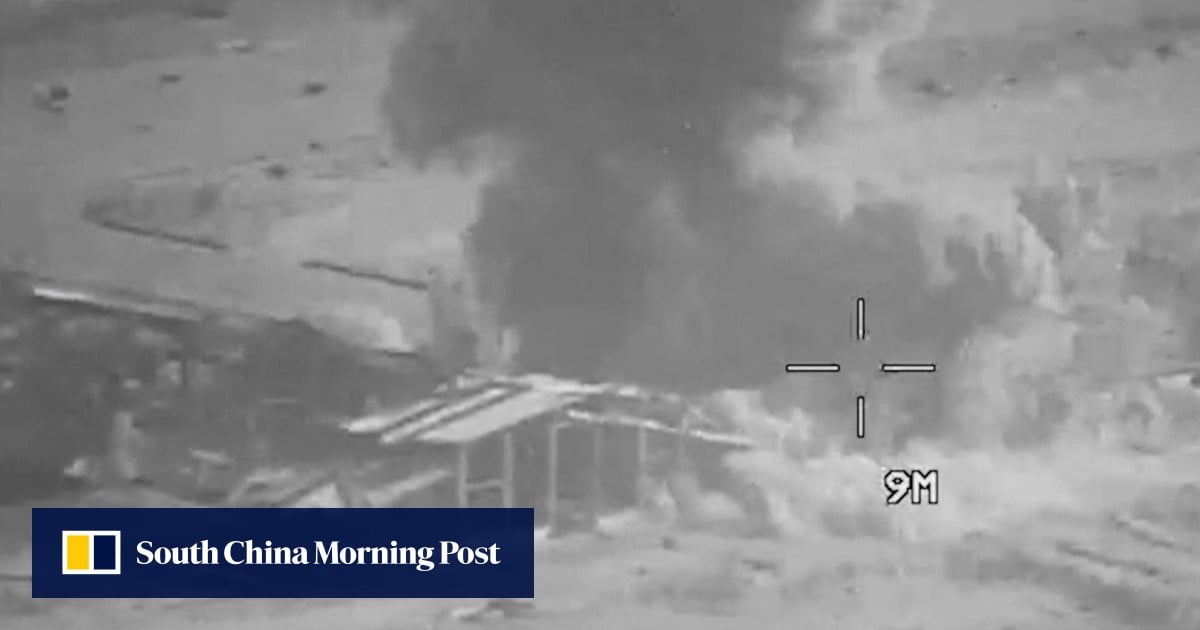
On Friday, the United States launched missile strikes targeting various sites across Iran, intensifying ongoing tensions in the region. President Donald Trump emphasized that Iran and its Houthi allies in Yemen could face “major military punishment,” yet he left the possibility open for a diplomatic resolution with Tehran. This volatile scenario raises questions about future steps in US-Iran relations and the impact on regional stability.
Escalating Military Engagements
In a separate incident, the US military disabled a tanker ship that persistently ignored warnings while attempting to breach the blockade on Iranian ports. This action underscores the increasing frequency of confrontational measures taken by the US in response to perceived threats from Iran. Just two weeks following the collapse of a temporary ceasefire aimed at stopping hostilities, Iranian forces retaliated by targeting US military bases situated in nearby Arab nations. They further warned that they might target non-military structures utilized by American personnel.
The tactical environment has shifted dramatically, prompting heightened military posturing from both nations. Trump has recently signaled an intention to expand potential targets to include key infrastructures such as Iran’s oil facilities and bridges. Additionally, he has threatened to deploy ground troops to capture the strategic oil hub at Kharg Island, as well as target Pickaxe Mountain, a site linked to Iran’s nuclear program. Such aggressive announcements contribute to a mounting geopolitical crisis and drastically escalate the stakes involved.
Assessment of Military Options
Despite these warnings and strategic threats, President Trump announced that he had not yet made a final decision regarding additional military strikes against Iran. This hesitation suggests a complex interplay of military strategy and diplomacy in the current situation. While the administration prepares for possible escalation, there is also an evident awareness of the potential ramifications that broader military involvement may present, both abroad and at home.
Trump remarked, “We are talking to them,” expressing a belief that Iranian officials are taking diplomatic discussions seriously. This acknowledgment adds a layer of unpredictability to the ongoing negotiations, as it hints at a willingness to engage in constructive dialogue while simultaneously maintaining a strong military position. Nevertheless, the delicate balance between aggressive military rhetoric and diplomatic overtures may prove challenging to navigate.
The Global Implications of Military Action
The implications of any further military action against Iran extend beyond the Middle East, potentially influencing global oil markets and international diplomatic relations. Oil terminals like the one located on Kharg Island are critical to the Iranian economy and global energy supply, making any disruption of operations a concern not only for Iran but also for other countries reliant on oil imports.
As tensions escalate, the international community will be closely monitoring the actions of both the United States and Iran. The strategic calculations being made in Washington and Tehran will significantly impact not just regional stability but also broader geopolitical dynamics. The delicate balance of power in the Middle East requires a careful and strategic approach, one that considers both military readiness and the imperative for diplomacy.
In summary, as the United States continues to take military actions and prepare for possible escalation against Iran, the opportunity for diplomatic solutions remains a critical component of the unfolding narrative. With both nations at a crossroads, the coming weeks will likely define the future trajectory of their relationship and have lasting implications on global affairs.